Everyday Essential Aesthetics-Created

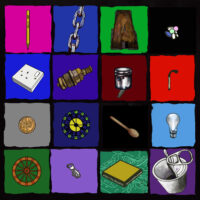
This is my interpretation of Everyday Essential Aesthetics-Created. How could we live our modern lives without these essential yet usually overlooked or hidden items? Everyday essential aesthetic refers to the style or look of items or products that are commonly used or needed on a daily basis. This aesthetic typically focuses on simplicity, functionality, and practicality while still maintaining a visually pleasing and cohesive appearance. When it comes to clothing, everyday essential aesthetic often includes basics and timeless pieces that can be easily mixed and matched, such as plain t-shirts, high-quality jeans, classic sneakers, and comfortable sweaters. The colour palette is usually neutral and versatile, including shades like black, white, grey, navy, and beige. In terms of home decor, everyday essential aesthetic is characterized by minimalism, clean lines, and practicality. It may involve decluttering and only keeping items that serve … Continue reading Everyday Essential Aesthetics-Created →
Monuments

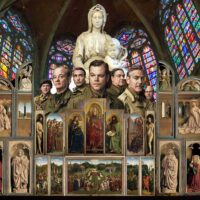
Theft. Treasure Hunt. The survival of western cultural civilisation. Oh, and George Clooney… Monuments Hear the story at The ARC Winchester. Monday 18 March 2024. 17.30 – 19.00 Booking for this free event is essential: www.art-tales.org/free-lecture Why were these works considered so wonderful and important that they became victims of the looters of the French Revolution and the Nazis, to appear as sublime prizes in formidable places of honour? Why are they thought to be amongst the greatest works of art ever produced in the western world? Why have film directors such as George Clooney been so inspired by their story that he produced and starred in ‘The Monuments Men’? This is the story of Hubert and Jan van Eyck’s Ghent Altarpiece and Michelangelo’s Madonna of Bruges. How they were made, when they were made and how. What is so … Continue reading Monuments →

Everyday aesthetics 11 – Wheat

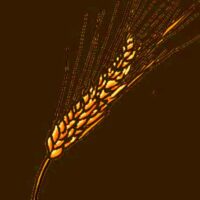
Wheat is one of the oldest cultivated grains and has been a staple food for human civilizations for thousands of years. Everyday aesthetics 11 – Wheat The cultivation of wheat began around 10,000 years ago in the Fertile Crescent, which includes parts of modern-day Iraq, Turkey, and Syria. It was a key factor in the development of agriculture and the transition from a nomadic lifestyle to settled communities. Wheat is a cereal grain and belongs to the Triticum genus of the grass family. There are different varieties of wheat, but the most common types are hard wheat, soft wheat, and durum wheat. Each variety has different characteristics and uses. The composition of wheat can be divided into three main parts: the bran, germ, and endosperm. The bran is the outer layer of the wheat kernel and is rich in fiber, … Continue reading Everyday aesthetics 11 – Wheat →

Everyday aesthetics 10 – Water

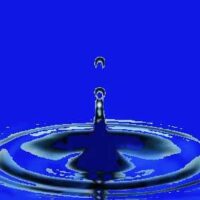
Water: I need it for my tea and coffee, flushing the loo, washing my socks, cleaning my teeth and above all for my hot water bottle. Everyday aesthetics 10 – Water Seriously though … Water is of utmost importance for life on Earth. It is an essential resource that is needed by all living organisms to survive and thrive. Here are some key reasons why water is important: Survival: Water is crucial for the survival of all living organisms. It is necessary for hydration, maintaining body temperature, and carrying out important bodily functions. Without water, humans, animals, and plants would not be able to survive. Agriculture: Water is essential for agriculture and food production. It is required for irrigating crops, maintaining livestock, and sustaining the overall agricultural ecosystem. Adequate water supply is necessary for ensuring food security and preventing famine. … Continue reading Everyday aesthetics 10 – Water →

Everyday Aesthetics 9 – The Pencil

The history of pencils dates back thousands of years. It is believed that the earliest known form of a pencil was used by ancient Egyptians and Romans, who used a thin metal or lead rod to make markings on papyrus or wax tablets. Everyday Aesthetics 9 – The Pencil During the 16th century, a significant development was made in pencil manufacturing when a large deposit of graphite was discovered in Borrowdale, England. This graphite was found to be ideal for writing and drawing due to its softness. The graphite was sawn into sticks and wrapped in string or paper for use. However, unlike modern pencils, these sticks of graphite were held together by string or inserted into wooden holders. It was not until the late 18th century that the modern pencil, as we know it today, was developed. In 1795, … Continue reading Everyday Aesthetics 9 – The Pencil →

Everyday Aesthetics 7 The Chain

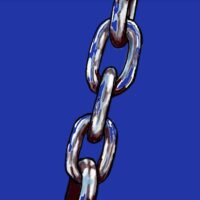
An everyday essential – the chain. Taken for granted, seen everywhere, shining or rusty, essential component or merely aesthetic. We couldn’t live without it in today’s modern society. Everyday Aesthetics 7 The Chain One absolutely essential use is the chain on my swing. Where would children and indeed adults be without the garden or park swing? So from the garden to Isambard Kingdom Brunel’s shipbuilding chain, let’s look at its history. The history of the chain. Ancient times: metal chains made of iron or bronze were used in ancient civilizations like Egypt, Mesopotamia, and China. They were primarily used for decorative purposes, such as jewellery or adornments. Medieval period: During the Middle Ages, chains became more functional. They were used for various applications, including restraining prisoners, securing gates, and hoisting heavy loads. The blacksmiths of the time played a crucial … Continue reading Everyday Aesthetics 7 The Chain →

Monuments Day Numinous Fascinans

It was Monuments Day at Brockenhurst Village Hall Tuesday 14 November. Monuments Day Numinous Fascinans A lively group of art lovers enjoyed a thought provoking, entertaining talk and film at Brockenhurst. The Ghent Altarpiece by Jan van Eyck and the Bruges Madonna by Michelangelo  We discovered the amazing true story of the Monuments Men, which was centred around the looting of priceless artworks during the Second World War and the race to retrieve them before they disappeared forever. Highlighting the Ghent Altarpiece and the Bruges Madonna, we learned of their history and importance. We explored the term ‘numinous fascinans’ associated with the mysterious spiritual quality of the narrative. Then on to George Clooney, who loved the unlikely tale so much, he invested his own money in directing and starring in the film of the Monuments Men, which we watched. The talk and film documented … Continue reading Monuments Day Numinous Fascinans →

Vincent – How to do it

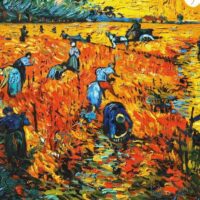
The art workshop – Cafe Vino da Vinci – follows simple rules and approaches and you can take home your own masterpiece. Tint your canvasBefore starting, Van Gogh tinted his canvas, using an underpainting technique, opting to dip into yellow ochres or blues. You’re not faced with a stark white canvas. Tone your canvas with an overall colour that you see in the work. Vincent – How to do it Use a limited paletteBecause oil paints were expensive in those days, Van Gogh used a limited colour palette and used minimal colours to the best of his ability. Study the main colours. Although it might seem tricky to start with, resisting the urge to blend and laying the paint on quickly, is one of the key traits of the Van Gogh style. Use short, strokes with a filbertVan Gogh mostly used a flat, filbert brush, … Continue reading Vincent – How to do it →

Monuments Day Treasures and Theft

Two of the most revered works of art in the world are the Ghent Altarpiece and the Bruges Madonna. Monuments Day Treasures and Theft What are these pieces? Who created them? Why are they so important? What are the stories they are telling? What is their history? Discover one of the greatest treasure hunts of the art world. Brockenhurst Village Hall. Tuesday 14 November 2023. 1.30 – 5.00 It’s a fascinating story of human endeavour and passion…and art. We’ll be exploring their creation, the stories within them, those working behind the scenes as well as those who made it all possible. We’ll see how they survived over the centuries, in particular their looting by the Nazis and the incredible tale of their recovery, as depicted in George Clooney’s ‘Monuments Men’ movie. If you’ve not seen it, even if you have, … Continue reading Monuments Day Treasures and Theft →

Atonement & Overcoming

One of the most compelling lectures on the power of art that I have ever attended. Atonement & Overcoming. Winchester Arts Society talk on October 17th, 2023, was by Angela Findlay and the subject: Germany’s art response to its history of WWII. How does a nation deal with its past? How does it atone for its guilt? How is this expressed in art? For the Germans there is a word for it ‘vergangenheitsbewältgung’ meaning ‘dealing with, coming to terms with, overcoming the past’. Here in the UK (and elsewhere) we erect memorials to the ‘lone soldier’ and such plinths as ‘The Cenotaph’. Also as in my previous blogs, statues to airmen/women, soldiers, sailors etc. We are all so familiar with them that we now simply pass them by as a matter of course. We leave these memorials to do the … Continue reading Atonement & Overcoming →