
The history of pencils dates back thousands of years. It is believed that the earliest known form of a pencil was used by ancient Egyptians and Romans, who used a thin metal or lead rod to make markings on papyrus or wax tablets. Everyday Aesthetics 9 – The Pencil
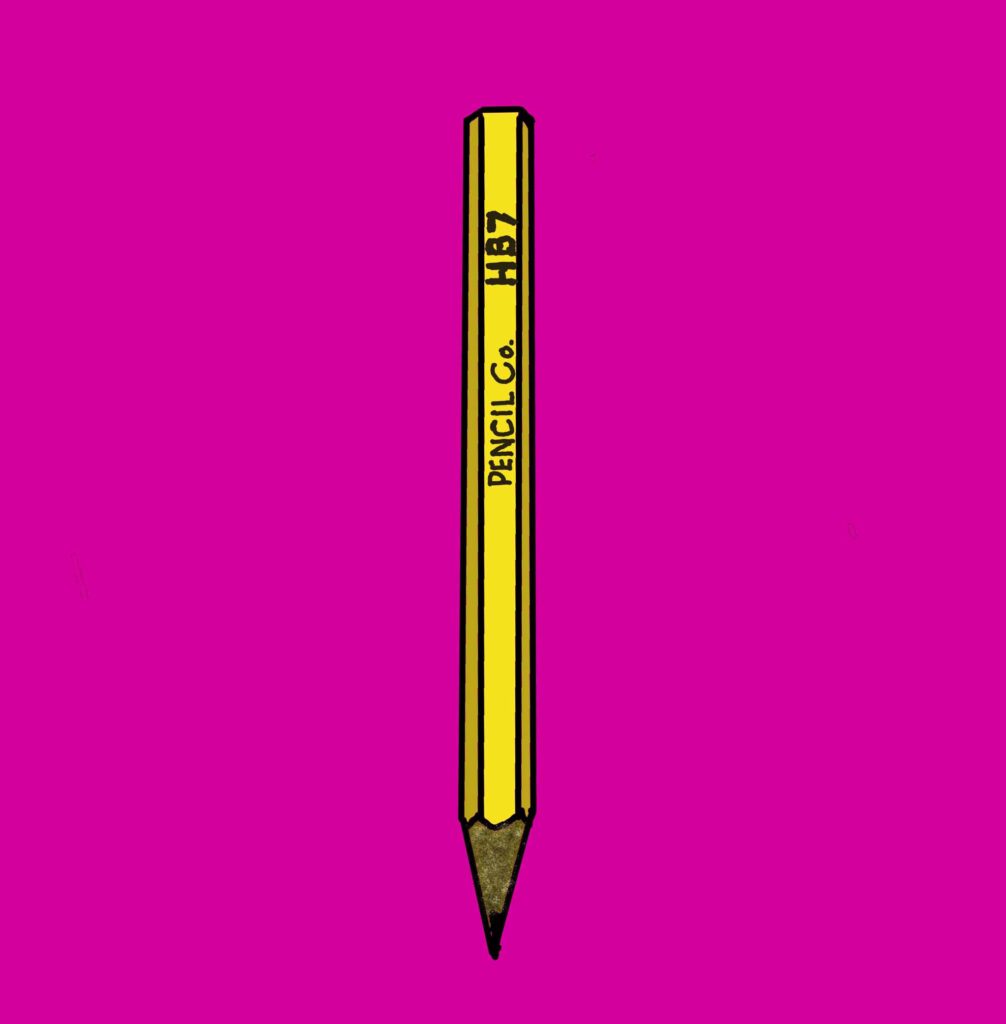
During the 16th century, a significant development was made in pencil manufacturing when a large deposit of graphite was discovered in Borrowdale, England. This graphite was found to be ideal for writing and drawing due to its softness. The graphite was sawn into sticks and wrapped in string or paper for use.
However, unlike modern pencils, these sticks of graphite were held together by string or inserted into wooden holders. It was not until the late 18th century that the modern pencil, as we know it today, was developed.
In 1795, Nicholas-Jacques Conte, a French officer, invented a process of grinding graphite into a fine powder mixed with clay. This mixture was then fired in a kiln, resulting in a harder and more durable material encased in wood. This process is still the foundation of modern pencil manufacturing.
The process of pencil manufacture involves several steps. First, a mixture of graphite, clay, and water is prepared. This mixture is then pressed through a machine that extrudes it into long thin strands. These strands are dried and then cut into pencil-length segments.
Next, a slat of wood, usually cedar due to its strength and fragrance, is cut into thin, rectangular pieces called pencil blanks. A groove is then cut into each blank to accommodate the graphite strand. The graphite strand is inserted into the groove, and another blank is glued on top, sandwiching the graphite.
The sandwiched blanks are then further shaped to form the desired pencil shape. This can involve cutting, shaping, and sanding the wood until it reaches the desired appearance. After shaping, the pencils are painted and coated with a protective lacquer.
Finally, the pencils are imprinted with information such as brand name, pencil hardness, or manufacturer’s logo. They are then packaged and made ready for shipment.
Everyday Aesthetics 9 – The Pencil
Today, pencil production is a highly automated process, with modern machinery and advanced techniques ensuring consistent quality. However, the basic concept and principles of pencil manufacturing have remained largely unchanged since the development of the first mass-produced pencils in the late 18th century.
Everyday Aesthetics 9 – The Pencil
 |