
The visit: Ghent. A welcoming town, not such a tourist trap as its neighbour Bruges but more common-place and natural and far less exploitive. We were following in the footsteps of George Clooney Ghent Altarpiece
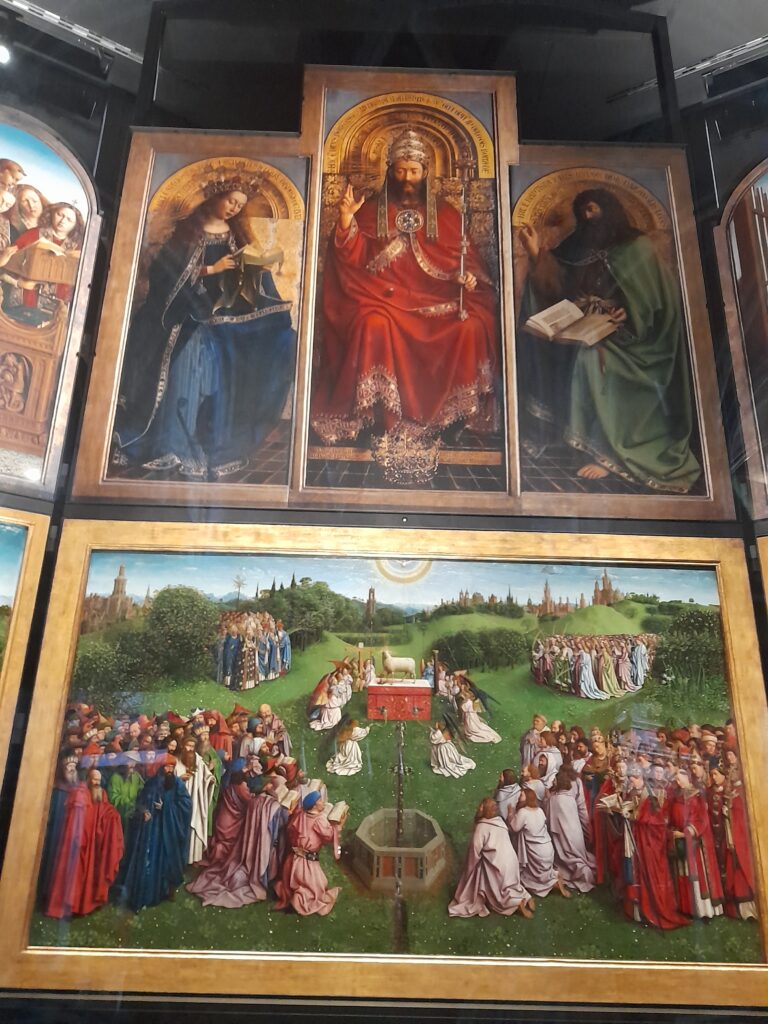
It was therefore a great town to visit and in particular to experience the wonder of the world-famous painting ‘The Ghent Altarpiece’ by Jan & Hubert van Eyck (completed 1432). This is to be found in Sint-Baafkathedral. The reason for our visit and in the footsteps of George Clooney Ghent Altarpiece.

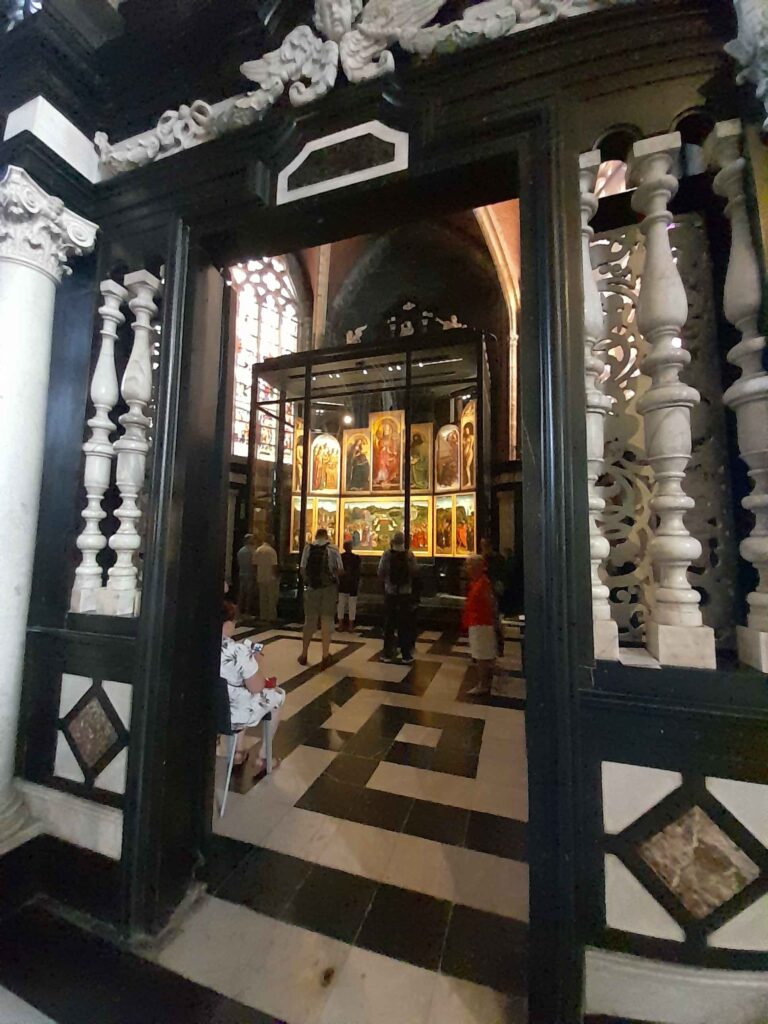
The Venue: The church is divided into two parts, the church itself and a ‘museum’ housing the most valuable and rare artefacts including the ‘Altarpiece’. Separating the ‘been there, seen that’ from those who are truly interested in the artefacts is a modest fee of 12 euros. This includes the latest technological VR experience telling the story of the ‘Altarpiece’.
The modern experience: VR eye googles on, in the crypt you are guided round various scenes projected through your headset showing the construction of the piece, its history (see below for full account) including being stolen by French Revolutionaries, to its being rescued by the ‘Monuments Men’ as recounted by George Clooney’s film of the same name.
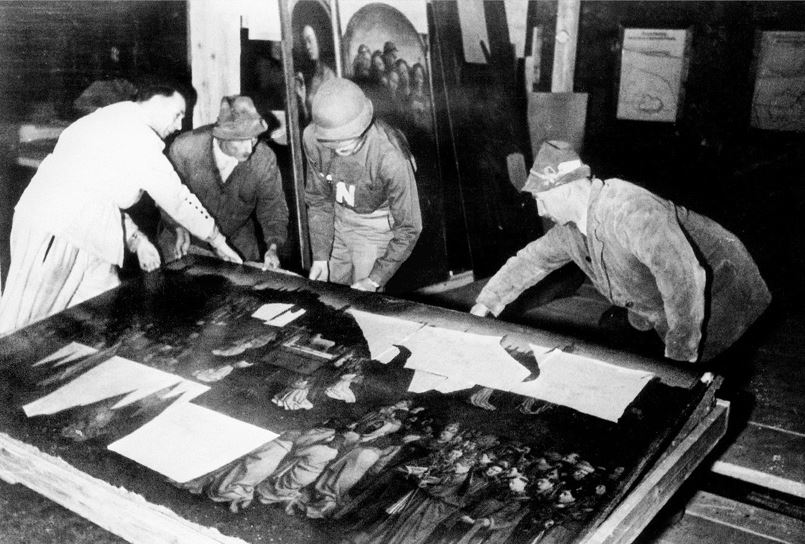
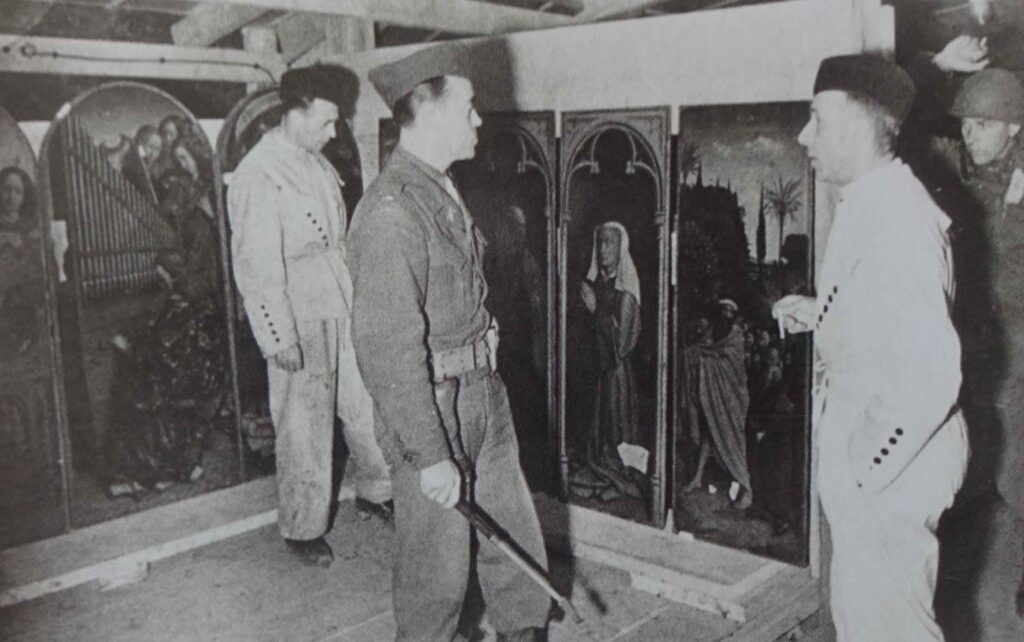
Through the church museum you eventually come to the ‘Ghent Altarpiece’, and it is an awesome sight at first glance and a wonderful piece of art after due investigation and reflection.
The encounter: You feel elevated into its presence. Something sublime and almost unreal, exceeding expectations. Its colours vibrate, its dynamism drawing you in to the story as a willing participant.
The works’ purpose: The work was created as a narrative to tell the story of Christ’s redemption of humanity. Christianity essentially being a religion of redemption with its ultimate gaol being the liberation of humankind from evil in all its forms.
We therefore have here a piece of communication and biblical explanation and not a compilation for aesthetic, beauty’s sake. A piece to inspire esoteric mysticism. And that still holds today, 600 years later.
The impact on the viewer: Standing in front of the piece for a time, sitting for longer, becoming absorbed in the whole and the detail, the images and the symbolism, the dynamism, simplicity and gentleness, one can become engrossed in the power of the spirituality intended as well as the genius of the artistic skill and technique enabling such ‘numanistic tremendum and fascinans’.
The highlights:
It is considered to be one of, if not the first paintings to be rendered in oil. An invention by the Van Eycks so the art history books tell us.
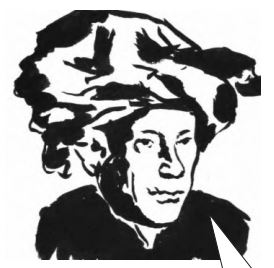
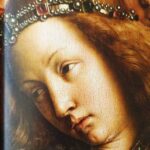
The style: Study closely the figures and their physiognomies and the life-like realistic depictions are breath-taking. True figures and true faces, true gestures and absolutely natural eye and expression depictions.
It should be considered that up until this time the figures and faces of artworks were based upon the iconography of the Byzantine. That is, flat features with recognisable but not realistic features. No perspective, linear or aerial to the faces etc.
There is also much movement and dynamism in the scenes depicted, again not seen in art since the end of the Classical era.
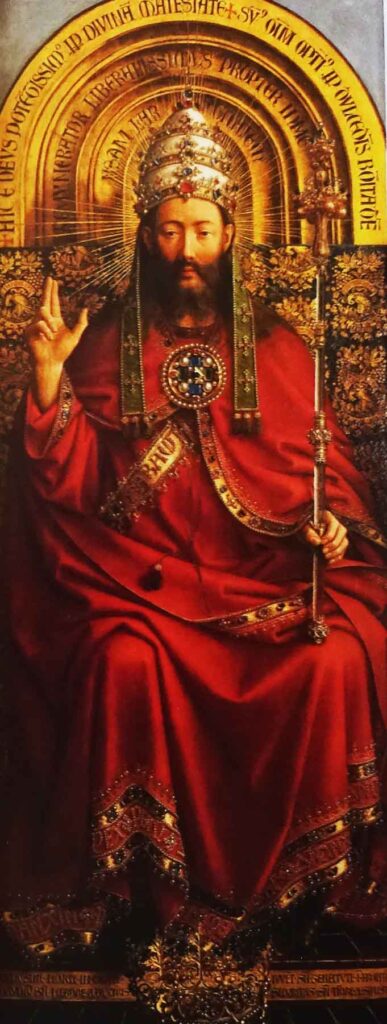
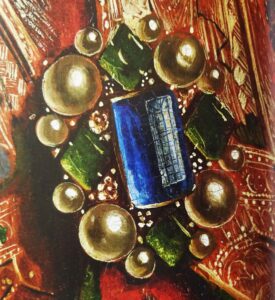
The use of newly discovered colour also is evident in every scene. There is even perspective on the floor on which God’s feet are rested. Was this the influence of the Florentine architect Fillipo Brunelleschi who art historians attribute the invention of perspective in 1415?
The above makes this work unique and gives it its deserved epitaph of a world-famous work of art.
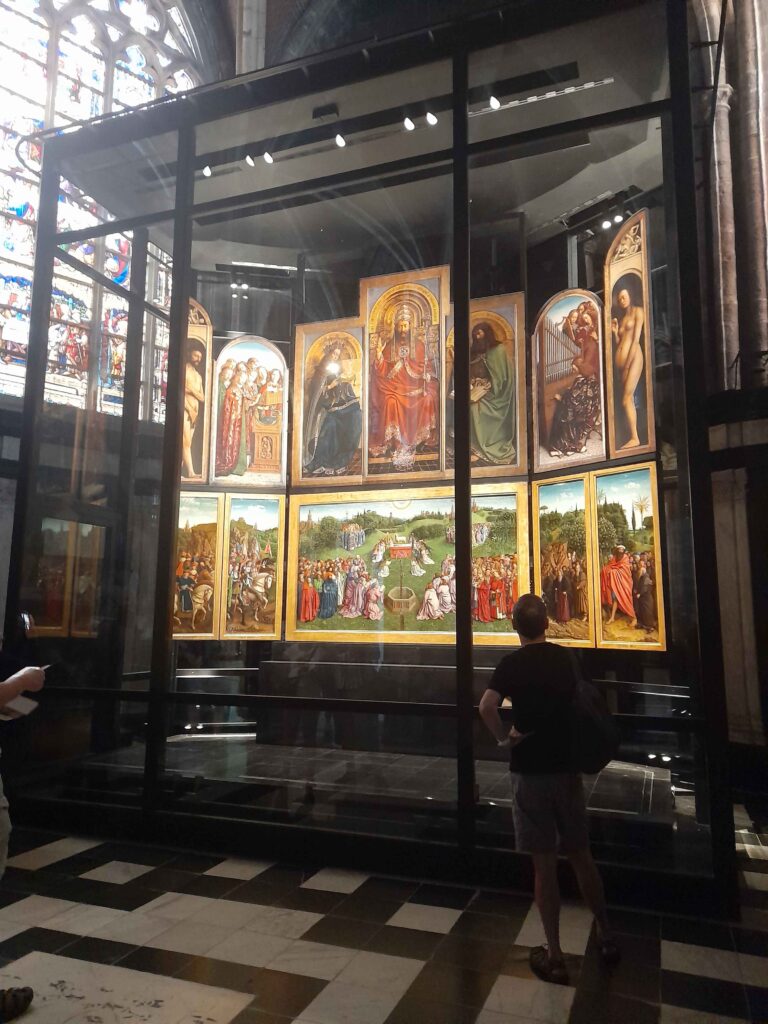
An explanation: The panels from top left clockwork:
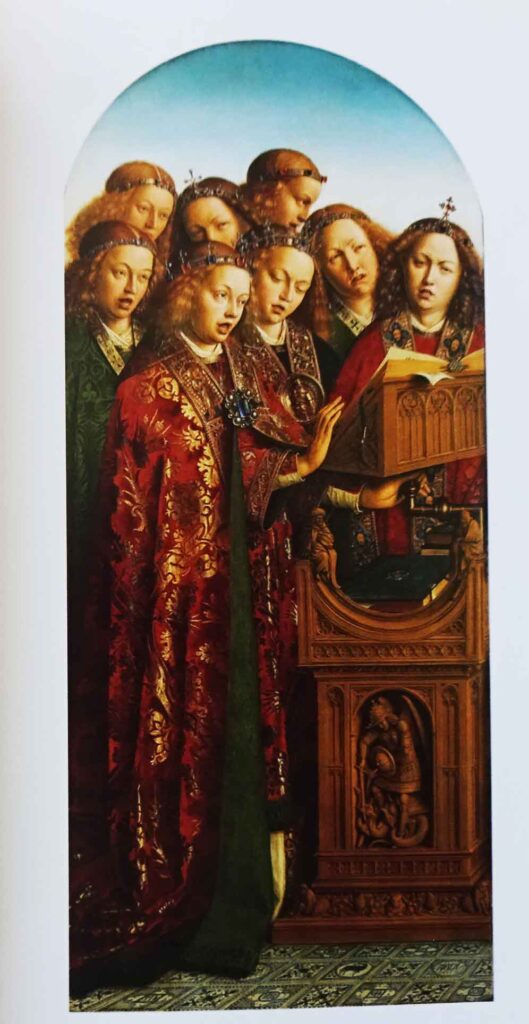
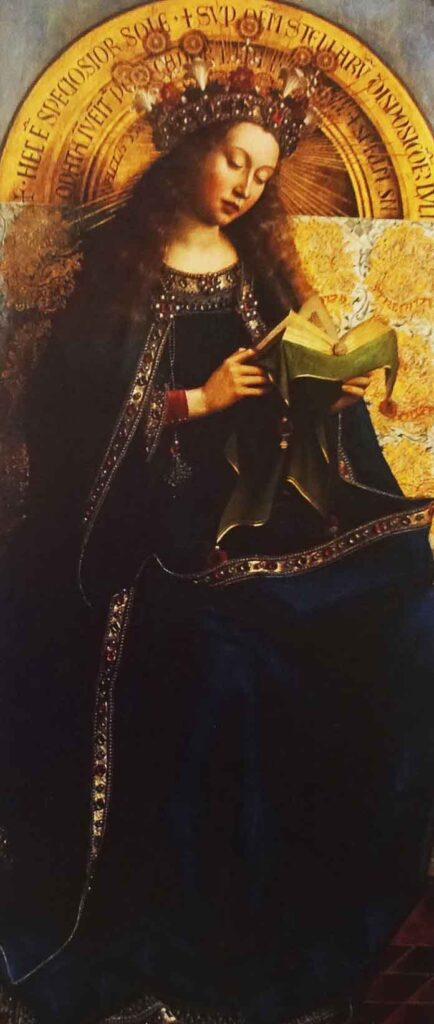
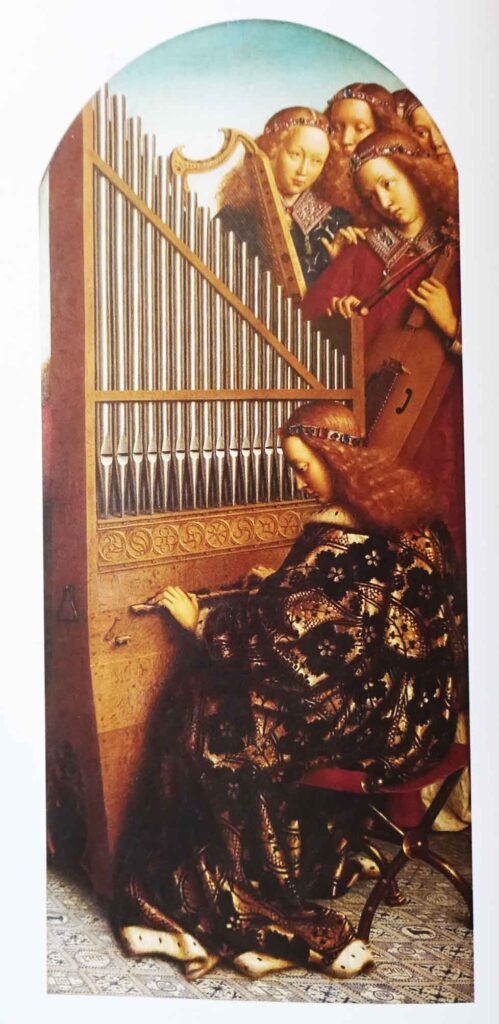
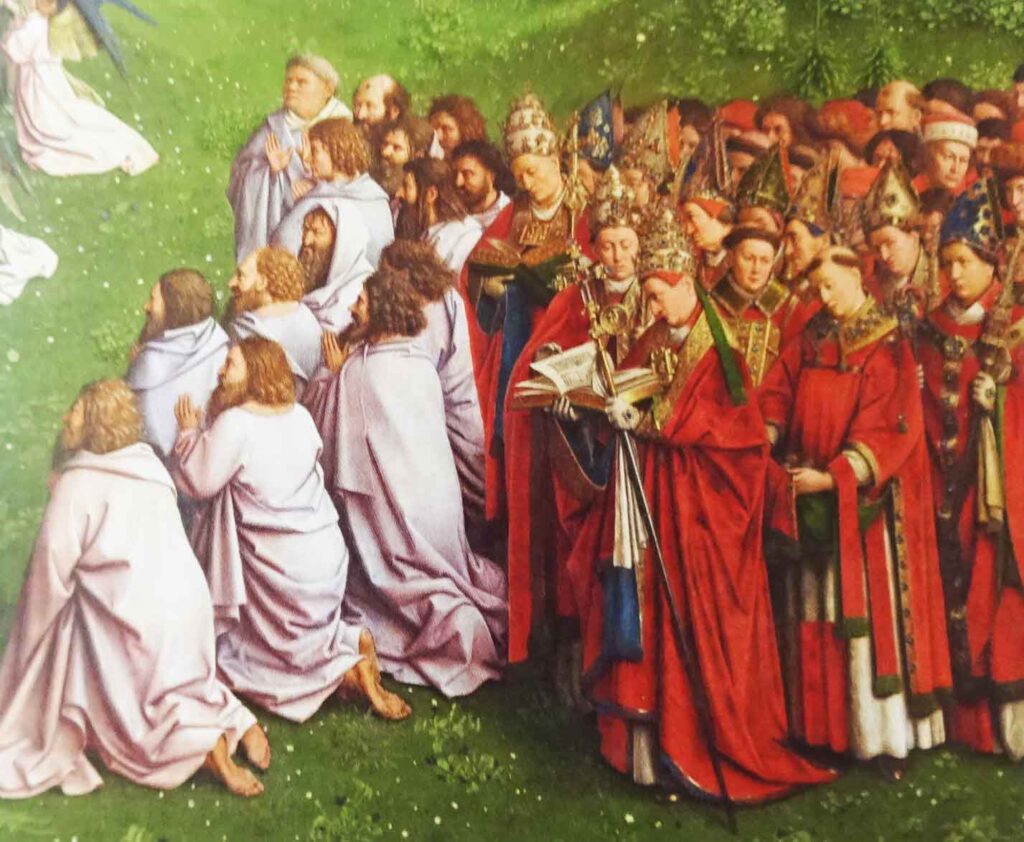
Adam. And with a navel. Angels signing and holding an image of the church. The Madonna. Twelve stars in her crown – the Book of Revelations and four types of Marian symbol flower- lilies (virginity and purity), roses (love, suffering purity) columbines (humility) lily-of – the valley (Song of Songs)

God in his wisdom with his triple crown.
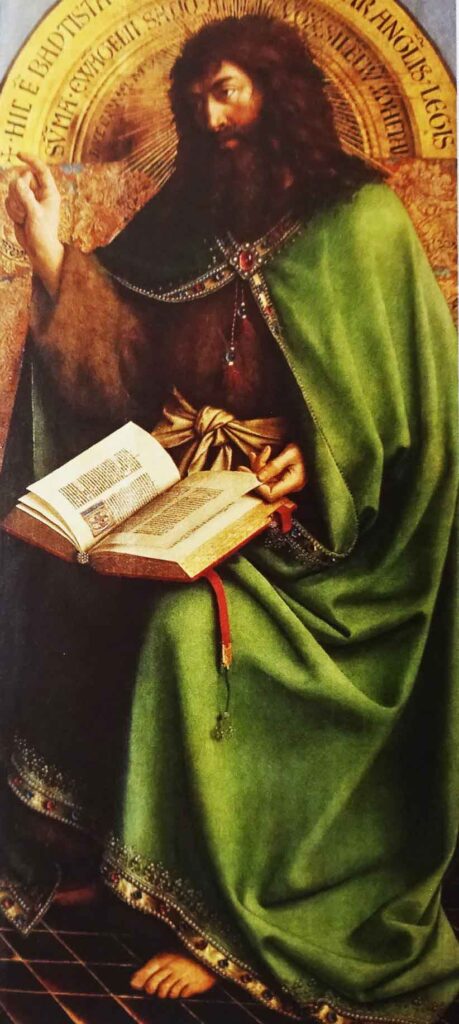
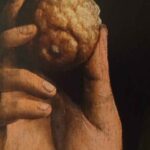
John The Baptist with his camel clothes and resting his finger on Book of Isaiah ‘Consolamini’ (take Comfort) whilst pointing to the Messiah. Angels singing. Eve – not holding an apple but a citrus fruit.

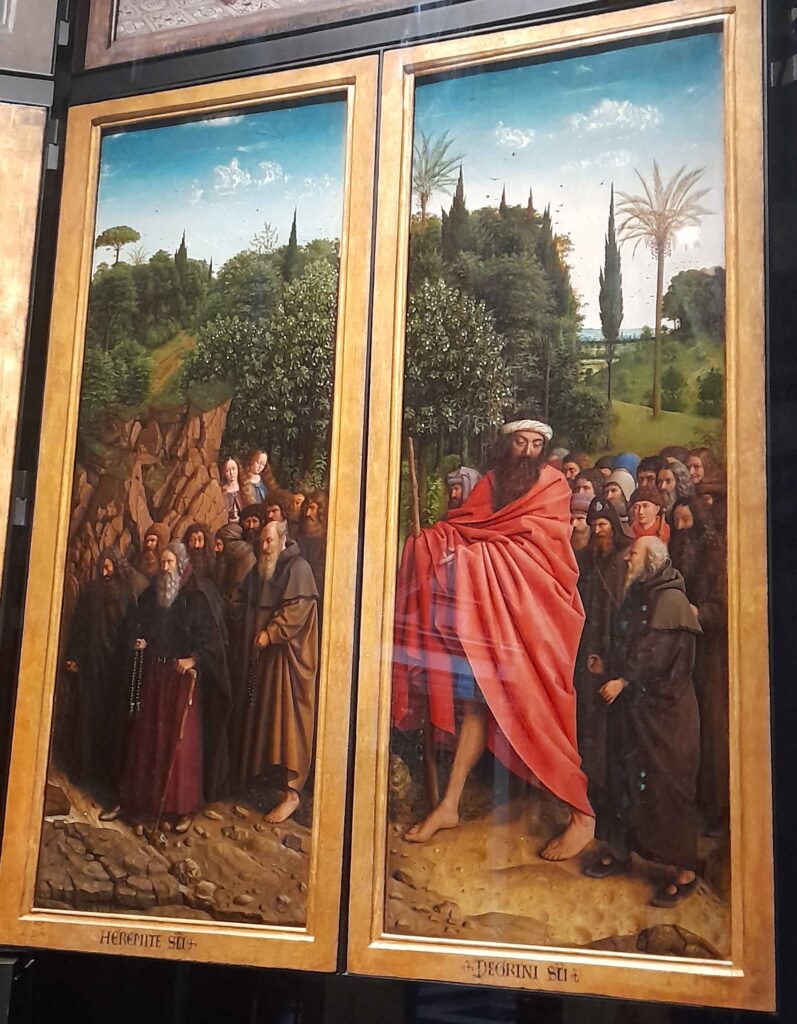
Hermits and Pilgrims (look at the depiction of movement as the pilgrims come from behind the cliff).
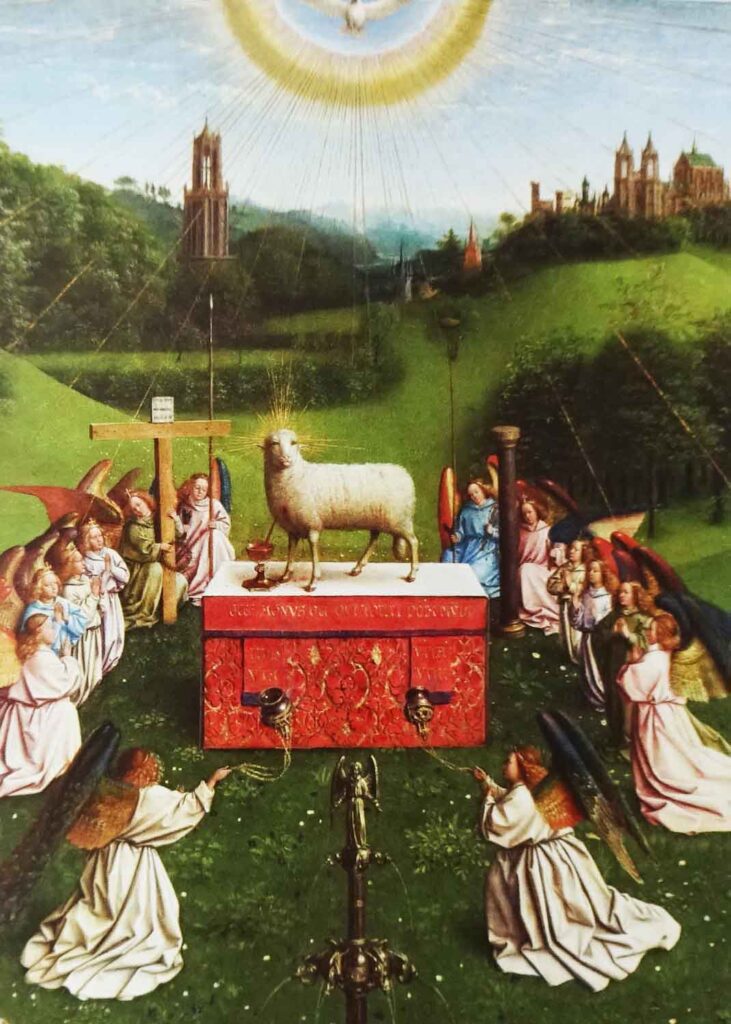
The Adoration of The Lamb of God.
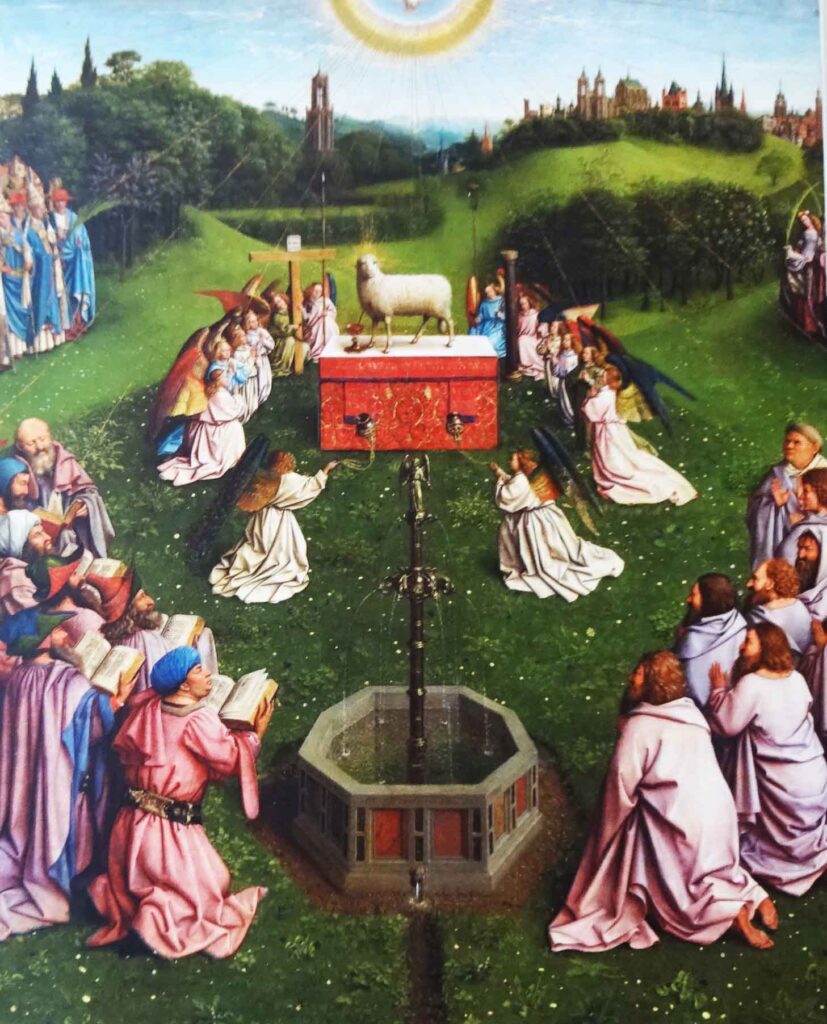
Top centre – the holy spirit.
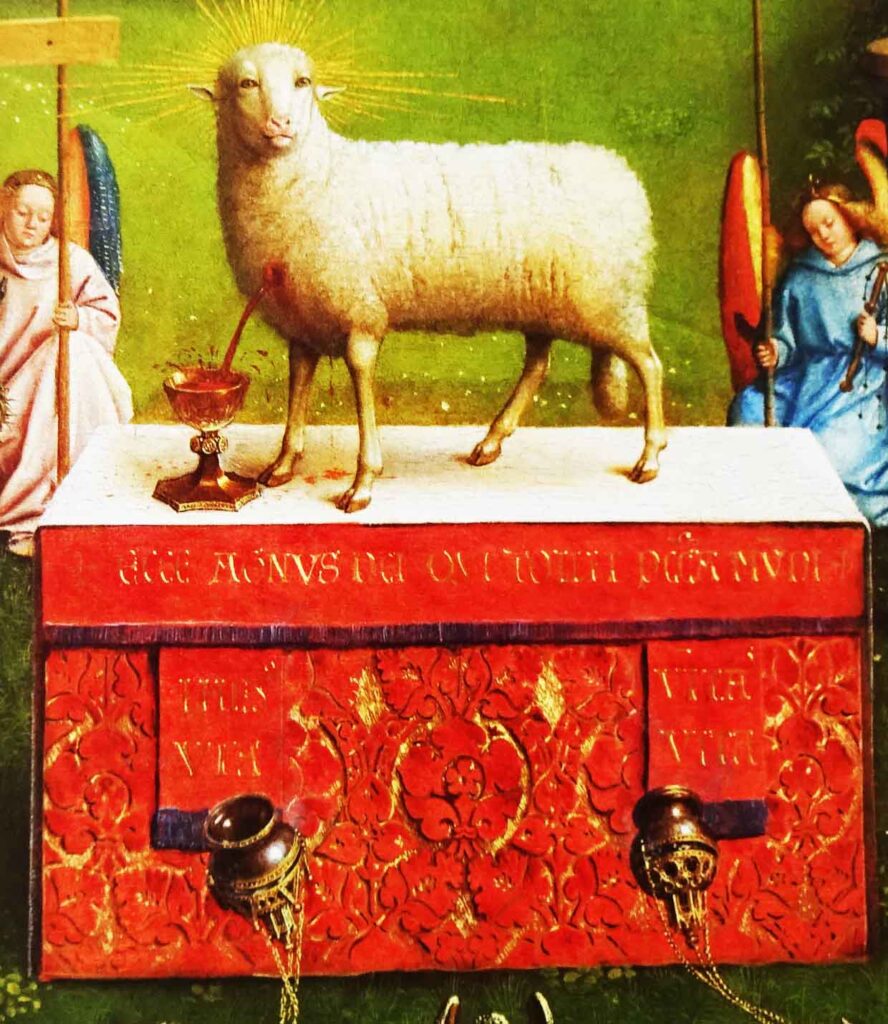
Centre – the Lamb of God. The Son of God. God’s gift to humankind in reparation for being expelled from the Garden of Eden. Jesus Christ in the form of a lamb. The crucifixion wound – blood, Last Supper ‘wine as my blood’, his sacrifice for humanity.
14 angels kneeing. The pillar – symbol of the flagellation. And somewhere here is a daffodil, the symbol of re-birth. Top left – the clergy. Top right – female saints, martyrs and confessors. Recognising the power of the female (van Eycks – early feminists?)
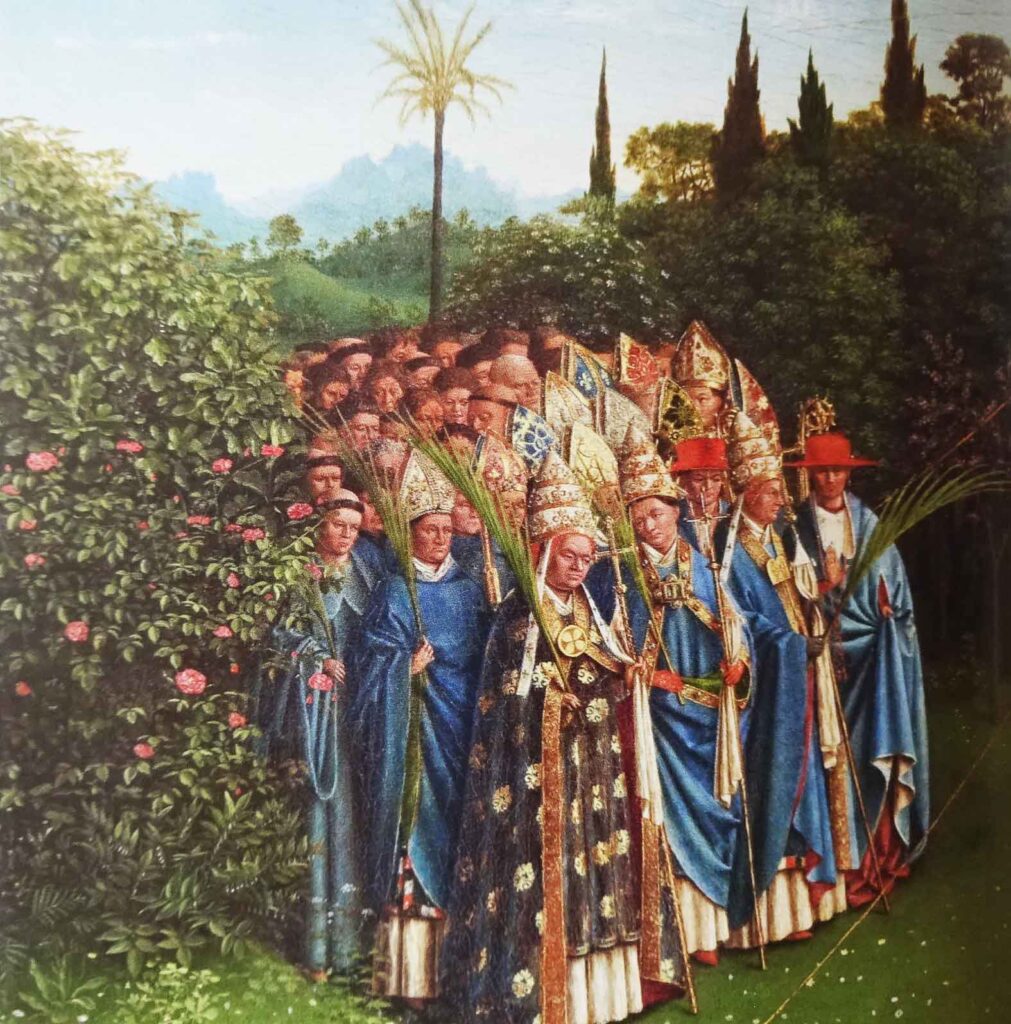
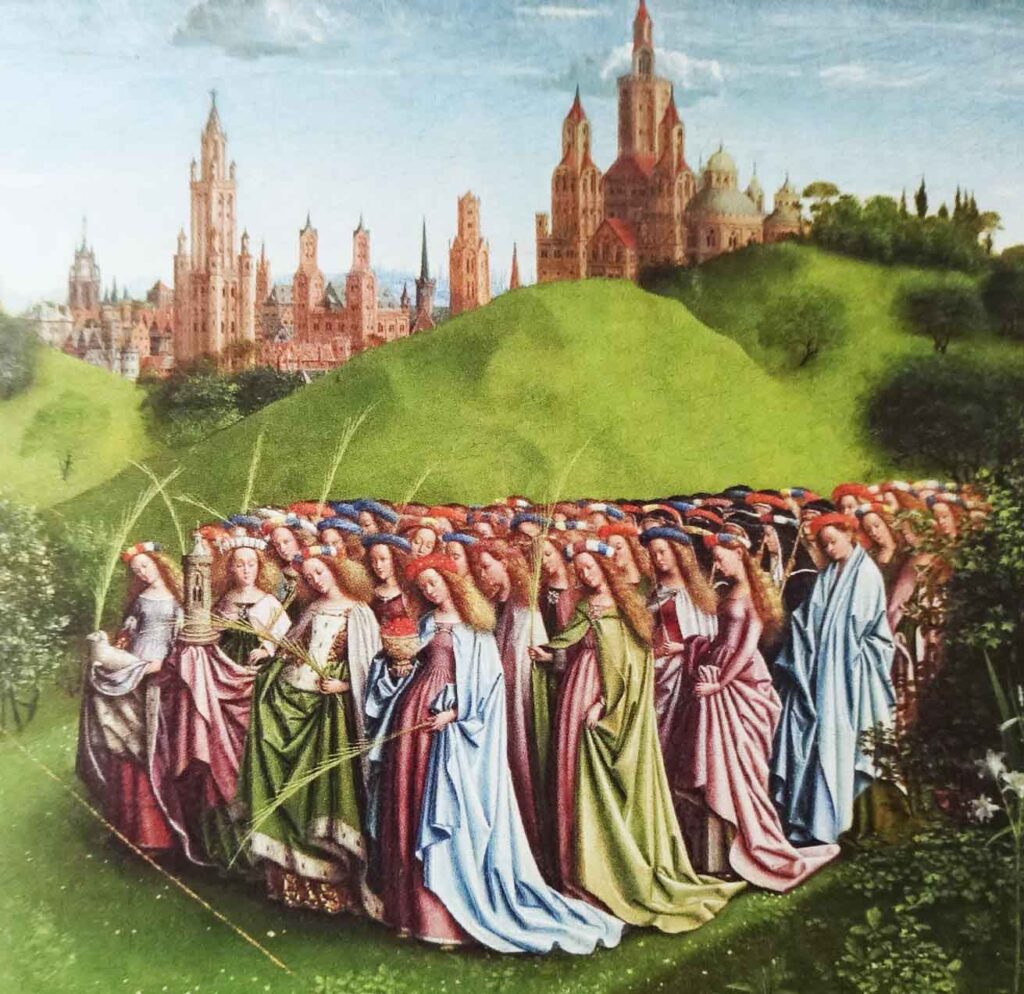
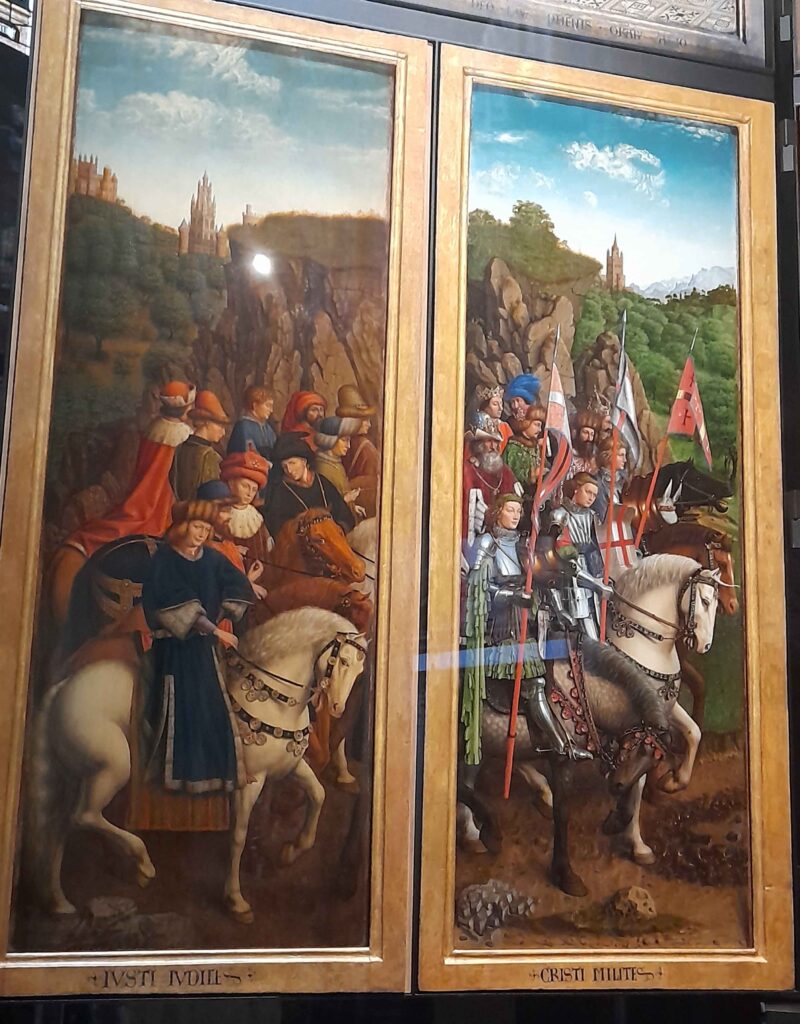
Bottom right – the saints. All in a landscape with apparently 64 different flowers, the cypresses in top left – symbol of everlasting life and Ghent on the horizon on top right. Bottom left – knights and other worthies. (The very bottom left panel is a reconstruction – the original panel being stolen a few years ago and never found).

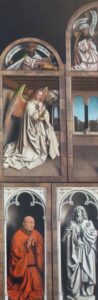
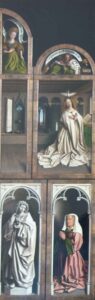
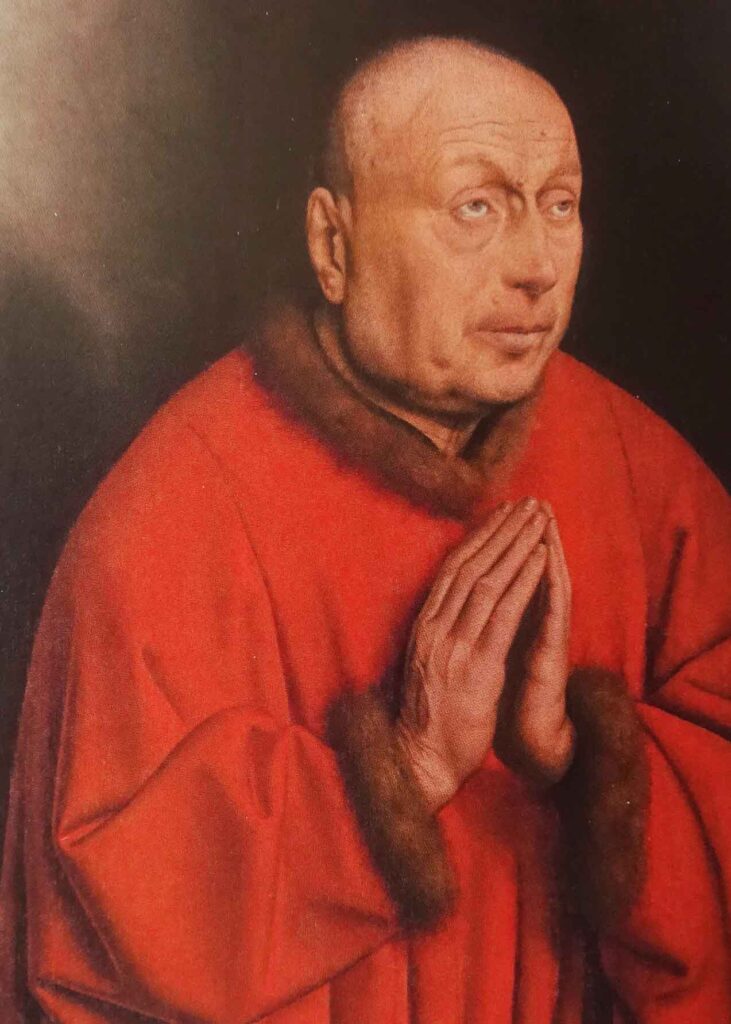
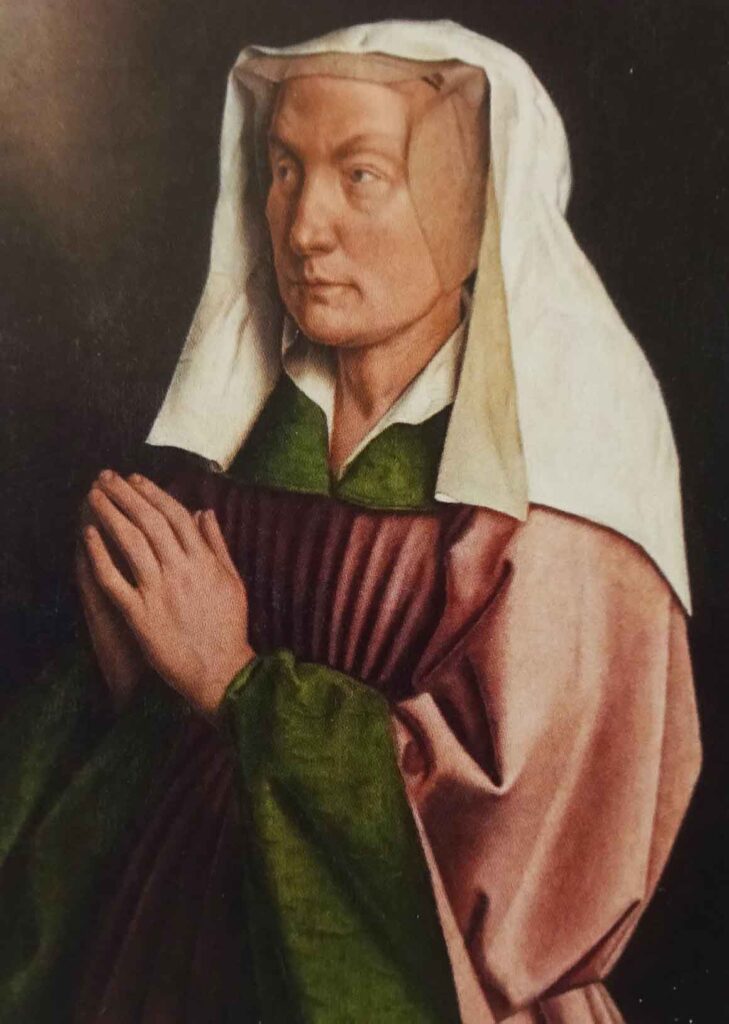
On the back, the front of the closing panels, various saints as statues, angels (Annunciation) and the benefactor Jodocus Vyd and his wife Elizabeth Borluut.
The history: The Altarpiece’s history is a story in itself.
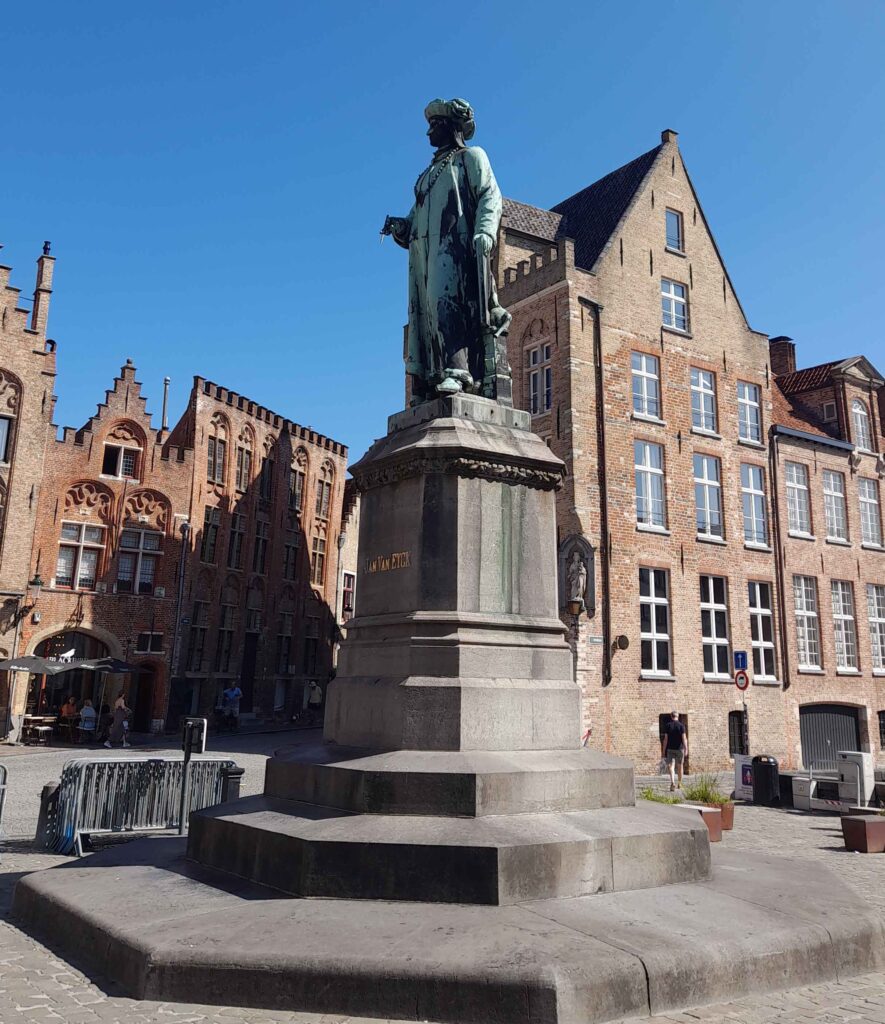
Commissioned by Jodocus and Elizabeth, it was actually Herbert van Eyck who started on the work and was finished by his brother Jan in 1432 when it was installed in the chapel.
It was hidden from destruction by iconoclasts during the religious turmoil of 1566-1578.

During the French Revolution in 1794, whilst occupying Flanders, it was taken to Paris where it remained until the aftermath of Waterloo when a great deal of stolen art work was returned by the victorious forces, primarily the British and Prussians.
However, in 1816 the piece’s wings were sold to the Brussels antiquitarian L.J. Nieuwenthurys for 6000 francs. Resold a year later to an English collector E. Solly for 100,000 francs. In 1821 the wings were sold together with other works to King Friedrich-Wilhelm III of Prussia, remaining in a museum in Berlin until 1918.
Under the terms of the Treaty of Versailles, in 1918 the Germans handed back the wings to be restored to the altarpiece for the sum of 75,000,000 francs as an offset to the reparations imposed on Germany by the Allied powers.
During the above history, the Adam and Eve side panels had been acquired by the state and these too were returned making the altarpiece whole again for the first time since 1794.
In 1934, the side panel depicting the Just Judges was stolen by an unknown thief never to be found again.
1940, with the collapse of France, all the panels were secretly sent to the castle of King Henri VI of France in Pau to save them falling into the hands of the Germans. In 1944 the Vichy government fell under pressure from the occupying Germans and the work was sent to the salt mines at Alt Aussee in Austria (together with (7000 other works). It was destined for Hitler’s planned museum in Linz.
As the Allies neared the mines, all the works in this salt mine were nearly destroyed by the Nazis to prevent them falling into ‘world Jewry’s’ hands.
The Allies were informed of this potential destruction and the works were saved. Dramatically illustrated in the film ‘The Monuments Men’ (with some artistic licence of course). Footsteps of George Clooney Ghent Altarpiece.
After being displayed in Brussels, the Ghent altarpiece was eventually returned to its hometown where it now resides.
The altarpiece was fully restored to its original brilliance between the years 2012-24.
Today: It is now displayed behind security glass and this adds to its power.
And that, for the time being, is the end of this fascinating story of survival. Who knows what the future holds for this amazing piece of world class art.
Footsteps of George Clooney Ghent Altarpiece – that’s what it was all about.

Some key dates in context:
1431 Joan of Arc executed by the English
1433 Chinese Emperor Xuan-zong prohibits any further long distant sea voyages
1433 Hungarian King Sigismund becomes Holy Roman Emperor
1434 Cosimo de’ Medici becomes effective leader of Florence
1434 Jan Van Eyck paints the Arnolfini Wedding
1436 French recapture Paris from the English