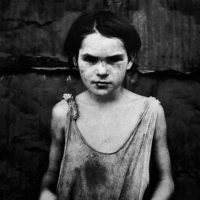
Dorothea Lange – ‘The Radical Eye’

Sir Elton John Photography Collection

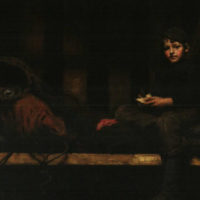
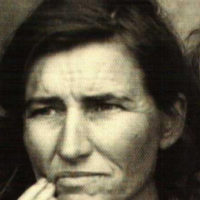
The photographs by Dorothea Lange from the Sir Elton John Collection at the Tate Modern London ‘The Radical Eye’ Dorothea Lange Sir Elton John Tate Modern – an interesting perspective on the joys and plights of migrants With no dialogue to help us we are invited to ponder and mull on the condition, circumstances and disposition of the subjects, the human beings, before us. Here are real live images of destitution, of people in despair, of the subjects not being in collusion (presumably) with the photographer and hence in control of the final picture. In ‘Migrant Mother’ we see what we must accept (or maybe not!) is a photograph of a real person and her family in a dire state. We can ask ourselves: ‘where is the father? has he abandoned them? is he seeking work somewhere? We don’t know … Continue reading Dorothea Lange – ‘The Radical Eye’ →
Sir Elton John Photography Collection

Sir Elton John Photography Collection Tate Modern London ‘The Radical Eye’. Snapshots & Fun to Profound Works Modernist Photography – Snapshots – Sir Elton John Photography Collection Tate Modern Three things that stood out for me when I visited the Sir Elton John Photography Collection Tate Modern: a vast number of the photographs vaunted as profound and meaningful could be simply labelled as ‘snapshots’. They reminded me of the black and white images I took as a child with my box brownie. I passed quickly over these. A little step from this were the fun and games images by such as Man Ray and Herbert Bayer. Art – ?? Technically effective and clever for their time but now very passé. The next category were portraits of celebrities such as Salvador Dali and Spencer Tracey. The poses were good, the lighting spot … Continue reading Sir Elton John Photography Collection →

Robert Rauschenburg at the Tate Modern

Robert Rauschenburg and Retroactive II

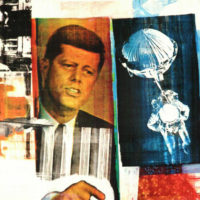
Robert Rauschenburg at the Tate Modern London: What was he trying to achieve? An interpretation Tate Modern London Robert Rauschenburg Exhibition – an understanding of what he was trying to achieve Slap, scrape, gather garbage and stick it on. That’s Tate Modern Robert Rauschenburg Rauschenburg & Detritus – as seen at the Tate Modern Robert Rauschenburg exhibition. Include anything, variety as the key. Detritus, old umbrellas, bike reflectors, bits of fabric and wood as well as furnishing materials. A combination, a ‘Combine’. Whatever seemed to be available, Rauschenburg made use of it for his works to cause controversy and debate. ‘Charlene’ as seen at the Tate Modern Robert Rauschenburg exhibition. Rauschenburg  & Ready Mades ‘A picture is more like the real world when it is made out of the real world’ that is the detritus of modern life. Even through … Continue reading Robert Rauschenburg at the Tate Modern →

Penlee Art Gallery and Museum Penzance Cornwall

Penlee Art Gallery Museum Penlee Art Gallery Museum – Nestling in the dramatic, rolling , fecund countryside alongside the picturesquely daunting life giving and taking sea, is a jewel of the South West of England, Penzance, within which is an absolute gem of an art gallery – Penlee Art Gallery  Museum Small, compact, with a wonderful café and underutilised shop, Penlee House Gallery and Museum contains some absolute riches of the late 19th and early 20th Century Schools of Cornish Art as well as modern masterpieces. The Artists Penlee Art Gallery Museum Of particular note at Penlee: Frank Bramley, Elizabeth and Stanhope Forbes, Henry Scott Tuke, Walter Langley                 and to represent the modern era, Kurt Jackson and Michael Praed. The Pictures Penlee Art Gallery Museum Penlee’s pictures are evocative of the Cornish way of life and for us … Continue reading Penlee Art Gallery and Museum Penzance Cornwall →

Australian Impressionism at the National Gallery London

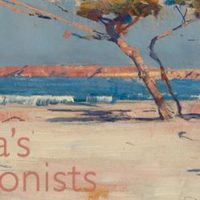
Australian Impressionism at the National Gallery London A real eye opener. Australian Impressionism at the National Gallery London reveals an unsung, virtually unheard of movement that encapsulated the founding of the Nation of Australia. Tom Roberts, Arthur Streeton:             Charles Condor and John Russell:               were remarkable artists working in Australia. Their movement was adopted by the new nation of Australia when it became its own Federation in 1901: defining what it meant to be Australian. A zeitgeist reflecting the period eye of the times. Plein-aire paintings, engaging with the Australian landscape and cityscapes. The 1889 Melbourne Exhibition in Australia – true impressionism far away from the French and British scene. The National Gallery London

‘9 Canvas Study of The Grand Canyon’

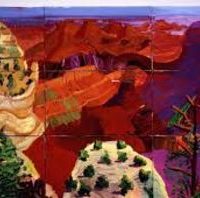
David Hockney ‘9 Canvas Study of The Grand Canyon’ 1998 and ‘The Road Across the Wolds’ 1997. How did he do it? Few photographs can capture the grandeur, awesomeness and sheer drama of the Grand Canyon to compete with David Hockney’s ‘9 Canvas Study of The Grand Canyon’. Few photographs capture the homeliness, intimacy, fecundity and lushness of the rural English countryside than David Hockney’s ‘The Road Across the Wolds’. HOW did he do it? The Grand Canyon: How did he do it? Let’s look at the ‘9 Canvas Study of The Grand Canyon’ first. The first thing that strikes you are the colours, predominantly the reds. Red vibrates, it urges forward towards us. It is the colour of love, drama, blood, life itself and here it reaches out and envelopes us. The scene is not framed – it extends … Continue reading ‘9 Canvas Study of The Grand Canyon’ →

David Hockney Tate Britain

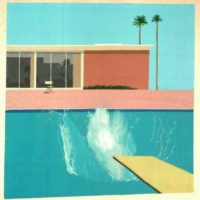
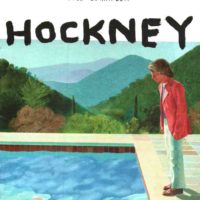
David Hockney Tate Britain ‘A Bigger Splash’ and ‘Peter Climbing Out of Nick’s Pool’ Brief Transient Hedonism David Hockney Tate Britain ‘A Bigger Splash’ and ‘Peter Climbing Out of Nick’s Pool’ When you gaze upon the nubile form of the figure rising from the pool, what you see? What do you feel? What values, attitudes and beliefs of yours rise to the surface with the figure? Transient hedonism all too brief. The 1960s and 70s Los Angeles Gay Californian Lifestyle. Carefree? Socially acceptable? Pre-AIDS. Rejection of social norms? Affluence – the swimming pool, warm and sunny – the blue sky and palm trees. Hedonism. A transient life of our understanding, experience, desire or rejection? Transience and Loss The transience and eventual loss of life and all worldly goods (water does not record our existence, our presence, the splash we make … Continue reading David Hockney Tate Britain →

David Hockney At The Tate Britain London

David Hockney Tate Britain Discover His Repertoire and Enjoy the Entertainment David Hockney at Tate Britain – A show. A great show. David Hockney at Tate Britain is drawing huge crowds – to see and to be seen. Pure entertainment. The thing to do. ‘Can’t miss Hockney although we’ve seen it all before-well most of it anyway’. Entertainment This David Hockney at Tate Britain is a show naturally put on for the viewer, the connoisseur one could say as well as those folk who simply want to be entertained. And indeed we were. David Hockney is a showman. His art is that of an entertainer. He painted for the viewing eye – us at large. The elite, not for the fantastically wealthy but the ordinary man and woman in the street. The David Hockney at Tate Britain exhibition really captivates this … Continue reading David Hockney At The Tate Britain London →

‘Friday feeling’ at the State Russian Museum St Petersburg

A painting by Ilya Repin Barge Haulers on the Volga

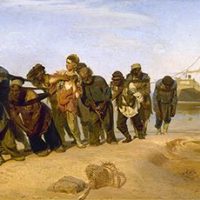
‘Friday feeling’ at the State Russian Museum St Petersburg Ilya Repin’s, Barge-haulers on the Volga, (1870–73). Friday feeling. The name Friday comes from the Old English Frīġedæġ, meaning the “day of Frige“, a result of an old convention associating the Old English goddess Frigg with the Roman goddess Venus, with whom the day is associated in many different cultures. (Source Wikipedia) ‘Friday feeling’ at the State Russian Museum St Petersburg, perhaps epitomised by Ilya Repin’s, Barge-haulers on the Volga, (1870–73). That end of the week Friday feeling The joys of seeing the week’s working life draw to a close and a long weekend to look forward to. That Friday feeling. Perhaps not a real Friday feeling. This work probably more in truth captures the suffering which the poor labouring peasants had to endure under the Tsarist regimes and indeed, did they … Continue reading ‘Friday feeling’ at the State Russian Museum St Petersburg →

Modern Art Making Sense? What does it do for you? Read on …

Modern Art Making Sense? What does it do for you? It was fascinating being interviewed on the radio and to face challenges about Modern art Making Sense Definitions Modern Art is the non-traditional, non- academic art from roughly the 1860s to the 1970s as epitomised by Manet, Monet, Duchamp, Picasso, Pollock and the British St Ives School.           Post Modernism: from the 1970s particularly Performance and Conceptual Art. Wiki for more detailed descriptions. Complex definitions, philosophies, opinions and attitudes persist with incredible seriousness and it has to be said with some, preciousness. What to make of it all? The confused viewer. What can they make of The Turner Prize? Picasso? Surrealism? Emin and Hirst? My response in the radio interview? Allow the piece to work on you, don’t dismiss it too quickly as ‘rubbish – that’s … Continue reading Modern Art Making Sense? What does it do for you? Read on … →