Everyday Aesthetics 9 – The Pencil

The history of pencils dates back thousands of years. It is believed that the earliest known form of a pencil was used by ancient Egyptians and Romans, who used a thin metal or lead rod to make markings on papyrus or wax tablets. Everyday Aesthetics 9 – The Pencil During the 16th century, a significant development was made in pencil manufacturing when a large deposit of graphite was discovered in Borrowdale, England. This graphite was found to be ideal for writing and drawing due to its softness. The graphite was sawn into sticks and wrapped in string or paper for use. However, unlike modern pencils, these sticks of graphite were held together by string or inserted into wooden holders. It was not until the late 18th century that the modern pencil, as we know it today, was developed. In 1795, … Continue reading Everyday Aesthetics 9 – The Pencil →
Everyday Aesthetics 8 – The Spoon

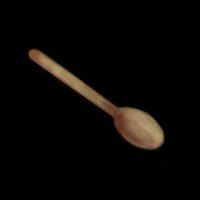
The history of the spoon dates back thousands of years. The earliest known spoons were made from various organic materials such as shells, animal bones, or wood. These early spoons were likely used as tools for cooking and eating. Interesting article in one of the Sunday mags about the equipment soldiers used in the filed from Roman times to the present. The one consistent item was the spoon. For 1000s of years. Where would we be without it? In ancient civilizations such as Egypt, Greece, and Rome, spoons were often made from precious metals like gold or silver, and they were seen as symbols of wealth and status. The handles of these spoons were often embellished with intricate designs and engravings. As time progressed, metalworking techniques improved, and spoons made from iron, bronze, and eventually stainless steel became more common. … Continue reading Everyday Aesthetics 8 – The Spoon →

Everyday Aesthetics 7 The Chain

An everyday essential – the chain. Taken for granted, seen everywhere, shining or rusty, essential component or merely aesthetic. We couldn’t live without it in today’s modern society. Everyday Aesthetics 7 The Chain One absolutely essential use is the chain on my swing. Where would children and indeed adults be without the garden or park swing? So from the garden to Isambard Kingdom Brunel’s shipbuilding chain, let’s look at its history. The history of the chain. Ancient times: metal chains made of iron or bronze were used in ancient civilizations like Egypt, Mesopotamia, and China. They were primarily used for decorative purposes, such as jewellery or adornments. Medieval period: During the Middle Ages, chains became more functional. They were used for various applications, including restraining prisoners, securing gates, and hoisting heavy loads. The blacksmiths of the time played a crucial … Continue reading Everyday Aesthetics 7 The Chain →

Monuments Day Numinous Fascinans

It was Monuments Day at Brockenhurst Village Hall Tuesday 14 November. Monuments Day Numinous Fascinans A lively group of art lovers enjoyed a thought provoking, entertaining talk and film at Brockenhurst. The Ghent Altarpiece by Jan van Eyck and the Bruges Madonna by Michelangelo  We discovered the amazing true story of the Monuments Men, which was centred around the looting of priceless artworks during the Second World War and the race to retrieve them before they disappeared forever. Highlighting the Ghent Altarpiece and the Bruges Madonna, we learned of their history and importance. We explored the term ‘numinous fascinans’ associated with the mysterious spiritual quality of the narrative. Then on to George Clooney, who loved the unlikely tale so much, he invested his own money in directing and starring in the film of the Monuments Men, which we watched. The talk and film documented … Continue reading Monuments Day Numinous Fascinans →

Vincent – How to do it

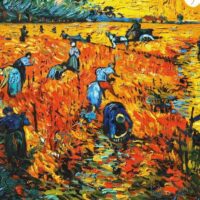
The art workshop – Cafe Vino da Vinci – follows simple rules and approaches and you can take home your own masterpiece. Tint your canvasBefore starting, Van Gogh tinted his canvas, using an underpainting technique, opting to dip into yellow ochres or blues. You’re not faced with a stark white canvas. Tone your canvas with an overall colour that you see in the work. Vincent – How to do it Use a limited paletteBecause oil paints were expensive in those days, Van Gogh used a limited colour palette and used minimal colours to the best of his ability. Study the main colours. Although it might seem tricky to start with, resisting the urge to blend and laying the paint on quickly, is one of the key traits of the Van Gogh style. Use short, strokes with a filbertVan Gogh mostly used a flat, filbert brush, … Continue reading Vincent – How to do it →

Masterpiece to take home

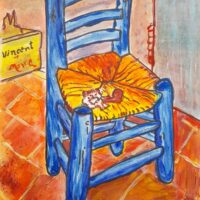
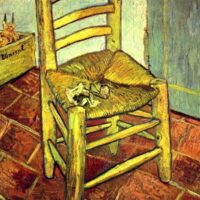
Café Vino da Vinci with a Masterpiece to take home It worked! A good number of people turned up at Brockenhurst Village Hall to create their own version of Vincent van Gogh’s ‘Chair’. After a brief talk on Vincent’s life, his relationship with Paul Gauguin, his move to Arles and of course his style and techniques, artists started on their masterpieces. Some chose freestyle, working completely from scratch whilst others used a grid of the original. A template was also provided as well as an outline sketch of the chair for people to simply colour in with their paints. In the background – ‘French Café’ music and artists’ enjoyment was enhanced with some French wine (or tea and coffee if preferred). Once the basic colouring was completed, the next step was to build up the layers of colour to enrich … Continue reading Masterpiece to take home →

Paint Vincent’s Chair

A new and exciting event at Brockenhurst Village Hall on Tuesday 10 October 2023 6.30 to 8.30. Paint Vincent’s Chair With the aid of templates or a grid or even a sketch to colour in, artists of all skill levels will enjoy taking home their own masterpiece of Vincent Van Gogh’s ‘Chair’. The evening will start with a short illustrated talk about Vincent and his ways of painting and a little history behind the painting of the ‘Chair’. Materials are provided by the village hall and folk can chose which approach they prefer. Suitable art paper, templates and sketches are all available to … Paint Vincent’s Chair To the background of Italian Cafe music, some vino from the bar or even tea and coffee, the evening promises to be highly enjoyable with a little fun and a few laughs even. … Continue reading Paint Vincent’s Chair →

Everyday Aesthetics 6 The Tin Can

The tin canning process was conceived by the Frenchman Philippe de Girard, who had British merchant Peter Durand patent the idea in 1810. Everyday Aesthetics 6 The Tin Can. Where would we be without the tin can? It holds my beer, my baked beans, canned veg and fruit. Apparently like frozen food, the contents are just as fresh (almost) as newly harvested veg and fruit owing to the speedy transfer from fisld to canning. It’s undoubtedly one of the most valuable everyday essential convenience. The canning concept was based on experimental food preservation work in glass containers the year before by the French inventor Nicholas Appert. Durand did not pursue food canning, but, in 1812, sold his patent to two Englishmen, Bryan Donkin and John Hall, who refined the process and product, and set up the world’s first commercial canning factory on Southwark Park Road, London. By 1813 they … Continue reading Everyday Aesthetics 6 The Tin Can →

St Austell Cornwall Portmeirion

St Austell Brewery Visitor Centre holds a fascinating tale. St Austell Cornwall Portmeirion What links Cornish beer, the Spanish Armada, a German artist, pub signs, a grade II listed building, Fowey with Munich and London, not forgetting Wales? Not the impressive beer, not the coffee or delicious food but an intriguing story of a great example of overlooked public art: the pub sign and an amazing set of links. St Austell Brewery rightly prides itself on its pubs’ signage, the artwork enticing patrons to come on in and enjoy. So with that in mind it is amazing what tales you can find opening up sitting quietly in a corner of such an outfit. What caught my attention was the name of Hans Feibusch and the Ship Inn Fowey Cornwall. The ‘Old Lady of Fowey’ according to English Heritage was built … Continue reading St Austell Cornwall Portmeirion →

Everyday Aesthetics 4 The Match

Everyday Aesthetics 4 The Match The match used to be an essential means of lighting a fire, cooker, smoking articles, candles and other items. Without a match a flintlock or other ignition tool was required. A utensil for lighting campimg stoves is still often preferred to the match which can of course become damp in wet weather. Where did the match come from? Once again, possibly China. A note in the text Cho Keng Lu, written in 1366, describes a sulfur match, small sticks of pinewood impregnated with sulfur, used in China by “impoverished court ladies” in AD 577 during the conquest of Northern Qi. During the Five Dynasties and Ten Kingdoms (AD 907–960), a book called the Records of the Unworldly and the Strange written by Chinese author Tao Gu in about 950 stated: If there occurs an emergency at night it may take some time to make … Continue reading Everyday Aesthetics 4 The Match →