
The subject of Brockenhurst Village Hall’s October Sip and Paint (Thursday October 2nd) will be two works by Paul Cézanne: a still life and one of his Mont Victoire landscapes. Paul Cézanne Post Impressionism.
The subject of Winchester ARC’s 7th November Sip and Paint will be two works by Paul Cézanne: a still life and one of his Mont Victoire landscapes. Paul Cézanne Post Impressionism.


At the end of the 19th Century a decisive game changer was dropped by artist Paul Cézanne in France. One of Cézanne’s techniques was to acknowledge that we enjoy a binocular vision that is seeing with two eyes rather than a monocular view, thereby giving deeper dimensions to how we see things from different viewpoints. This distorts the tradition of linear perspective singular vanishing points.
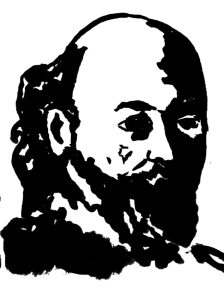
Consequently because of this and further crucial changes that he made, Cézanne has subsequently been placed alongside Manet as being another father of modern art.
“I’ve taken the impressionistic transient approach and mixed it with the solidity of the actual scene: the landscape and still life. And I’m not merely copying what I see with two eyes but attempting to represent the sensations I feel”
Breaking conventional rules of perspective, rapid and small brush strokes, emphasising plains of colour, blended the fluidity and light concentration of the Impressionists with the solidity of the object and the landscape and buildings and plants, Cézanne took centre stage in yet another evolutionary step forward.
Source – Wikipedia: Paul Cézanne (19 January 1839 – 22 October 1906) was a French Post-Impressionist painter whose work introduced new modes of representation, influenced avant-garde artistic movements of the early 20th century and formed the bridge between late 19th-century Impressionism and early 20th-century Cubism.
While his early works were influenced by Romanticism—such as the murals in the Jas de Bouffan country house—and Realism, Cézanne arrived at a new pictorial language through intense examination of Impressionist forms of expression. He altered conventional approaches to perspective and broke established rules of academic art by emphasizing the underlying structure of objects in a composition and the formal qualities of art. Cézanne strived for a renewal of traditional design methods on the basis of the impressionistic colour space and colour modulation principles.
Cézanne’s often repetitive, exploratory brushstrokes are highly characteristic and clearly recognizable. He used planes of colour and small brushstrokes that build up to form complex fields. The paintings convey Cézanne’s intense study of his subjects.
His painting initially provoked incomprehension and ridicule in contemporary art criticism. Until the late 1890s it was mainly fellow artists such as Camille Pissarro and the art dealer and gallery owner Ambroise Vollard who discovered Cézanne’s work and were among the first to buy his paintings. In 1895, Vollard opened the first solo exhibition in his Paris gallery, which led to a broader examination of Cézanne’s work. Both Henri Matisse and Pablo Picasso are said to have remarked that Cézanne “is the father of us all”.