
This work was commissioned by an American buyer Thomas Gold Appleton, but was never collected. It is presently in the Musée d’Orsay, Paris.
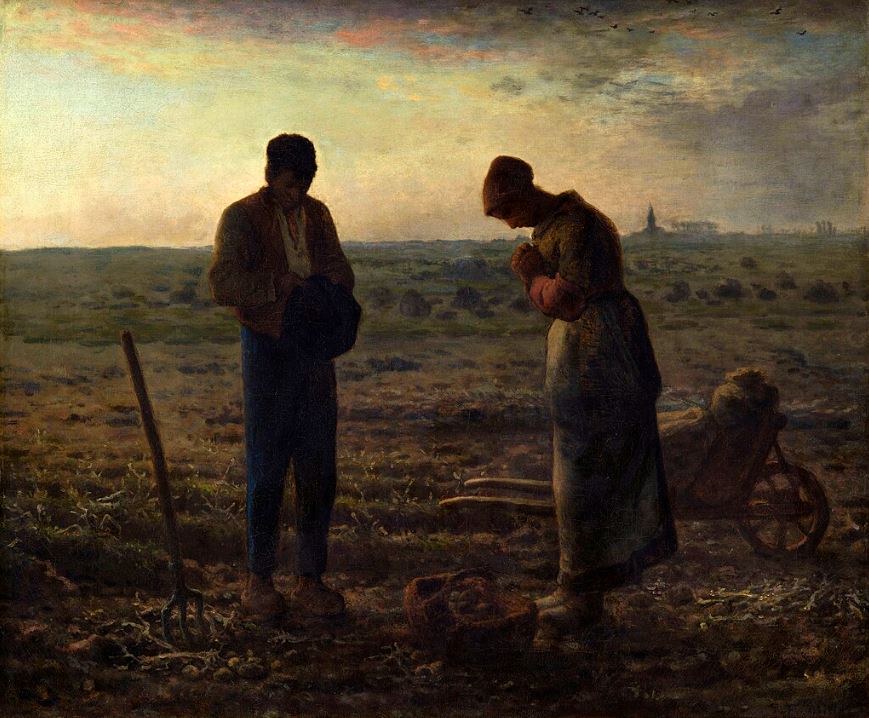
This elemental work depicts two peasants, presumably man and wife, pausing at their work, bowing their heads in prayer, the Angelus. They are standing in a field of potatoes, and you can see their collecting sacks in the barrow behind the woman. In the background you can identify the village and the church where the bell is tolling indicating the time for the Angelus prayer.
The painting is heavily structured with the horizontal background and the vertical figures, both dominating the composition. Note that the picture is divided into three, the sky being one third and ground two thirds. This brings the viewer into the frame almost as standing directly in front of the pair. Millet has drawn you into the scene. A single diagonal highlights the important presence of the prong, a working person’s essential tool for survival, and the barrow is shown almost as a support for the female to lean on.
It is sunset as shown by the redness of the sky, the time for the Angelus. The sun has actually set as Millet has chosen his pallet by using soft muted, natural colours. Dusk, soon to be dark. Is it the end of a warm day or is it cool? The viewer’s choice.
This work was painted shortly before the invention of impressionism with its broad rapid brushstrokes. Millet has chosen to paint a representational work, not an impression although he has avoided the strict Salon artificial perfectionism. He probably used a variety of brushes but without actually standing in front of the work, it is difficult to tell.
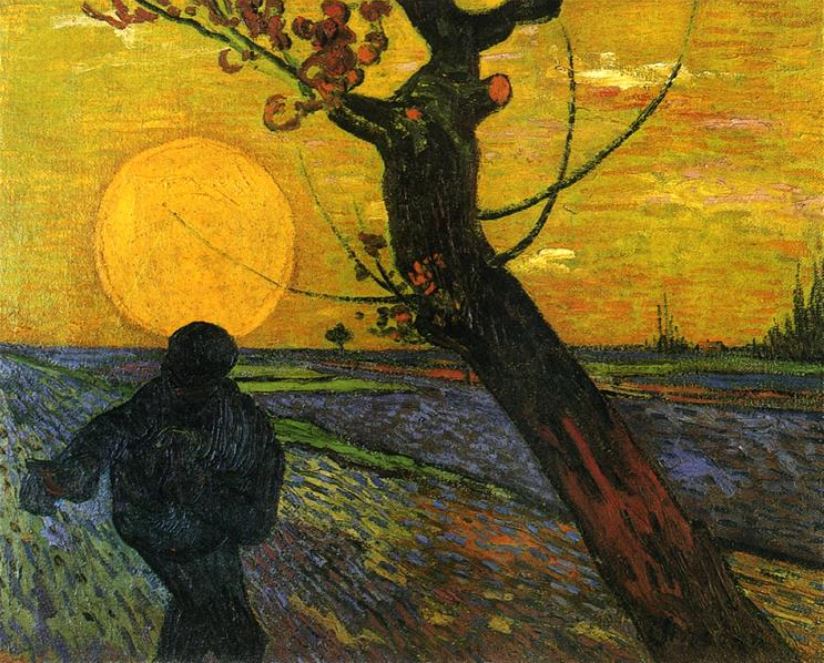
The theme is obviously the rural peasant working class, labouring hard to maintain their existence. This was a familiar theme for Millet and the French realism so familiar at the time with other artists such as Gustav Corbet following a similar theme. It influenced artists such as Camille Pissarro (who apparently wept when in front of l’Angelus) who combined ordinary folk realism with impressionism and it may certainly have influenced artists such as Vincent van Gogh and his depictions of rural working class with his early works and notably his series of ‘The Sower’.
At the time three-quarters of French people worked in rural activities and many feel French people still identify strongly with their past rural peasant ancestors.
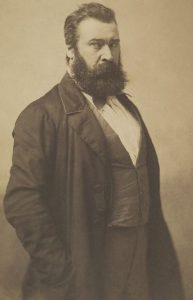
Jean-François Millet was one of France’s great social empathisers. Frowned upon by the bourgeoisie at the time but soon became recognised for the contribution he made to art, French culture and the identification of those for whom we depend upon for our own well being and survival. The forgotten peasant classes.
Stand and stare. Think of the work’s construction and above all the story it is telling for us in the comfort of our galleries and homes.