
Claude Monet Waterlilies – the next Sip and Paint extravaganza at the Winchester ARC. This Friday, 1st November 2024
Claude Monet. b. 1840 Paris d. 1926
One of the founders of Impressionism. Failed to get his works hung at Salon, exhibited at Salon des Refuses in 1874. One of his earlies famous works is ‘Impression Sunrise’ painted in 1872.
Writing in satirical mag in Paris, journalist Louis Leroy satirically labelled Monet’s works mere impressions. That was the start of it all.
Before that – simply representations. Later on we now have all sorts of different approaches.
Monet at Giverny
Claude Monet noticed the village of Giverny while looking out of a train window. He made up his mind to move there and rented a house and the area surrounding it. In 1890 he had enough money to buy the house and land outright and set out to create the magnificent gardens he wanted to paint.
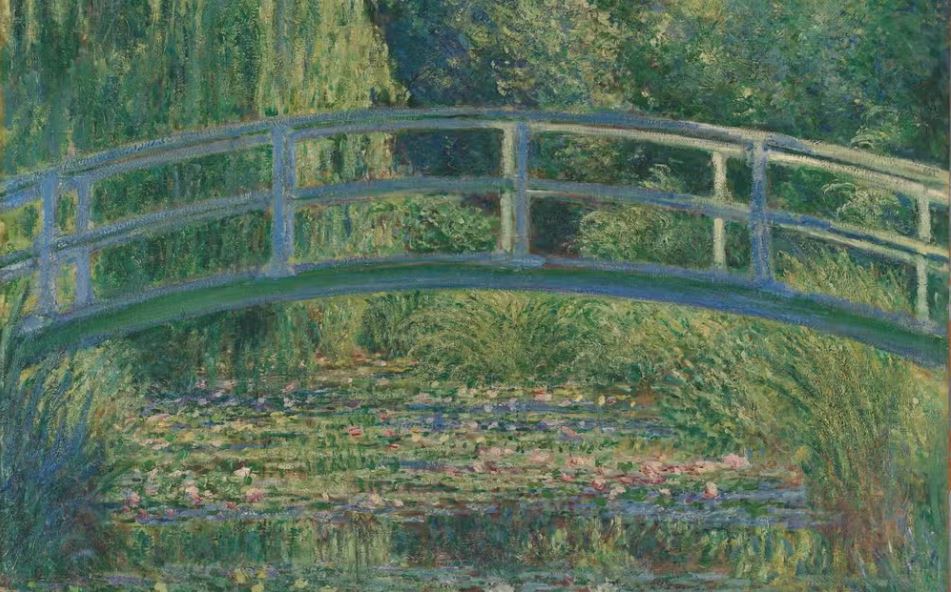
Some of his most famous paintings were of his garden in Giverny, famous for its rectangular Clos Normand, with archways of climbing plants entwined around colored shrubs, and the water garden, formed by a tributary to the Epte, with the Japanese bridge, the pond with the waterlilies, the wisterias and the azaleas.
Claude Monet’s “Water Lilies” is a series of 250 paintings that depict Monet’s flower garden at Giverny, France. This series is one of his most famous works and exemplifies his pioneering role in the Impressionist movement. The paintings capture the beauty of the water lilies, pond, and surrounding scenery, showcasing his use of light, colour, and brushstroke techniques.
Monet’s style in these works emphasizes the effects of natural light and atmosphere, often painted plein air (outdoors) to capture the shifting qualities of the landscape. The series includes variations of composition, time of day, and seasonal changes, reflecting Monet’s deep engagement with the subject over different periods.
The “Water Lilies” series culminated in several large-scale artworks, which Monet intended to be displayed in a dedicated oval room at the Orangerie in Paris. In these paintings, he experimented with abstraction and perspective, moving away from traditional representational art and paving the way for modern art movements.
Claude Monet Waterlilies