David Hockney At The Tate Britain London

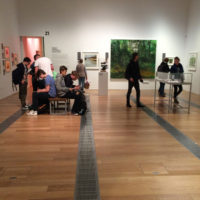
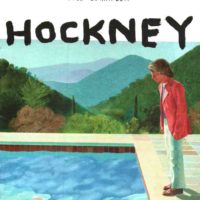
David Hockney Tate Britain Discover His Repertoire and Enjoy the Entertainment David Hockney at Tate Britain – A show. A great show. David Hockney at Tate Britain is drawing huge crowds – to see and to be seen. Pure entertainment. The thing to do. ‘Can’t miss Hockney although we’ve seen it all before-well most of it anyway’. Entertainment This David Hockney at Tate Britain is a show naturally put on for the viewer, the connoisseur one could say as well as those folk who simply want to be entertained. And indeed we were. David Hockney is a showman. His art is that of an entertainer. He painted for the viewing eye – us at large. The elite, not for the fantastically wealthy but the ordinary man and woman in the street. The David Hockney at Tate Britain exhibition really captivates this … Continue reading David Hockney At The Tate Britain London →
‘Friday feeling’ at the State Russian Museum St Petersburg

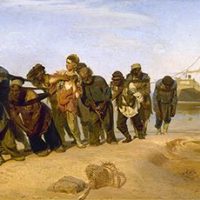
A painting by Ilya Repin Barge Haulers on the Volga

‘Friday feeling’ at the State Russian Museum St Petersburg Ilya Repin’s, Barge-haulers on the Volga, (1870–73). Friday feeling. The name Friday comes from the Old English Frīġedæġ, meaning the “day of Frige“, a result of an old convention associating the Old English goddess Frigg with the Roman goddess Venus, with whom the day is associated in many different cultures. (Source Wikipedia) ‘Friday feeling’ at the State Russian Museum St Petersburg, perhaps epitomised by Ilya Repin’s, Barge-haulers on the Volga, (1870–73). That end of the week Friday feeling The joys of seeing the week’s working life draw to a close and a long weekend to look forward to. That Friday feeling. Perhaps not a real Friday feeling. This work probably more in truth captures the suffering which the poor labouring peasants had to endure under the Tsarist regimes and indeed, did they … Continue reading ‘Friday feeling’ at the State Russian Museum St Petersburg →

Modern Art Making Sense? What does it do for you? Read on …

Modern Art Making Sense? What does it do for you? It was fascinating being interviewed on the radio and to face challenges about Modern art Making Sense Definitions Modern Art is the non-traditional, non- academic art from roughly the 1860s to the 1970s as epitomised by Manet, Monet, Duchamp, Picasso, Pollock and the British St Ives School.           Post Modernism: from the 1970s particularly Performance and Conceptual Art. Wiki for more detailed descriptions. Complex definitions, philosophies, opinions and attitudes persist with incredible seriousness and it has to be said with some, preciousness. What to make of it all? The confused viewer. What can they make of The Turner Prize? Picasso? Surrealism? Emin and Hirst? My response in the radio interview? Allow the piece to work on you, don’t dismiss it too quickly as ‘rubbish – that’s … Continue reading Modern Art Making Sense? What does it do for you? Read on … →

Emma Hamilton: Seductress or Victim of Sex Trafficking?

Emma Hamilton – some facts about her life and sex trafficking When you look into the alluring eyes and the pursing lips of Emma Hamilton, what do you imagine? A come hither? A seductress? Or do we have the face of a young innocent, of vulnerability, of sexual exploitation? Emma Hamilton left her widowed mother in Cheshire for the golden streets of London at age 12. Or was she sold? A spell as a theatre dresser then records disappear to resurface when she becomes the 15-year-old mistress of Sir Harry Fetherstonhaugh and the model of George Romney. At one of Fetherstonhaugh’s debaucheries at Uppark in Sussex, where she was known to dance nude, Emma became the mistress of Charles Greville. Greville soon after married a rich woman and so had to give up Emma ‘services’ to his uncle Sir William … Continue reading Emma Hamilton: Seductress or Victim of Sex Trafficking? →

Who is this fellow? What a Hero. Foundling Museum London

The Foundling Hospital was established by Captain Thomas Coram, (painted here by William Hogarth in 1740). Many other artists have contributed to the museum over years: Thomas Gainsborough, Joshua Reynolds and in more recent times, Grayson Perry. Coram, a retired mariner, was appalled at the state of street urchins, destitute families and orphans and lobbied the rich and the authorities to establish a care home for them.  (Thomas Coram)           (Captain Thomas Coram, Founder of Foundling Hospital by William Hogarth 1740)   Of poignancy is the display of remembrance tokens left by mothers with their child at the hospital. These were for the child to remember their mother by and as an identification for the mother to collect her child back should her circumstances improve. 100s of such tokens can still be seen at the museum. (Foundling Museum) A … Continue reading Who is this fellow? What a Hero. Foundling Museum London →

Queen’s House Greenwich

Queen’s House Greenwich This portrait of Captain James Cook was painted in 1776 by Nathanial Dance and hangs in the newly refurbished Queen’s House at Greenwich London. Queen’s House Greenwich A new world was being discovered by Europeans whilst across the pond the old colonies were in revolt. A momentous year. Looking at such a portrait of somebody so eminent in history, what emotions do you feel? Excitement at an age of exploration? Sadness at an age for the indigenous peoples passing away and a future of harshness and domination by outsiders? What of Cook himself? Do you feel admiration at his achievements and self-progression from humble beginnings or an opportunist? Whatever your views, it is good to look at historical portraits, perhaps particularly those of aristocrats and be challenged, to ask questions of yourself and examine your values and … Continue reading Queen’s House Greenwich →

Paul Nash at Tate Britain – The Spiritual Power of Place

Prepare well for the Paul Nash exhibition to  if you wish to indulge in a mood of the spiritual. Paul Nash’s style evolved over his lifetime from his own interpretation of dream-like landscapes, through Cubism, Vorticism, Geometrics and Surrealism to return to symbolic landscape. The power of Nash’s work resides in his capturing of the spirit of the place and the object to the extent that gallery visitors feel almost a sense of Jungian unconscious collectiveness if they allow themselves to be embraced by Nash’s power of perception. Nash was an official war artist for both World Wars and we can vividly experience his interpretation of the harsh realities of the front line, the war in the air and the destruction to both man and environment. ‘Sunset and sunrise are blasphemous mockeries to man’. Nevertheless, he seeks the destruction’s redemption for … Continue reading Paul Nash at Tate Britain – The Spiritual Power of Place →

American Abstract Expressionism

American Abstract Expressionism at the Royal Academy. Liberation Wow – a show worth seeing. For the first time in a generation a super collection of the masters of American Abstract Expressionism brought together under one roof. Upon first entering the galleries I was struck by the quietness. Looking around, most people seemed to be using head-phones, concentrating carefully on the explanations, trying to and all being well succeeding in gaining an understanding of what this significant movement in art was all about. On display are works by many artists but in particular of course Jackson Pollock, Mark Rothko, Clyfford Still, Willem de Kooning and Barnett Newman. So, we are treated to a display of the turning point in American Art, when the USA grew up and could take on the established art world of Europe and Russia. Influenced by German … Continue reading American Abstract Expressionism →

Caravaggio – how did he do it?

Michelangelo Merisi da Caravaggio simply known as Caravaggio was a bit of a lad and rascal who painted in Rome, Naples and Sicily in the late 16th and early 17th Centuries. If you’ve heard the name, you’ll know the paintings or at least his style: emotional, dramatic and heavy with shadow and exquisite lighting. There’s an interesting exhibition on now at the London National Gallery: ‘Beyond Caravaggio’. Here we have a few examples of his brilliance and many samples of paintings from those who chose to follow his example. Some good but most mediocre. Caravaggio’s works stand out far and above the crowd. So how did he do it? Look at his 1602 ‘The Taking of Christ‘. What are first things you notice? Probably the scene itself and the style and form in terms of drama and lighting. Taking the … Continue reading Caravaggio – how did he do it? →

Kurt Jackson: Revisiting Turner’s Tourism

Kurt Jackson: Revisiting Turner’s Tourism. Exeter Royal Albert Museum It was a special trip to Exeter to see this free and wonderful exhibition. The contemporary Cornish artist Kurt Jackson had visited 12 locations in Devon and Cornwall as depicted by JMW Turner. His intention was not to ‘re-do’ Turner but to simply reflect the changes from the early 19th Century to today, in his own style. Wandering through the exhibition one was presented with Jackson’s works alongside the drawings and etchings of Turner, from Boscastle Harbour to Land’s End, through Falmouth, Exeter and the source of the Tamar. Apart from the obvious features reflecting modern industrialisation, tourism and quote ‘sweetie papers’ and ‘loud radio sounds’, by looking into styles and techniques a greater meaningful depth is presented to the viewer. JMW Turner dialectically reacted to the Enlightenment movement to depict … Continue reading Kurt Jackson: Revisiting Turner’s Tourism →