
This is an exhibition worth visiting. Ukrainian Art at Royal Academy.
The exhibition features a number of works of early 20t Century artists working in Ukraine before it became swept up and almost lost as a country within the Soviet Union.
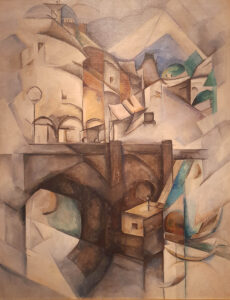
Artists looked to western Europe, particularly Paris for their influences and the Kyiv Art Academy became a leading European institution.
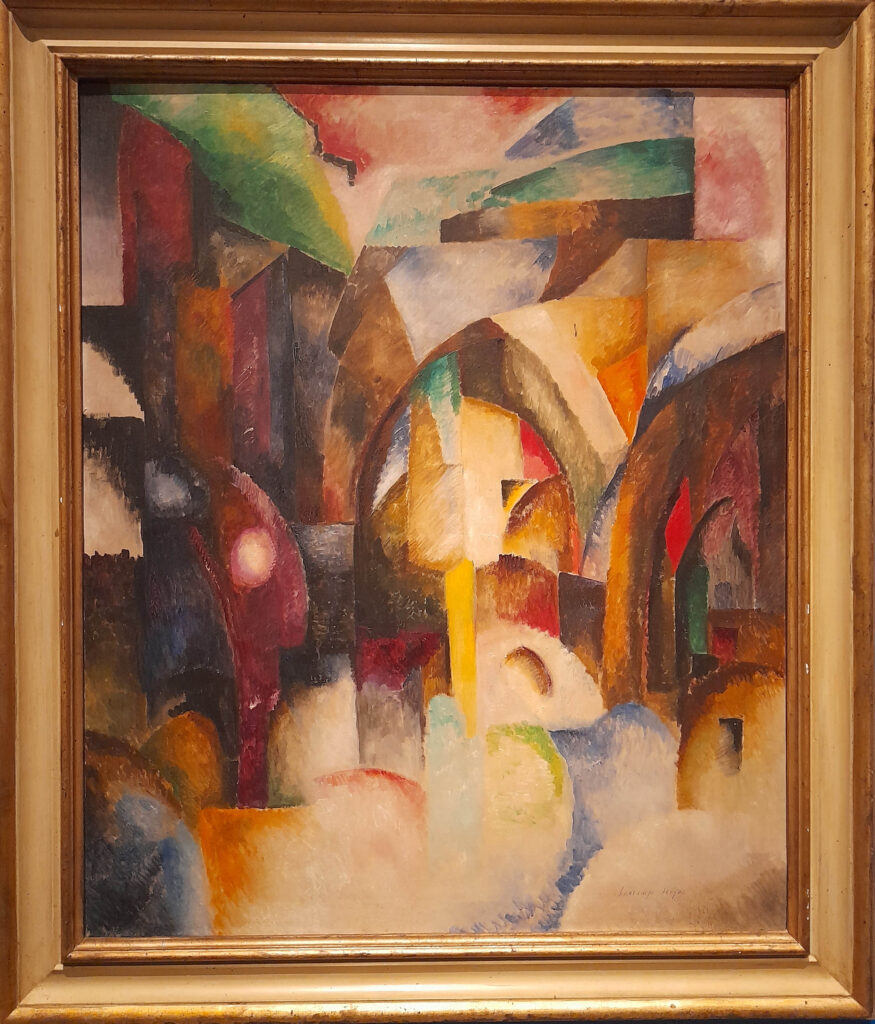
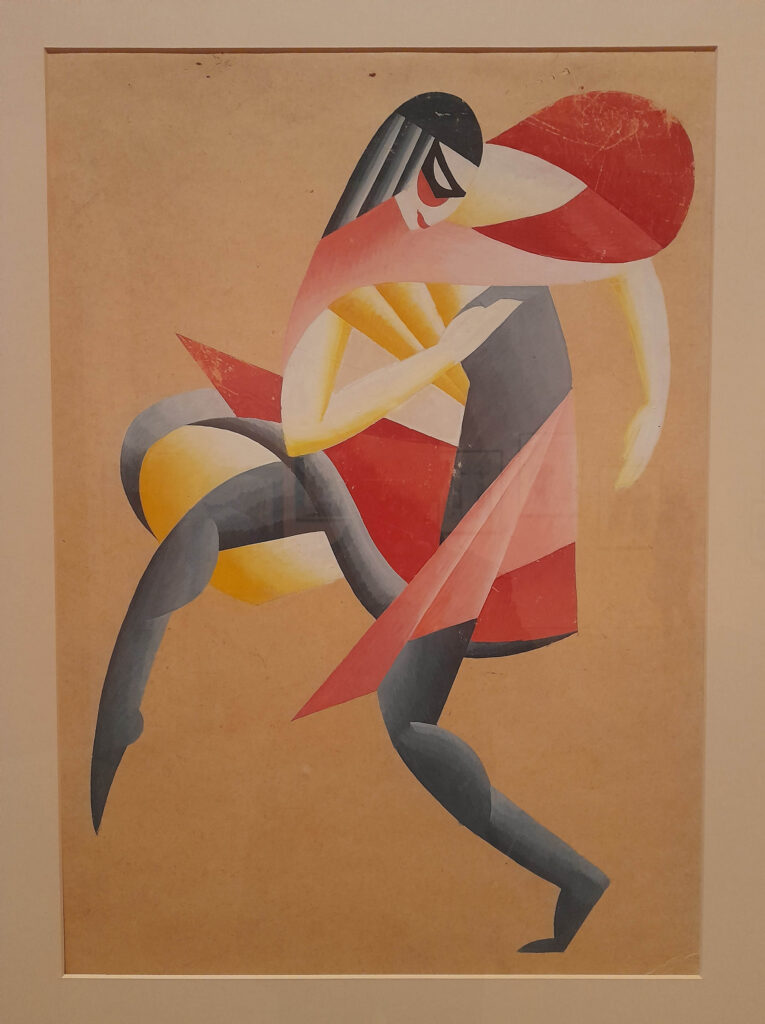
You can see the influence of Cubism and even Italian Futurism in many of these works. The British Vorticism movement can also be detected in the stage designs featured.
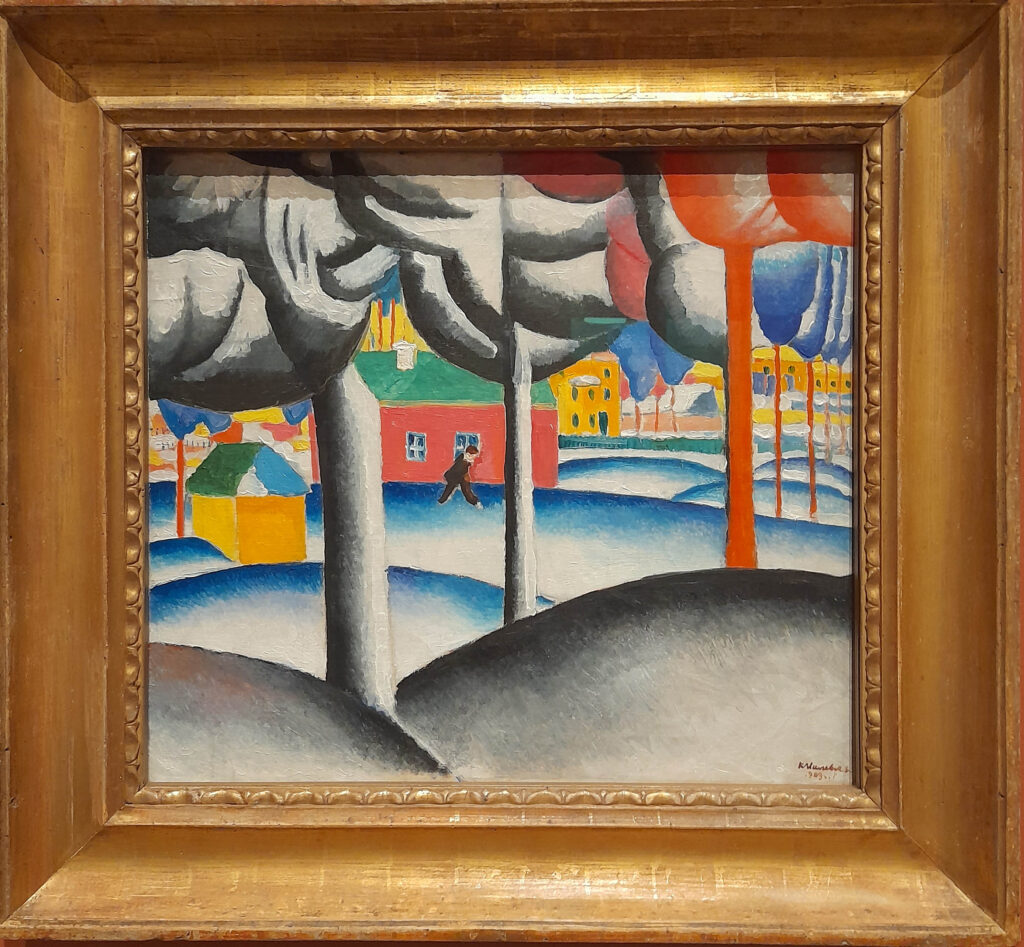
Kazymyr Malevych was the leading proponent of the Suprematism movement whilst residing in Russia in the early 20th Century and his particularly well known works feature white spaces and black squares. He returned to Ukraine in 1929 to teach at the Kyiv Art Institute where around this tie he abandoned abstraction to return to a figurative style as seen above.
Source of quote – Royal Academy:
‘At the turn of the 20th century, when the Ukrainian lands were divided between the Russian and Austro-Hungarian empires, no Ukrainian city was allowed to have its own art academy. This compelled aspiring artists to move elsewhere to complete their studies.
Those from Russia controlled Ukraine initially graduated mainly from the Imperial Academy in St Petersburg, but increasingly their focus shifted to European capitals, such as Munich and Paris.
Inspired by the radical trends they encountered in these cities, young artists from Ukraine began experimenting with a new visual language that combined elements of Cubism, with its geometrisation and fragmentation of the picture plane, and Futurism, characterised by vehement energy and movement. Consequently, art created in Ukraine featured dynamic compositions and simplified forms with a gradual move towards abstraction.
At the same time, artists adopted the vivid colour and rhythmic compositions of Ukrainian folk and decorative art.
Such references to Ukrainian imagery are also visible in the art of the emigre artists who developed their art abroad.
Ukrainian Art at Royal Academy