
Jane Austen Sip and Paint at the Winchester ARC Friday 1st August 2025.
Jane Austen was born on 16 December 1775 at Steventon Hampshire and sadly died too young at a house in College Street, Winchester on 18 July 1817.

Jane Austen Sip and Paint
She is of course well known for her contribution to literature, including Emma, Pride and Prejudice, Northanger Abbey and Mansfield Park.
Jane’s skill lies in her ability to weave irony, wit, social commentary and critique with character-driven narratives. Her innovative storyline techniques and her insightful portrayal of human relationships and social norms have made her a pivotal figure in literary history.
This was a special opportunity for people to enjoy an evening with Jane Austen and some of her literary characters. An enjoyable, unique Sip and Paint event.
Absolute beginners and experienced artists chose from a range of choices to paint: even Jane and Mr Darcy outside her house in College Street Winchester.
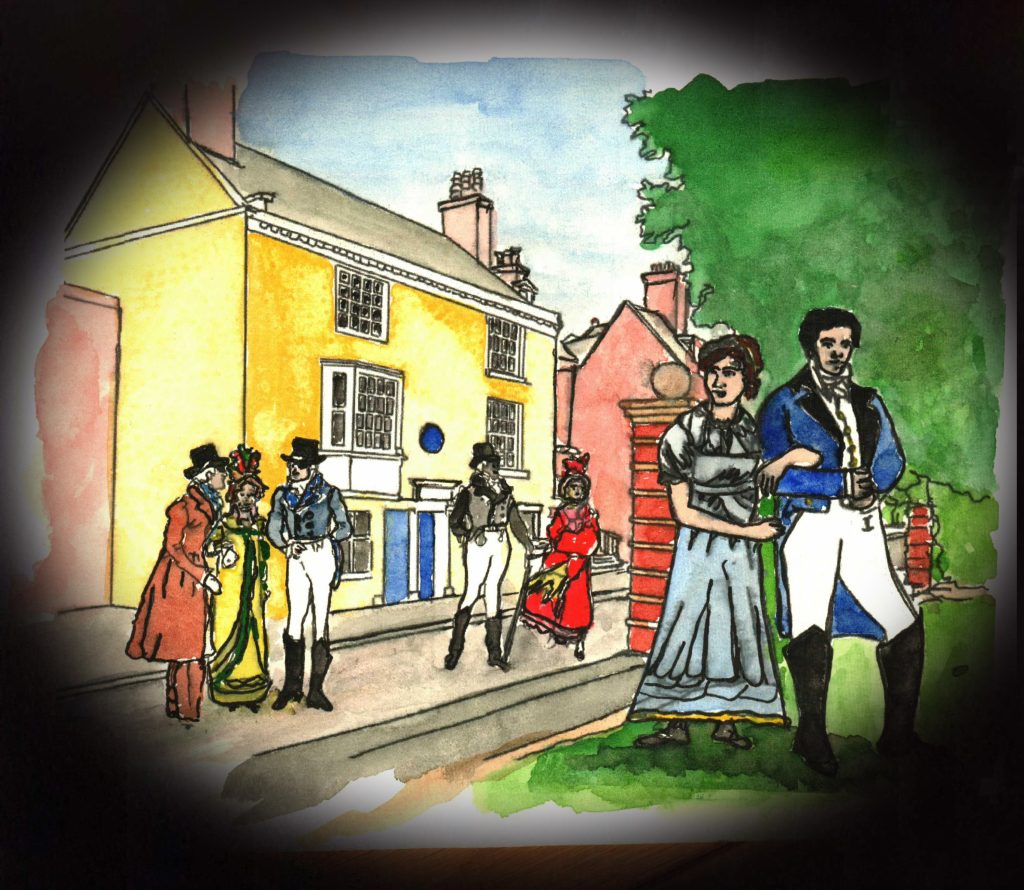
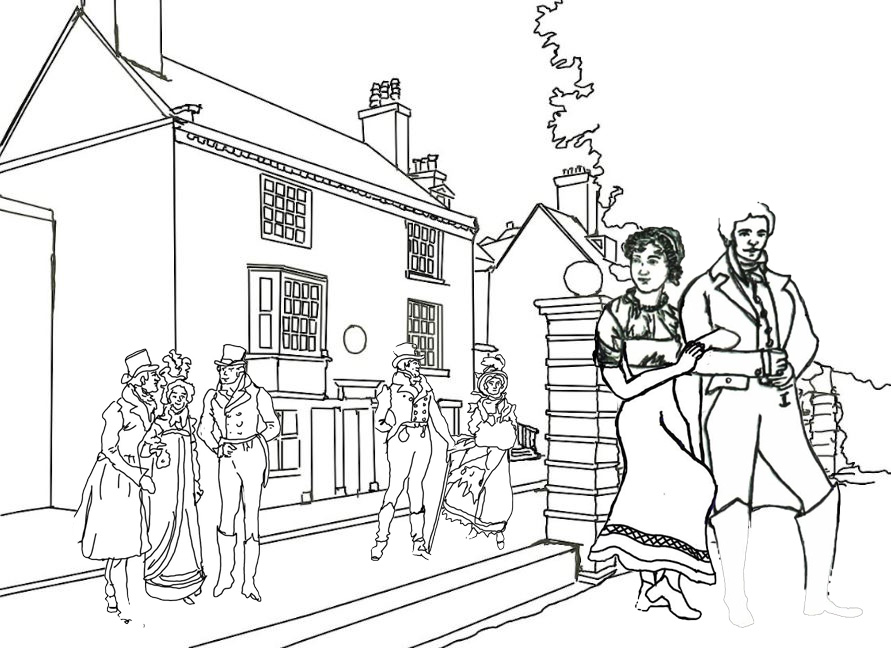
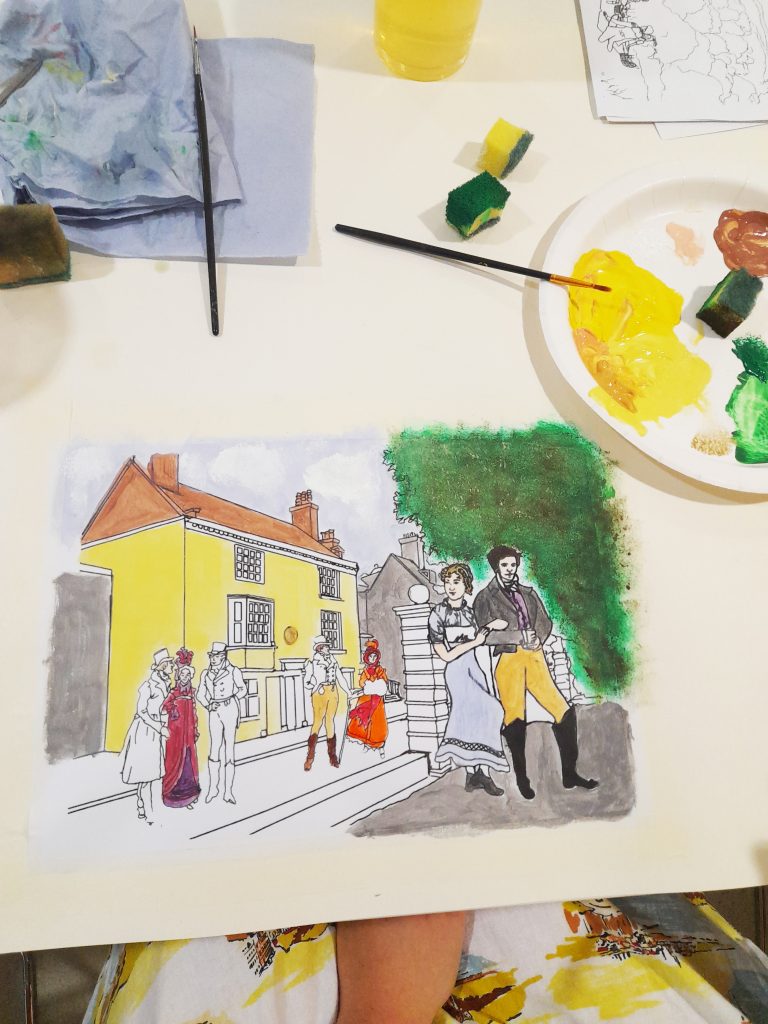
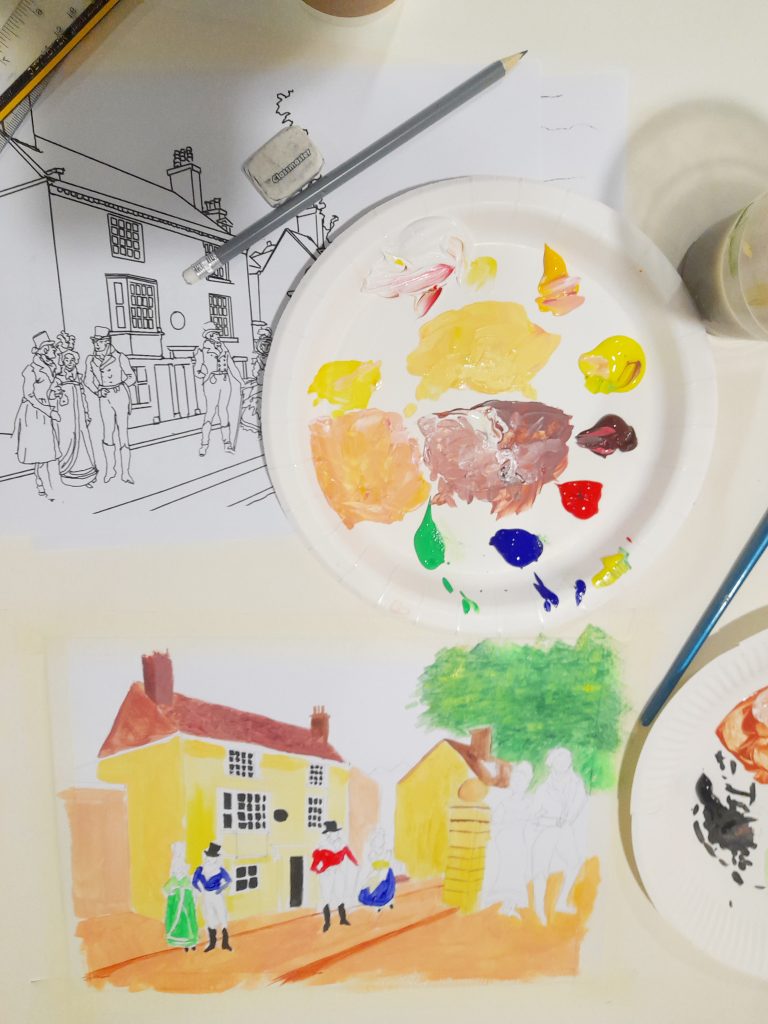
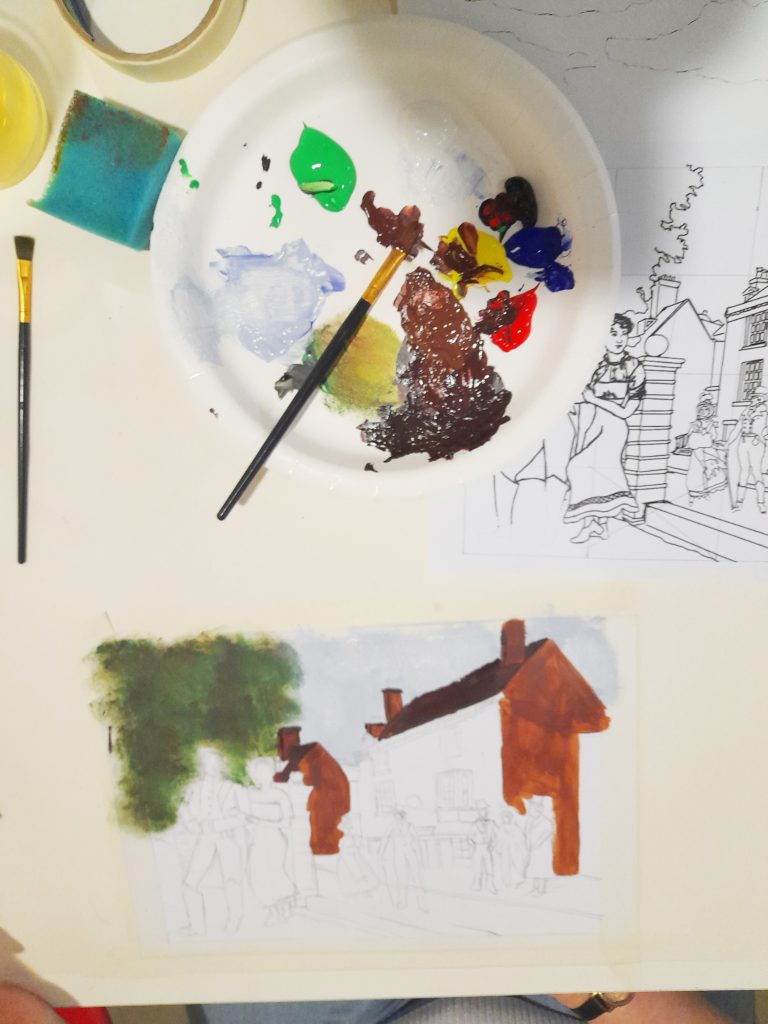
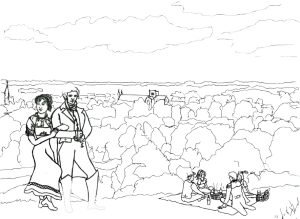
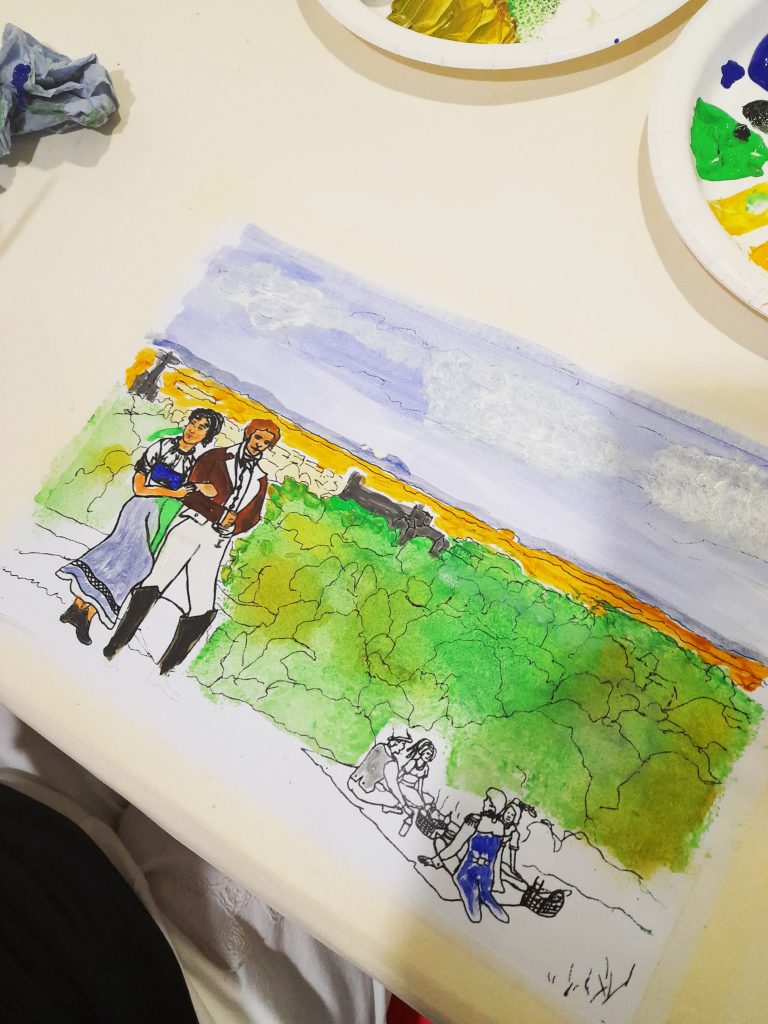
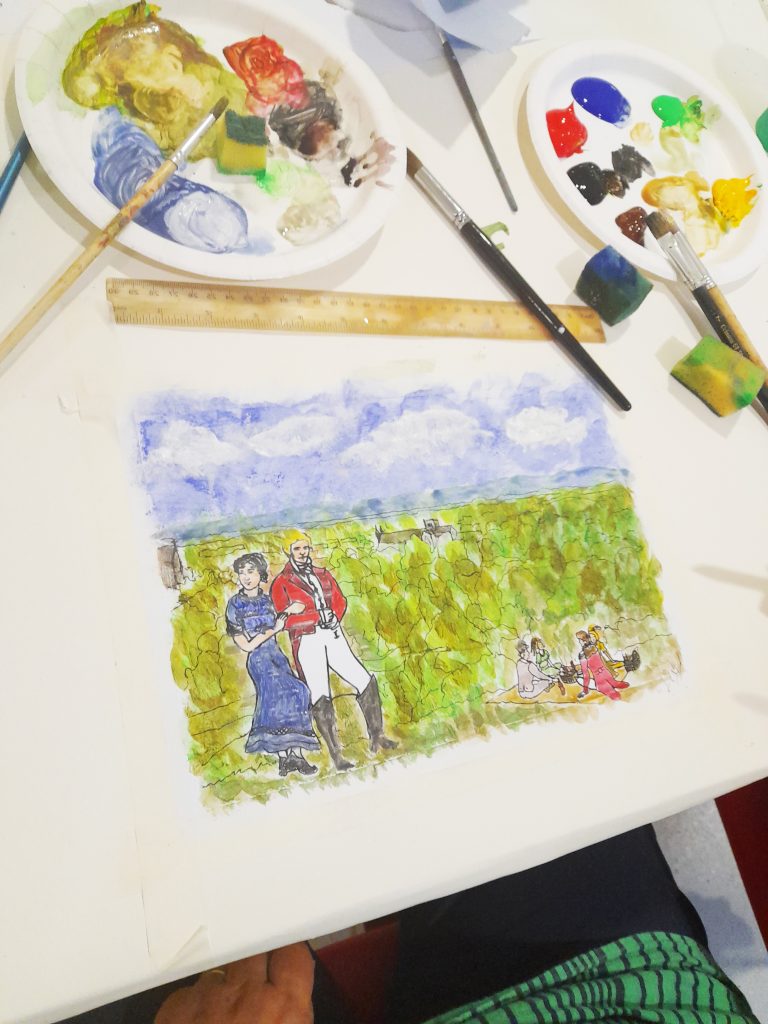
Or feel the sun and fresh air whilst you paint the couple having a picnic on St. Catherine’s Hill with Winchester and the meadows in the background.
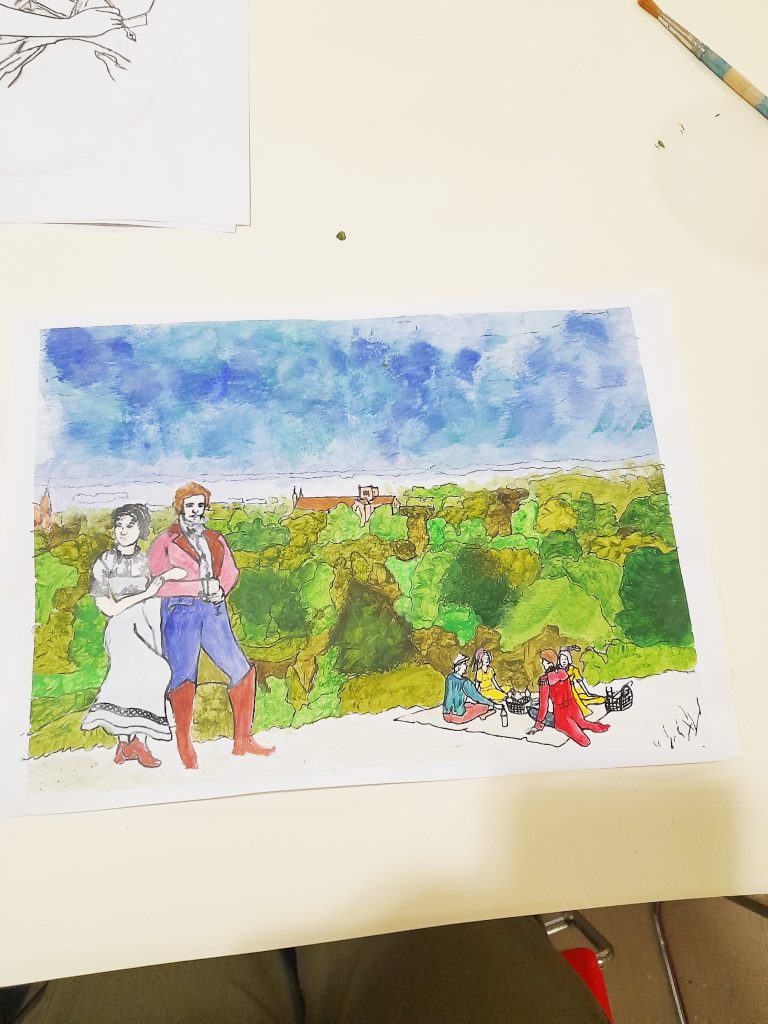
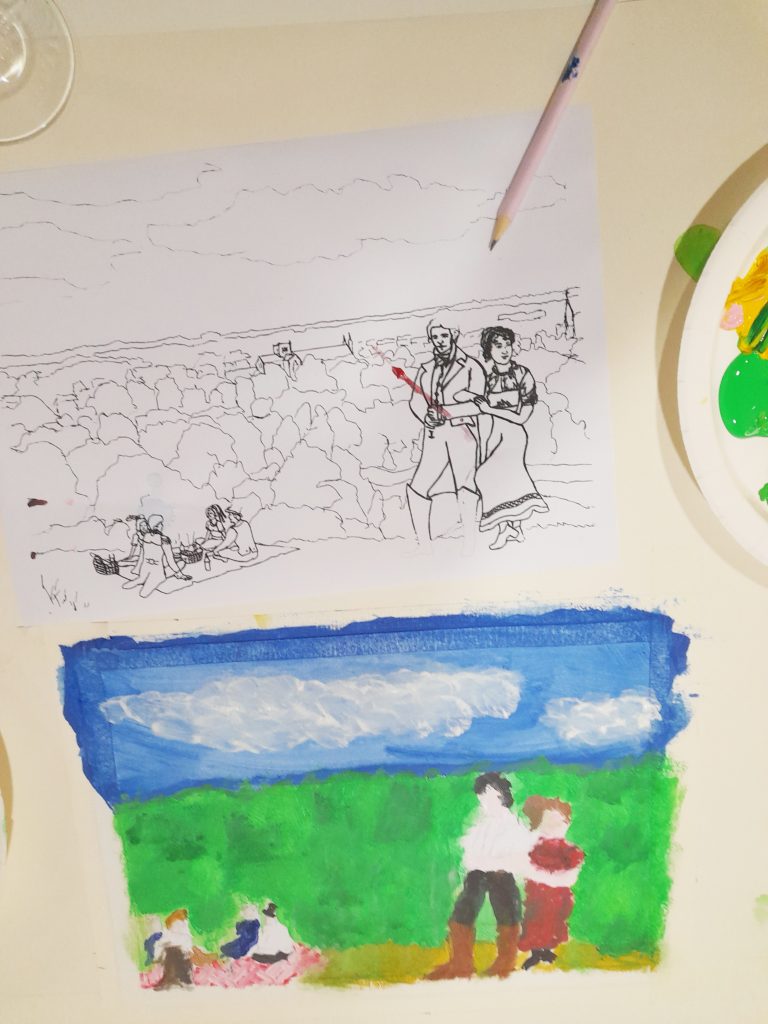
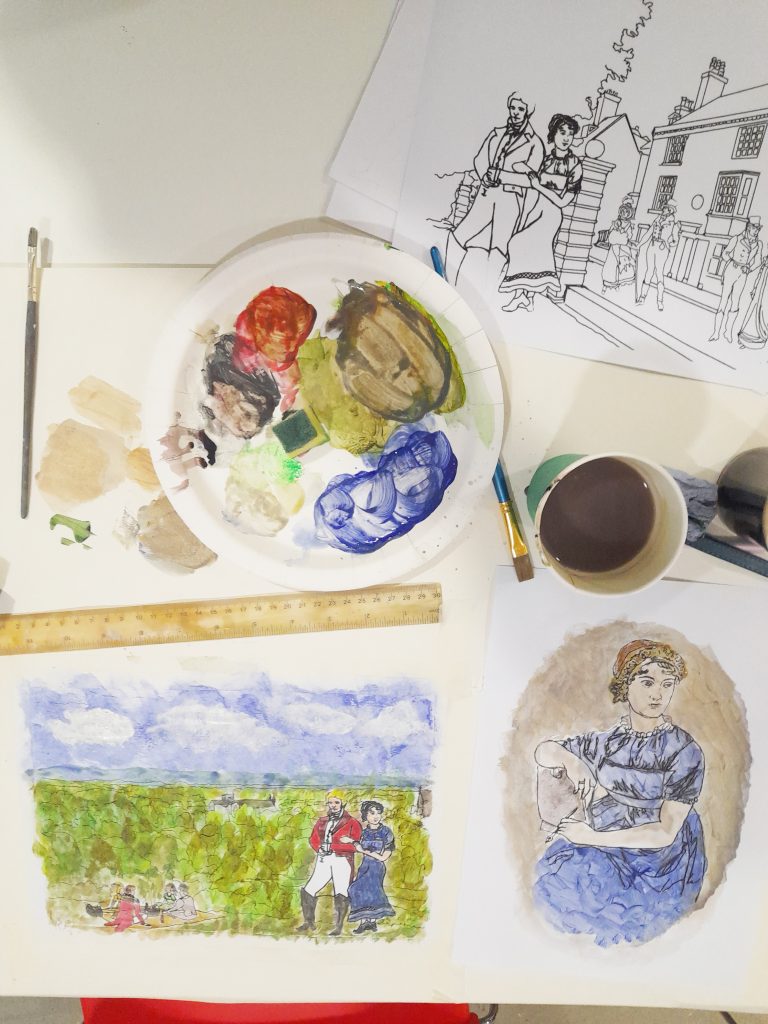

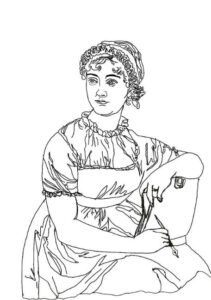
The only image we have of Jane is a sketch by her sister Cassandra. Feel the presence of Jane while painting this template portrait.
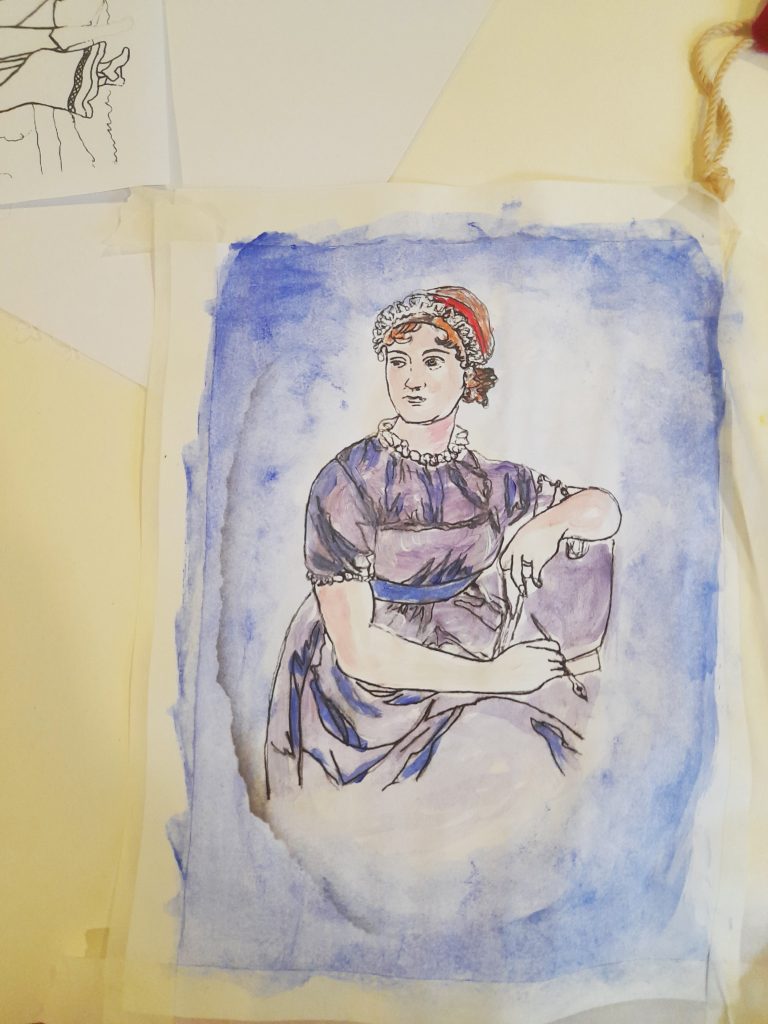
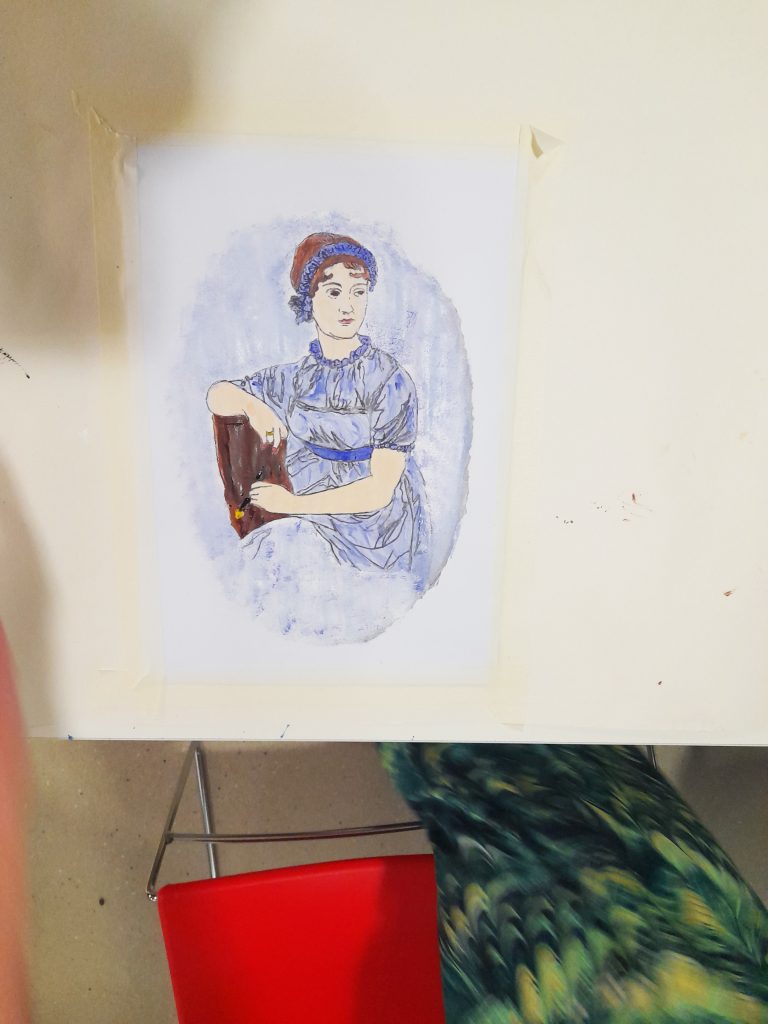
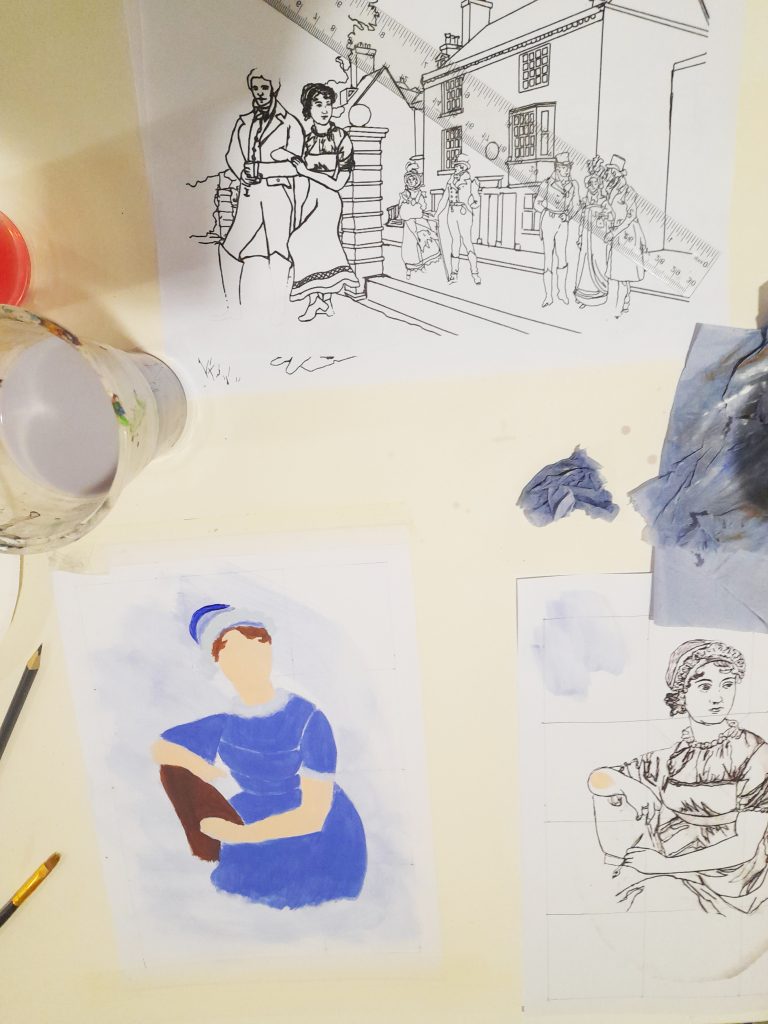
She lived during the time of the English Romanticist artists, one of the most famous being John Constable.
A background sketch will be provided of Constable’s ‘Haywain’ for you to complete with colours of your choice or simply follow his colour theme.
These are the templates for you to choose from and enjoy completing.
You will be guided, helped and have great fun and laughter along with Jane and her characters.
All materials and templates are supplied, plus wine and soft drinks.
Jane Austen Sip and Paint
“It was the best of times, it was the worst of times, it was the age of wisdom, it was the age of foolishness, it was the epoch of belief, it was the epoch of incredulity, it was the season of Light, it was the season of Darkness, it was the spring of hope, it was the winter of despair, we had everything before us, we had nothing before us, we were all going direct to Heaven, we were all going direct the other way …”1859
Charles Dickens in his book Tale of Two Cities was writing about the French Revolution of 1789 and the resulting Napoleonic Wars.
It was the age of revolutions with the American Declaration of Independence in 1776 and the overthrow of the British royal and aristocratic ruling classes in American.
Similarly in France with its revolution and Napoleon attempting the overthrown the royal and aristocratic ruling classes throughout Europe.
It was the age of Reason and The Enlightenment. Immanuel Kant defined the Enlightenment as mankind’s emergence from self-incurred immaturity and that people should have the courage to use their own understanding of themselves and the world.
Tom Paine – the Rights of Man, Mary Woolstencroft – and the onset of revolutionary feminism.
We also saw the Combination Acts: where employees could be arrested and tried for meeting together. We also saw the Swing riots, the Luddites: ordinary people rioting against the introduction of machinery thus losing their livelihoods. A little later The Tolpuddle Martyrs – which began to see the populist support of workers’ causes for the first time. Mass migration from the countryside to the towns and cities to feed the Industrial Revolution – another revolution.
Against this revolutionary background was born in 1775 Jane Austen and John Constable in 1776.
Jane Austen was born on 16 December 1775 at Steventon Hampshire and sadly died too young at a house in College Street, Winchester on 18 July 1817.
She is of course well known for her contribution to literature, including Emma, Pride and Prejudice, Northanger Abbey and Mansfield Park.
Jane’s skill lies in her ability to weave irony, wit, social commentary and critique with character-driven narratives. Her innovative storyline techniques and her insightful portrayal of human relationships and social norms have made her a pivotal figure in literary history.
The role of the female and the landed gentry and rural wealthy classes – innocently or ironically depicted with strict social norms and unquestionable hierarchical constraints. Women existing solely for the male exploitation, legal prostitution as Woolstencroft described it, and whose sole purpose in life was to secure a husband to live with happily ever after. Austen’s hero in Pride and Prejudice, Elizabeth Bennet’s preoccupation, once she realises her desire, is of course Mr Fitzwilliam Darcy. Thus, not independence, university, not to travel, not to secure a career – all impossible for women at that time. Is Jane Austen critiquing this situation? Does she recognise its unequalness? Is she accepting the status quo for what it was? There’s the debate.
John Constable was born in Suffolk in 1776, at the time of threateningly rural riots: Swing and Luddites.
His father was a mill owner – Flatford Mill and was therefore of quite a well to do class, quite a contrast to those peasant and labouring classes that kept them in the style to which they had become accustomed.
We understand that the gentle John Constable felt quite ill at ease and even threatened by the social revolution that was going on around him, and how is this depicted in his iconic works of art?
Tonight, we’re looking at his Haywain, painted in 1821: and this is merely an interpretation:
- Clouds
- River
- Poacher
- Role of women
- Autumn
- Size of figures
- Haywains going off in distance: the greatest passing of times since the Roman era; the migration from the countryside to the towns and cities to feed the industrial revolution.
So, with Jane Austen’s iconic commentary on social norms at the time and John Constable’s visual commentary on the social revolutions of the time – we have tonight ‘The Age of Revolutions’ The Age of Romanticism.