
Birth of Impressionism
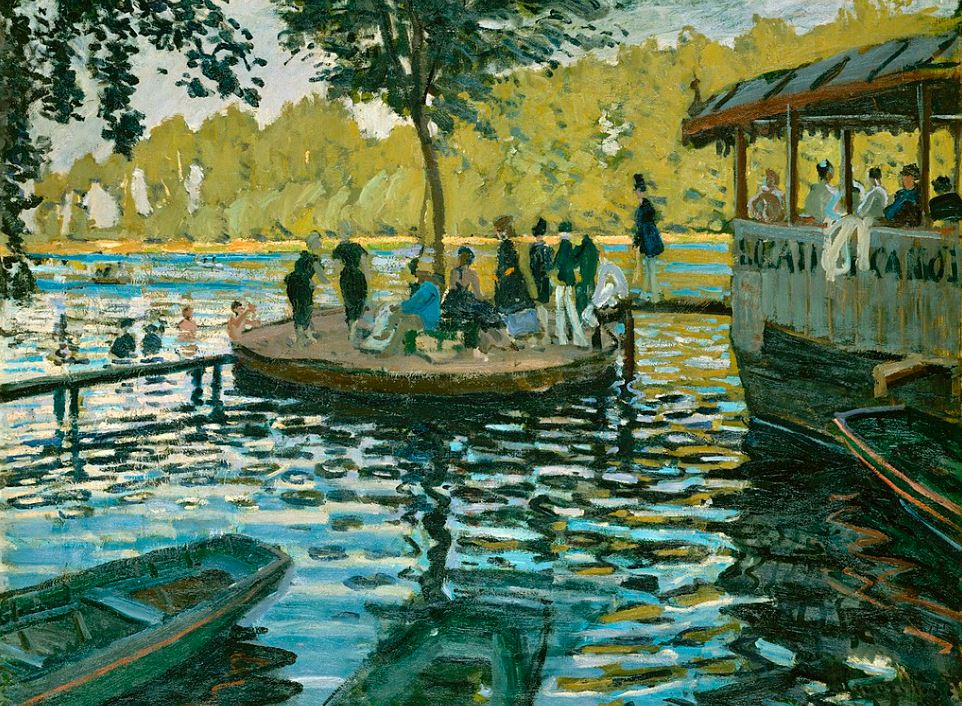
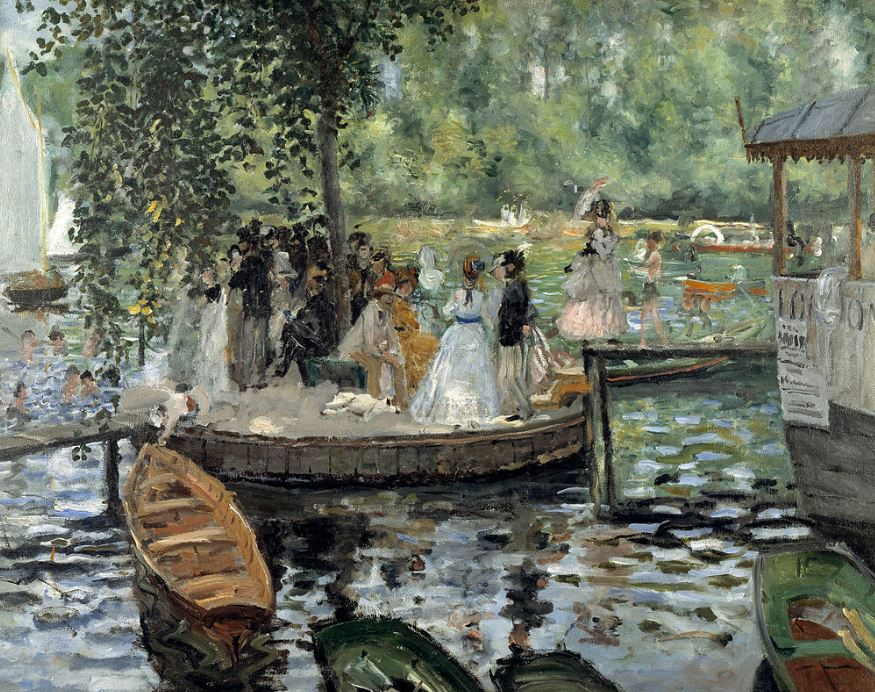
In 1869, two lads, Claude Monet and Pierre-August Renoir decided that they wanted a day out in the fresh air. Living in Paris it would have taken quite a time to journey to the countryside so instead they arrived at a parkland in the city’s suburbs, La Grenouillére (the Frog Pond) and here they set up their easels and opened their paint boxes.
La Grenouillére could have been described as seedy and down and out, but nevertheless it was a most popular place of relaxation and recreation for the ordinary folk of Paris.
With the sun, the activity, the movement and life and enjoyment all around them, the artists were in their element.
The resulting day’s work was an unparalleled invention. The solid, unyielding physical world of water, people, buildings and even a dog was broken down into obvious broad, bold, rapid, staccato strokes of contrasting colours black, white, blue and green.
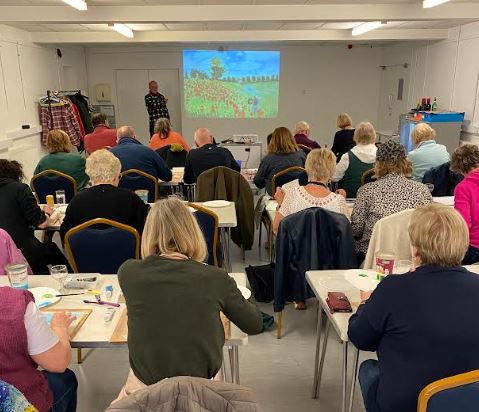
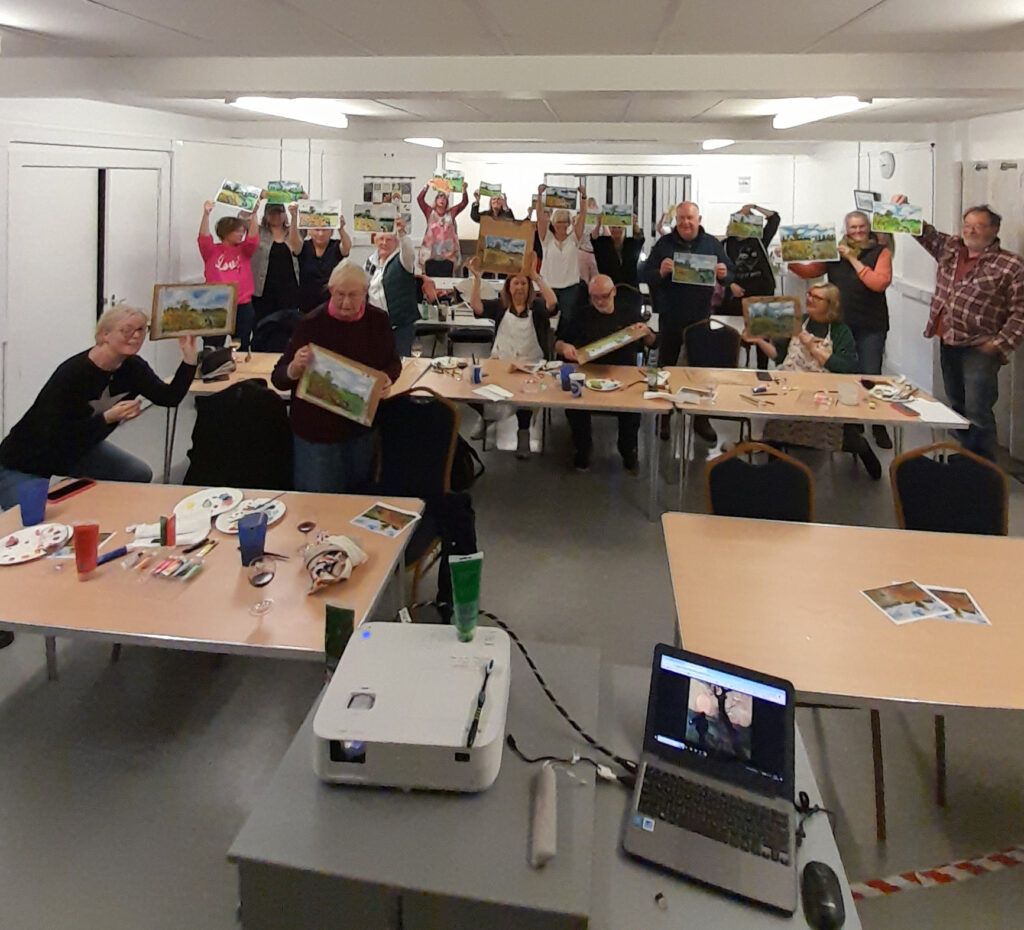
This was the subject of a Paint and Sip evening at Brockenhurst Village Hall on Thursday 3 April 2025.
22 people went home delighted with their masterpieces.
So was born Impressionism.
1870 and 1871. The French humiliated at Sedan.
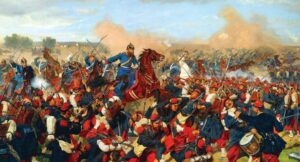
Paris besieged by the Prussians. People ate rats and dogs and froze in the winter. A deal. The Commune emerged. Riots and street violence. Thousands killed or incarcerated. Napoleon III fled to England. The dynasty collapsed.
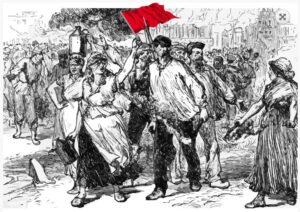
And what did it produce? Édouard Manet. Impressionism. The belle epoque. Berthe Morisot, Pierre August Renoir and Claude Monet and the world was turned on its head with the birth of modern art.
The devastation, desperation, slaughter and instability of these years proved salutary to those avant-garde artists attempting to make sense of the situation and circumstances they found themselves in.
Impressionism, the brief transience of life resolved on the canvas by the capturing of the ephemeral light, far removed from the hitherto solidity of fine art.
Following the gloom of 1870 and 1871 and the morbidity and concentration on classical, religious and mythological themes so prevalent as accepted fine art particularly at the Salon, Impressionism emerged with light, joyfulness, joie de vie, frivolous even and acknowledging existential fragility. A supreme dialecticism.
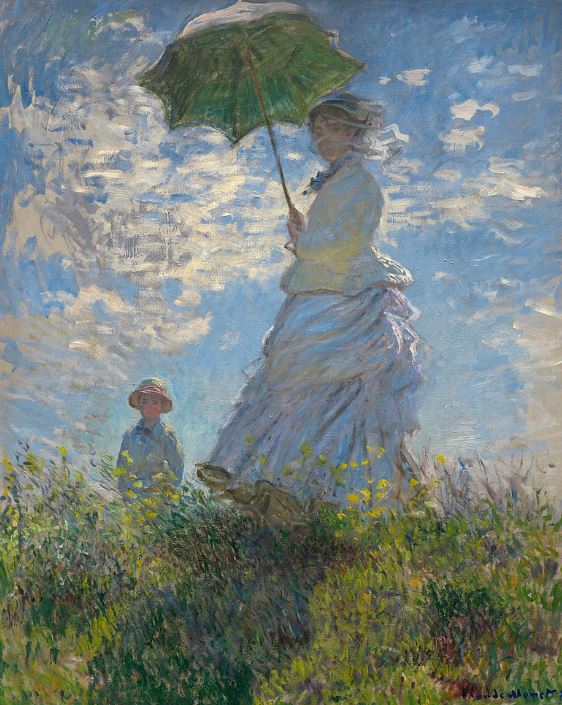
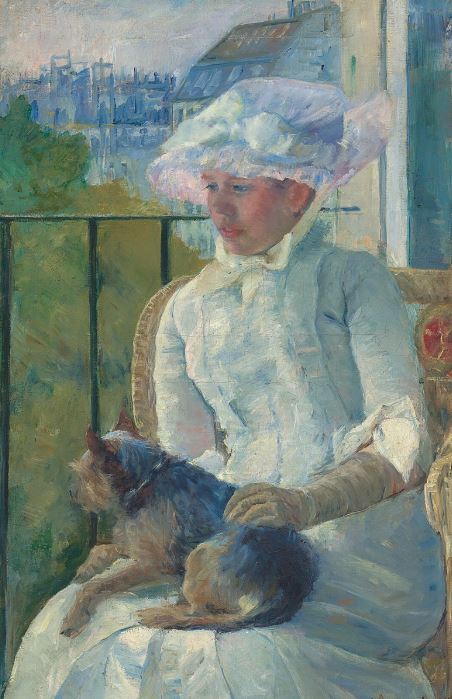
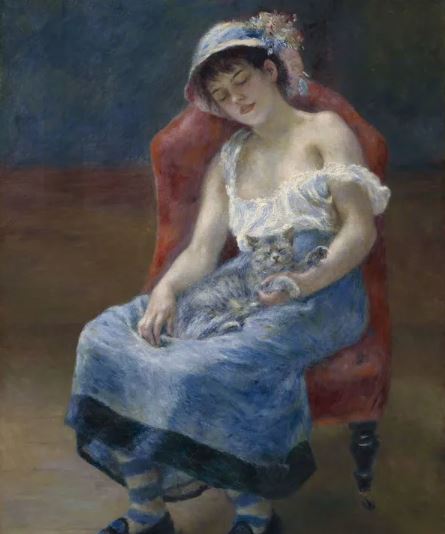
Years later Sigmund Freud summed up this emotionally fragile psychological state with the term, transient value. It’s where we become aware of the unavoidable transience of things: life, nature, the seasons moving on and we therefore increase our perceived value of what matter to us. As we value things that are scarce, like life, thereby their value enhances.
“It took some time before the public learned that to appreciate an Impressionist painting one has to step back a few yards and enjoy the miracle of seeing these puzzling patches suddenly fall into place and come to life before our eyes.”
The return of the open dynamic brush strokes from the Salon perfectionism.
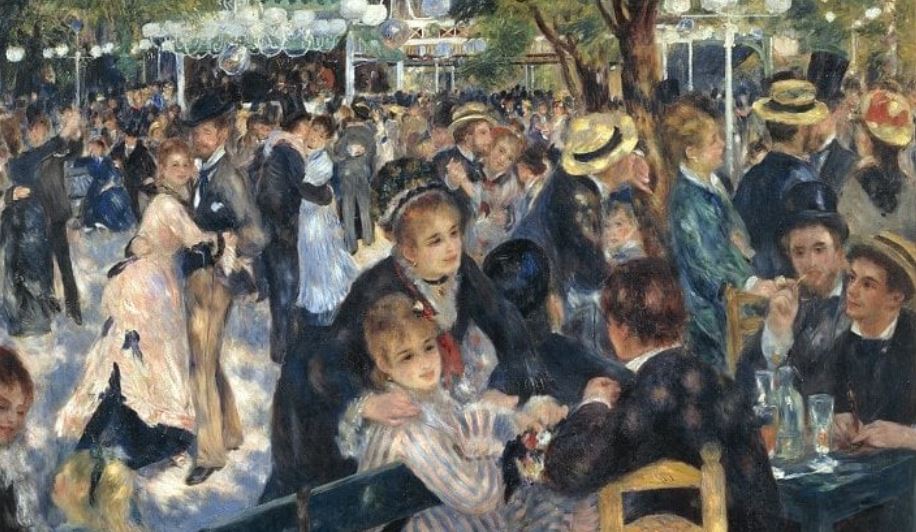
Movement. Everyday scenes and people. Rapid capturing of light.
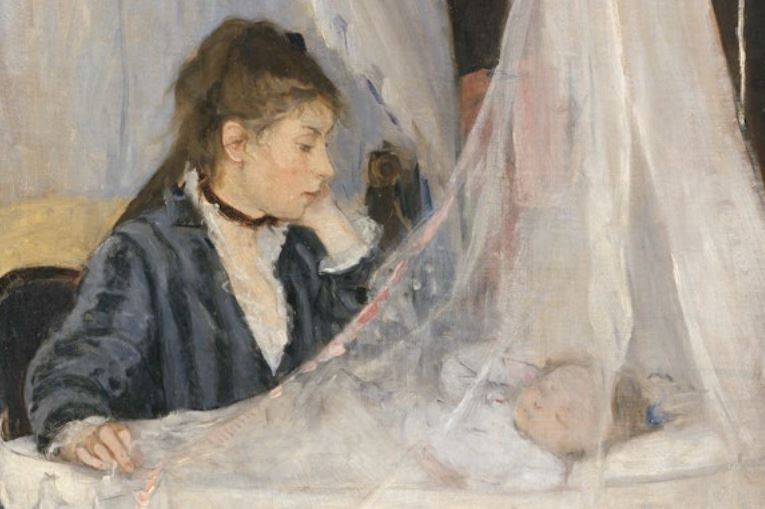
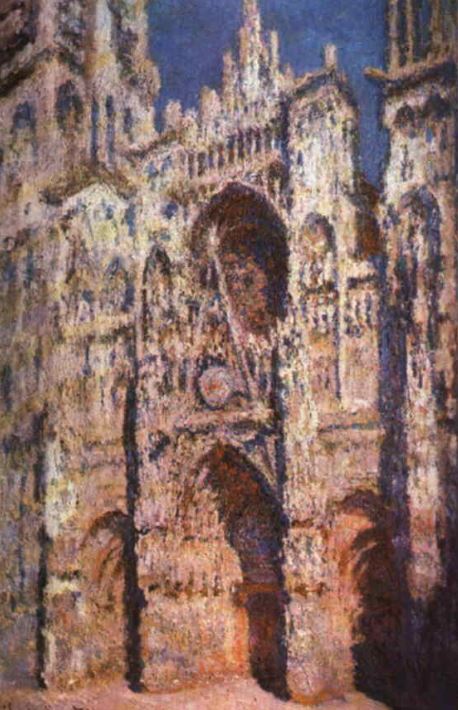
No concentration on perspective, capturing the experience of the viewer and often painted outside the studio, plein-air. Pure colours. Layer upon layer of iridescent colour. A vibrant flow of life and with Impression Sunrise below, almost spectral.
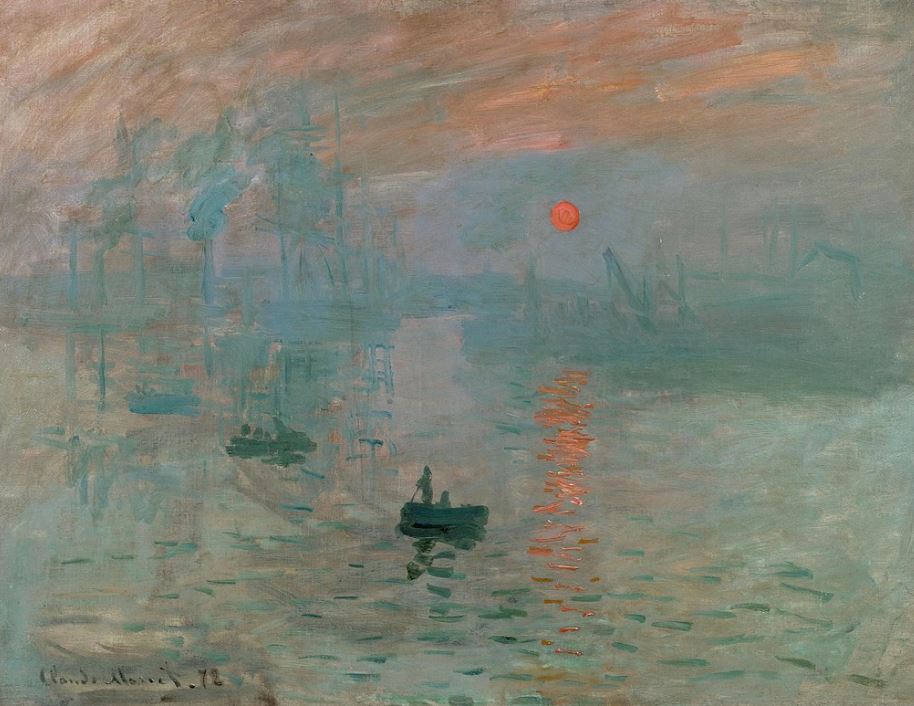
One of the first major Impressionist works Claude Monet’s Impression Sunrise invited a newspaper reporter Louis Leroy writing for the French satirical newspaper Le Charivari, to use the term an ‘impression’. The intention indeed was to satirise, but the term stuck and became the accepted and almost revered title for the movement.
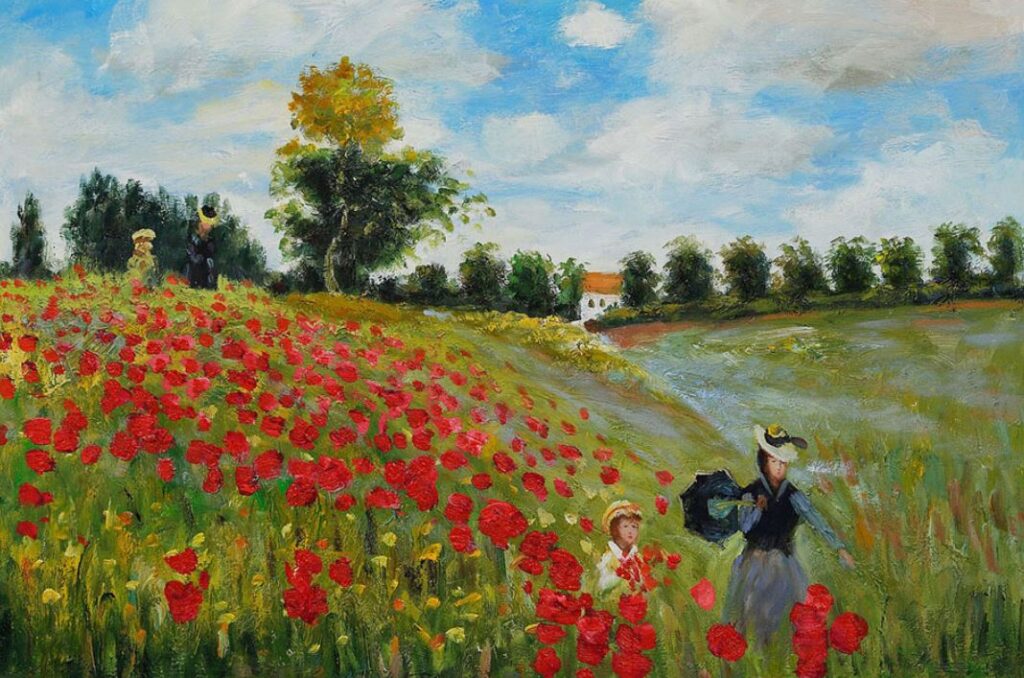
Claude Monet, then aged 33, lived in Argenteuil (Val-d’Oise) when he completed this painting in 1873. The Poppy Field near Argenteuil
This painting, probably painted in the vicinity of Argenteuil, then a rural area, depicts a large field, with poppies dominating the left-hand side. In the foreground is a woman with a parasol and straw hat, accompanied by a child. In the middle ground, we see a couple similar to the first. The background, at the far end of the field, consists of a row of trees, with a house visible.
The two mother-child couples mark out an oblique structuring the painting. The left half is dominated by red and the right by a blue-green. The woman in the foreground is probably Camille Doncieux, the artist’s wife, accompanied by a young Jean Monet, who, born in 1867, would be six years old in this scene.
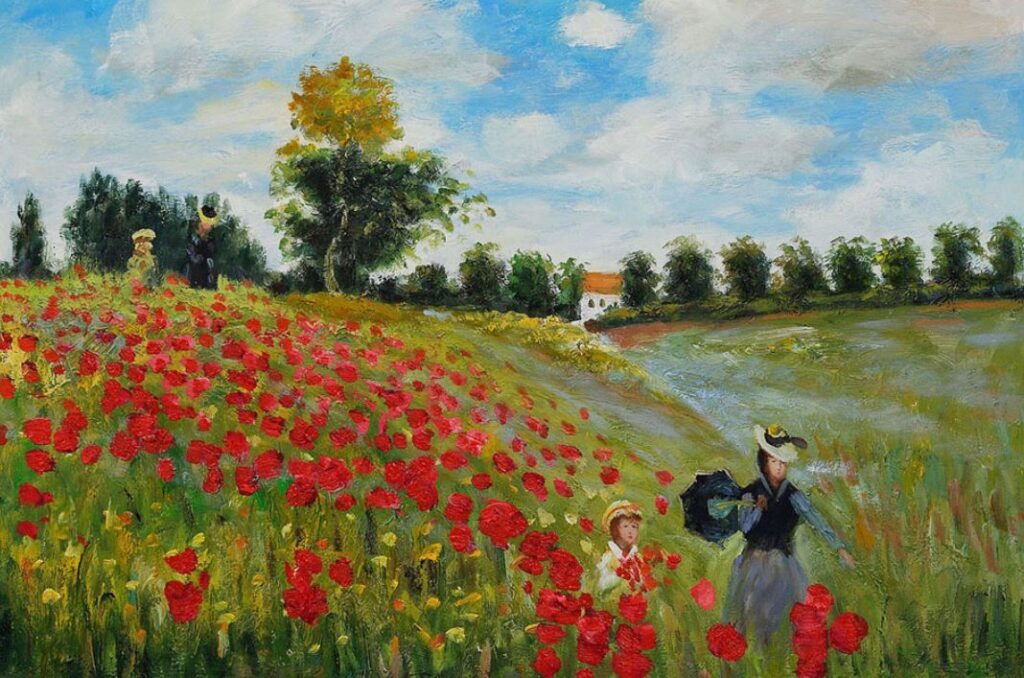
The capturing of light is foremost, the detail of the people and landscape is secondary. Light – transience reflecting the transience of life … the relentless lurching of the minute hand.
Birth of Impressionism