All posts by Alan Beckett

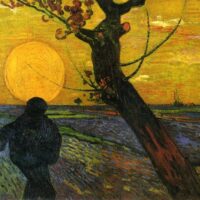
Vincent van Gogh The Sower

Vincent van Gogh The Sower In 1888, a year before his death, Vincent van Gogh produced 30 drawings and painting versions of his iconic ‘Sower’. In a letter to his brother Theo, Vincent drew a rough sketch of a most famous version of his Sower. This was for Theo to recognise the genius of this work and to agree to try and sell it for Vincent. With his paintings, Vincent used colours meant to express emotion and passion. Yellows, reds, blues, all with psychological undertones. Passions, sadness, illumination. And this was all before Sigmund Freud’s psychoanalysis became the vogue outside of Vienna. He assigned the leading roles to the greenish-yellow of the sky and the purple of the field. The bright yellow sun looks like a halo, almost turning the sower into a saint. Vincent was quite a religious man, … Continue reading Vincent van Gogh The Sower →
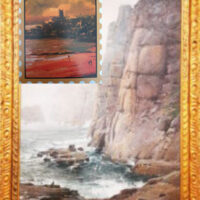
Tol Pedn Cornwall

Tol Pedn Cornwall at Penlee House Penzance by Samuel John ‘Lamorna’ Birch Just caught a great exhibition at Penlee House Museum and Gallery Penzance Cornwall: ‘The Shape of Things: Our Place in a Changing Climate’. One particular work stood out – Tol Pedn (1907) by Samuel John ‘Lamorna’ Birch. I’ve overlaid this with an image from Penlee House’s exhibition that shows Penzance in a red sky and background – the artist’s imaginary illustration of a dramatic affect of global warming. The description attached to the work – “Tol Pedn inspires awe at the beauty and history of our coastline.  by can be worn away other positive emotions, we can feel awe even when we feel overwhelmed. Awe connects us to each other and the world around us. It both calms and energises us to take action – empowering us to … Continue reading Tol Pedn Cornwall →

Poly Falmouth Vincent van Gogh

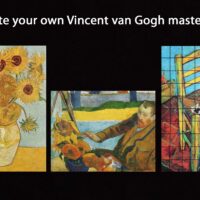
A great time was had at The Poly Falmouth where artists ‘sipped and painted’ Vincent van Gogh’s ‘Chair’ and ‘Sunflowers’. Poly Falmouth Vincent van Gogh. Wine, soft drinks, music to enjoy, laughter and chat, loads of paint (all materials supplied) templates to trace, sketches to colour, freestyle and grids to guide. The results were fantastic reflecting the true talent in this magical corner of Cornwall. It was a sell out event and at the end of the evening 24 people went home with their own masterpiece versions of Vincent’s iconic paintings. The Poly at Falmouth is a most historic building, dating back to 1833 when it was formed as the Cornwall Polytechnic Society by local merchant philanthropists Anna Maria and Caroline, the teenage daughters of Robert Were Fox of G.C. Fox & Co, a prominent Falmouth firm of shipping agents.  … Continue reading Poly Falmouth Vincent van Gogh →

Birth of Impressionism

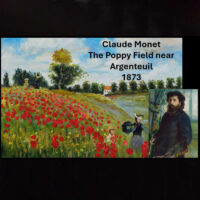
Birth of Impressionism In 1869, two lads, Claude Monet and Pierre-August Renoir decided that they wanted a day out in the fresh air. Living in Paris it would have taken quite a time to journey to the countryside so instead they arrived at a parkland in the city’s suburbs, La Grenouillére (the Frog Pond) and here they set up their easels and opened their paint boxes. La Grenouillére could have been described as seedy and down and out, but nevertheless it was a most popular place of relaxation and recreation for the ordinary folk of Paris. With the sun, the activity, the movement and life and enjoyment all around them, the artists were in their element. The resulting day’s work was an unparalleled invention. The solid, unyielding physical world of water, people, buildings and even a dog was broken down … Continue reading Birth of Impressionism →

Winston Churchill in Madeira

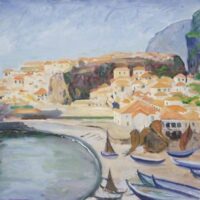
Winston Churchill in Madeira: Camara de Lobos‘ claim to fame is that Winston Churchill chose a spot here to paint his picture of the attractive harbour as it then was. Now of course it is extensively remodeled, over  populated and full of day cruise visitors. A few fishing boats remain nevertheless. The village is on the south coast of Maderira, just a few kms from the capital Funchal where everyday huge cruise ships disembark their passengers, many of whom brave the journey to Camara. Winston Churchill holidayed  here in 1951, residing in Funchal’s Reid Palace Hotel. Defeated in 1945 by Clement Attlee, he returned to the premiership in 1951. This must have been just after his visit to Madeira. Churchill was a devoted oil painter as we know from many of his surviving works particularly on display at his home,  … Continue reading Winston Churchill in Madeira →

The Mary Magdalene Debate

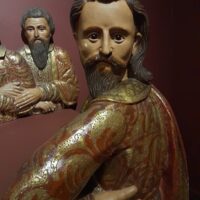
The Mary Magdalene Debate: And so the discussion in my mind continues. Is the figure to Christ’s right in Michelangelo’s work, Mary Magdalene or John as London’s National Gallery and the Louvre claim? An absolute gem of a place is the Museum of Sacred Art,  Funchal, Madeira. There’s not an awful amount that can be said about this island but it’s rich cultural heritage in the form of its own and in particular the art that was imported from Flanders in the 16th Century is outstanding. Of specialnote is the work to quote: ‘Attributed to the Master of the Holy Blood’ Flanders, Bruges (1515-1520). The central panel of this Descent from the Cross replicates a lost original by Rogier van der Weyden, from the 1440s’. The figure in the panel to the right has been identifed as Mary Magdalene. There … Continue reading The Mary Magdalene Debate →

Conversation with a Picture

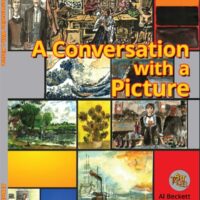
A Conversation with a Picture … coming your way soon. Available via Amazon Publishing on Kindle or buy a hard copy. Art is inviting, it’s compelling, removing us from the humdrum of ordinary life. It can make us feel happy; it can make us sad. We can drift past what we see in front of us, or we can engage in an enlightening conversation with that picture. What is the story behind that picture? How was is created? Why is it engaging our emotions? This book answers those and many more questions. The engaging conversational approach links you, the busy reader, to the artists, with over 400 beautiful illustrations. Enjoy. art-tales.org/a-conversation-with-a-picture.org Art is inviting, it’s compelling, removing us from the humdrum of ordinary life. It can make us feel happy; it can make us sad. We can drift past what … Continue reading Conversation with a Picture →

Caravaggio Ripley Coincidences

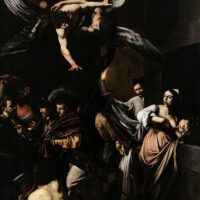
How on earth do you explain coincidences? What do they mean? Do they mean anything or is it just one of those things? Caravaggio Ripley Coincidences. We’d just been reading the Week-End Financial Times and inside was an article by the renowned columnist Enuma Okoro talking about how art works can have such a powerful influence on your world view. “I have selected this image because in imagining it as a painting that people would see regularly when they visited the church or the charity I suspect part of its role, like many works of religious art, was to suggest a way for people to live. It is as if this painting was to serve as a compass, helping to move our steps and actions in the direction of caring for others. This is a powerful idea, and it suggests … Continue reading Caravaggio Ripley Coincidences →

Michelangelo’s ‘The Entombment’

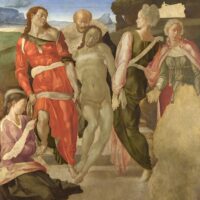
Interesting debate with London’s National Gallery over the description of Michelangelo’s ‘The Entombment’. My letter to the National Gallery: “The National Gallery’s description refers to … ‘He has been lifted from the laps of Mary Magdalene, seated at left, and the Virgin, planned but not painted’. It was my understanding that following the dictates of St Thomas Aquinas, the Virgin should always be painted in a blue robe, whilst Mary Magdalene should always be shown in red. Therefore, the standing figure to the right of Christ should perhaps be Mary Magdalene with a very red robe and her distinctive red hair, and not the figure seated at the far left as the National gallery’s description implies (pink robe and hair not as red as the standing figure). Furthermore, of interest is the obvious ‘V’ between the shoulders of the figure … Continue reading Michelangelo’s ‘The Entombment’ →

Klimt’s The Kiss Sip & Paint

Klimt’s The Kiss was the subject at the ARC Winchester on Valentine’s Day 14th February 2025. Klimt’s The Kiss Sip & Paint. Full house, sell out of 20 artists creating their own version of Gustav Klimt’s most famous work The Kiss. Many people chose to produce their own free style version starting from scratch with a bank sheet of acrylic paper. Other folk chose to use the sketches available to paint in their colours as Klimt used or indeed using their own personal approach. The room was richly decorated by the ARC staff with Valentine’s banners, hearts and even candles on the tables. The evening as started with me explaining the context of the work and going through how Herr Klimt must have produced his work as well as looking at a few of his other works. It took him … Continue reading Klimt’s The Kiss Sip & Paint →