
Chichester Canal & JMW Turner: Interesting morning spent by the Chichester Canal, West Sussex.
The canal was constructed in the early 19th century to facilitate the transportation of goods and military supplies between London and Portsmouth during the Napoleonic Wars, and was connected to the existing Arundel to Portsmouth canal at the time.
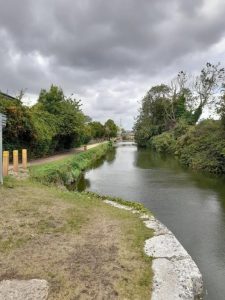
Looking at the actual canal and also studying the early maps of its route, whilst the Arundel to Portsmouth canal was laid east to west, the Chichester Canal was dug from north to south, i.e. from Chichester towards the sea, where it connected to the Arundel canal.
It is therefore most intriguing why JMW Turner painted his famous Chichester Canal painting with a sunset.
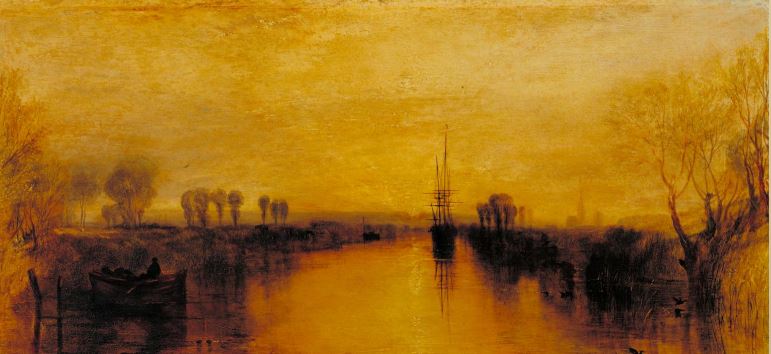
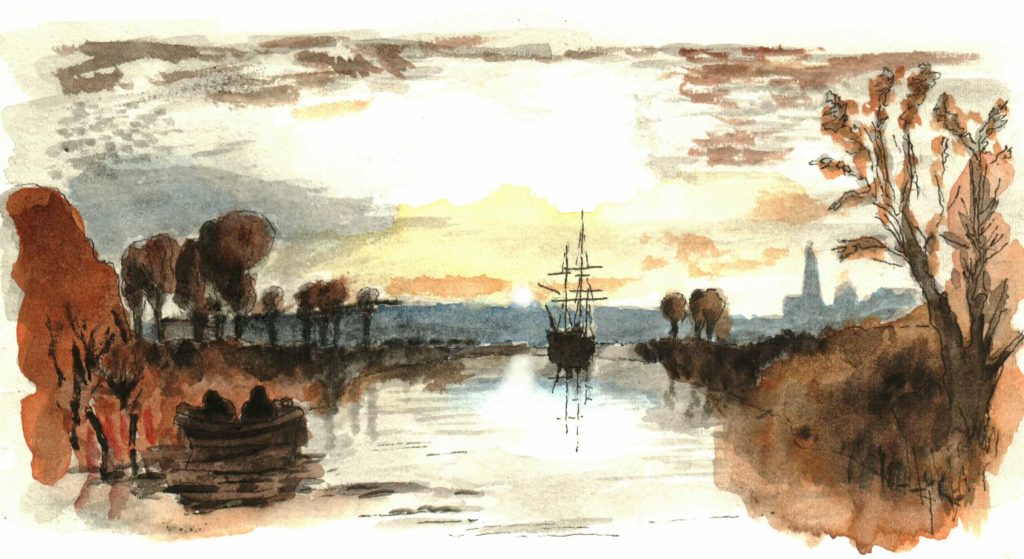
Looking carefully at this work, you can see the canal leading from the fore to the horizon where to the right you can see Chichester Cathedral’s outline and further back the hills of the Downs. And there is the sunset.
The sun sets in the west, not the north.
Comments and opinion please. I can only assume that either JMWT used a little artistic licence, or he painted from the shores of the then Arundel to Portsmouth canal, perhaps then known as the Chichester Canal.
I have interrogated Wikipedia and AI on this topic and the responses I’ve received are below.
Interesting.
Source AI:
J.M.W. Turner’s painting “Chichester Canal” depicts a view of the canal in Chichester, West Sussex. The painting is known for its atmospheric qualities and masterful depiction of light and color. The specific orientation (whether it faces north or another direction) can depend on the geographic orientation of the actual canal as well as Turner’s artistic focus. However, historical sources indicate that the canal itself runs in a generally east-west direction near Chichester. If you’re seeking to confirm the exact directional perspective depicted in Turner’s work, it would be best to consult a detailed analysis of the painting or a geographic map of the canal.
&
J.M.W. Turner painted “Chichester Canal” from a vantage point near the canal itself. The painting captures the tranquil scene of the canal with the surrounding landscapes. While the exact location where Turner set up to paint is not definitively recorded, it is believed he positioned himself along the canal near the area of Chichester, where he could best capture the light and atmosphere of the scene. Turner often sought out spots that offered a dramatic view of nature and light, which is evident in this work. For a more precise location, local historical records or studies that focus on Turner’s techniques and locations might provide additional insights.