
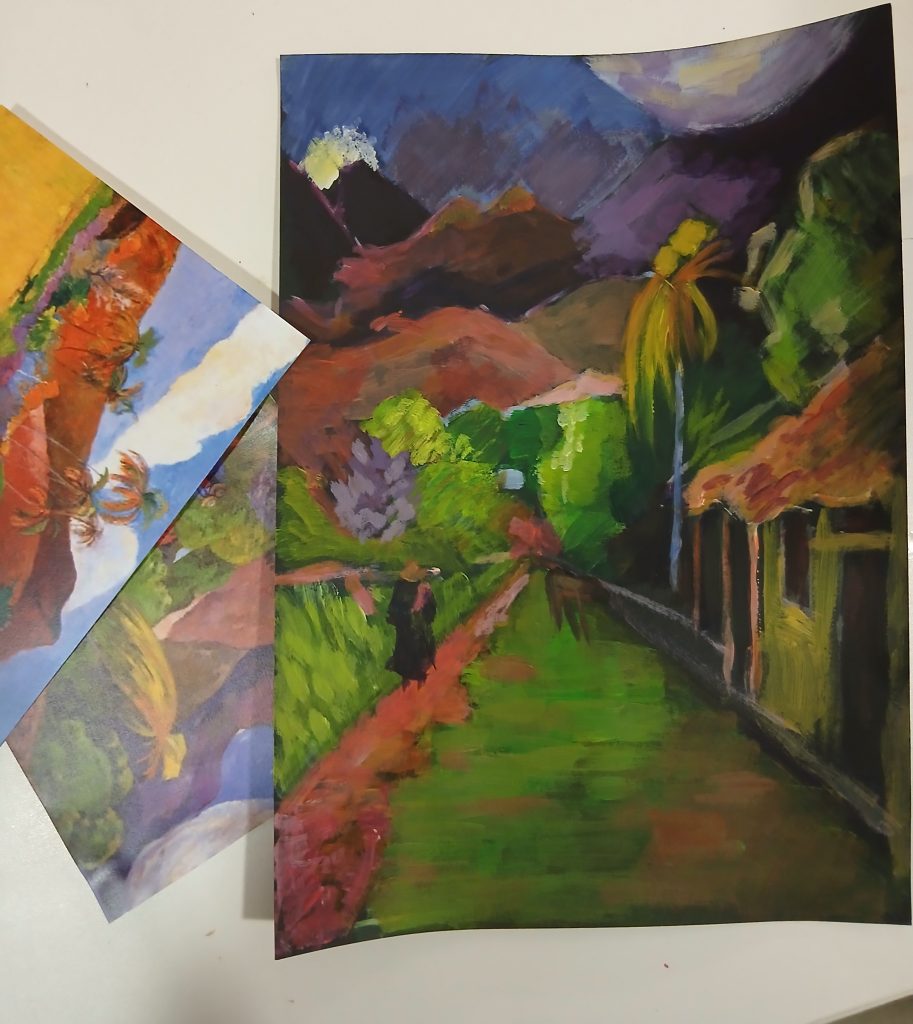
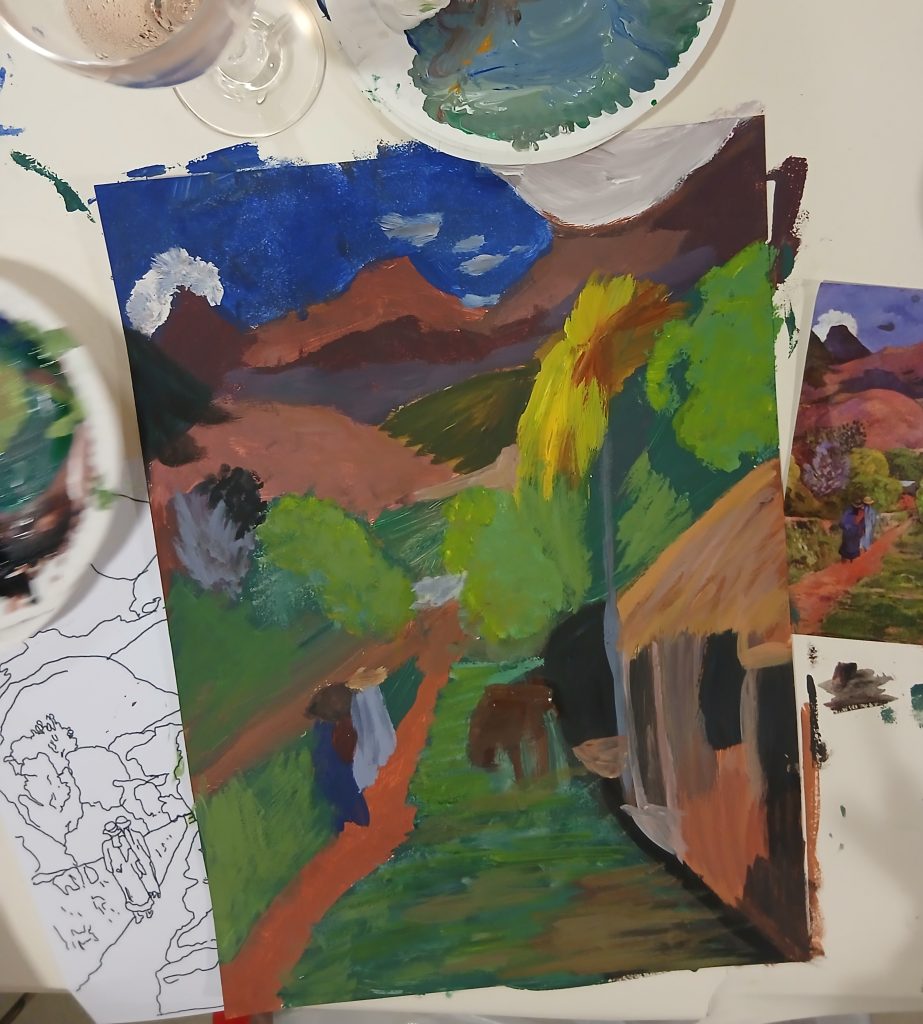
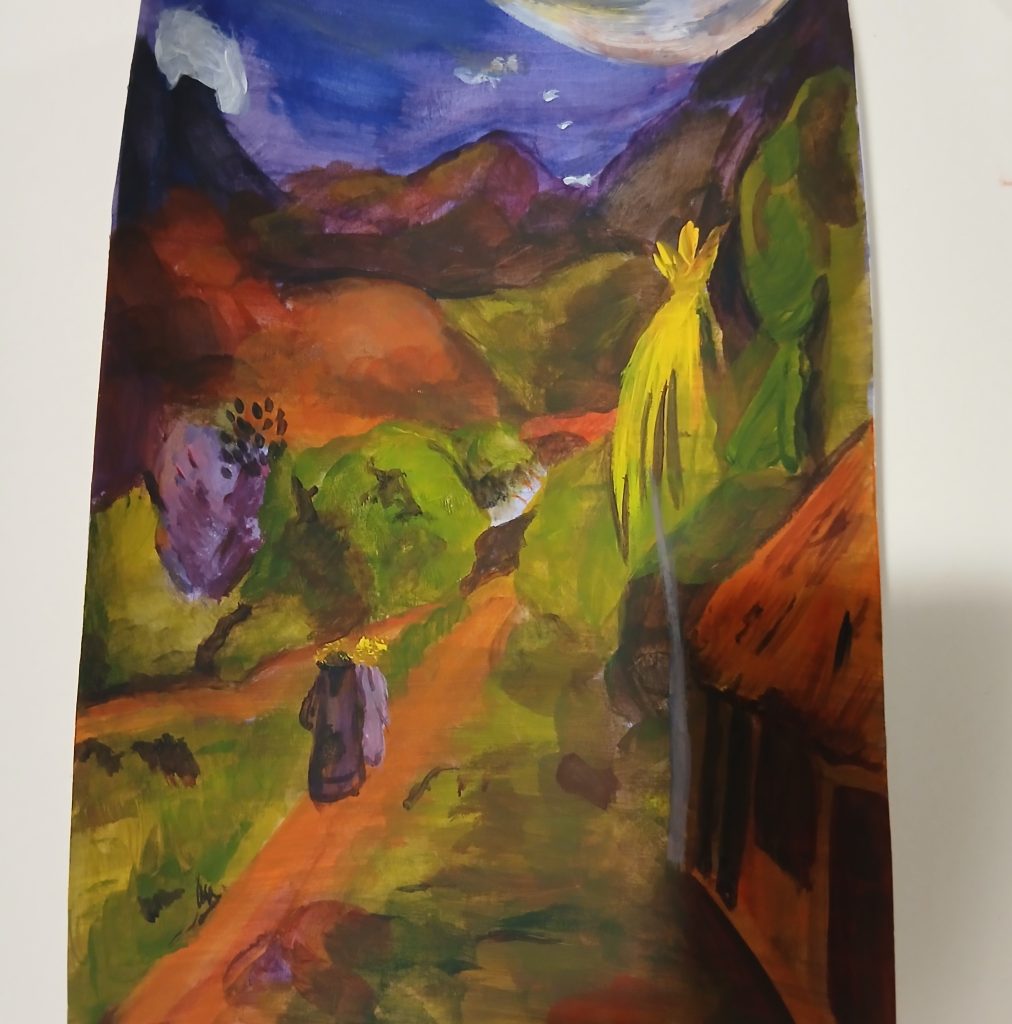
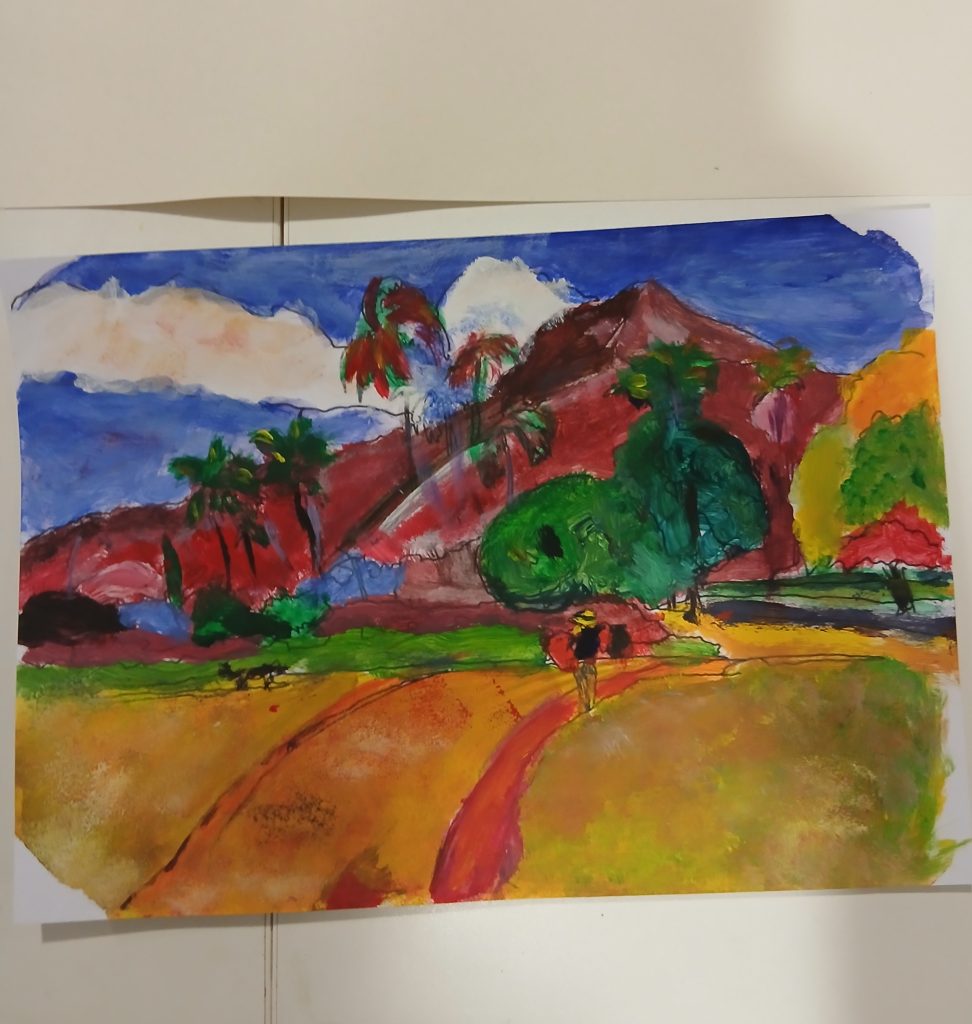
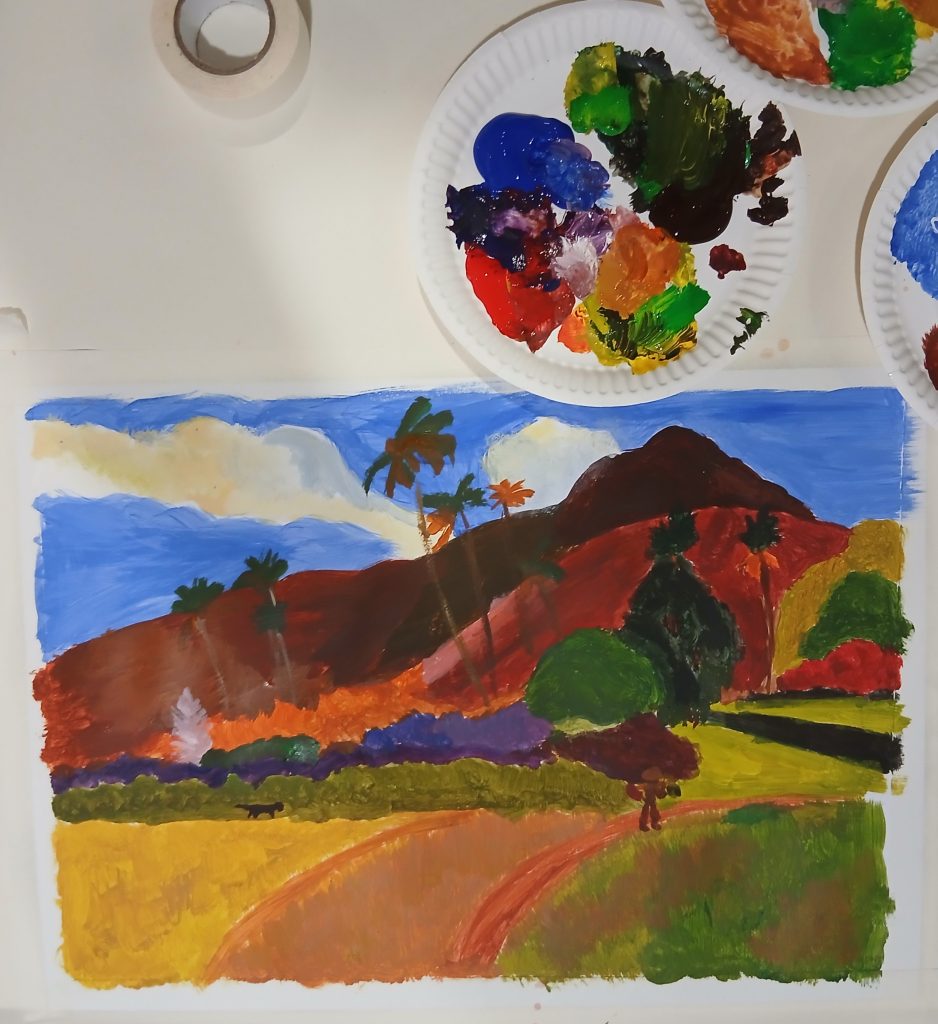
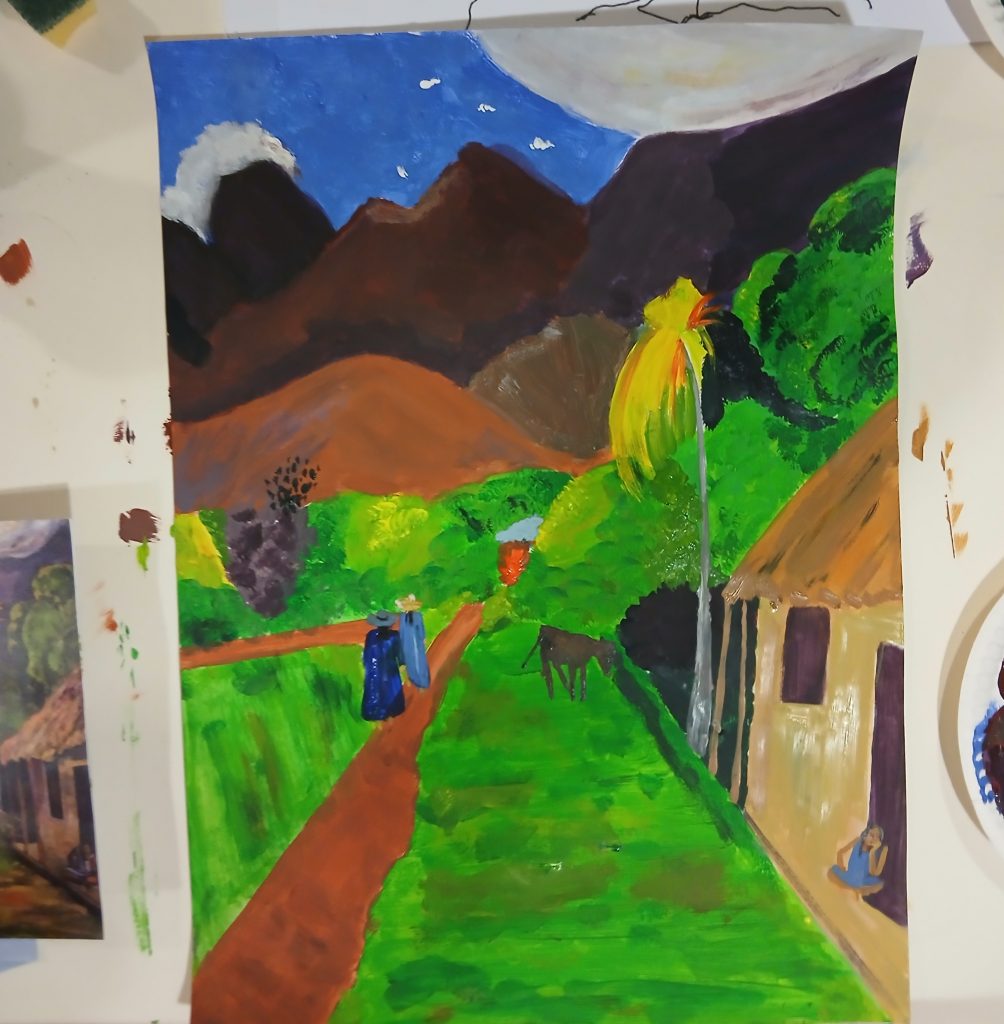
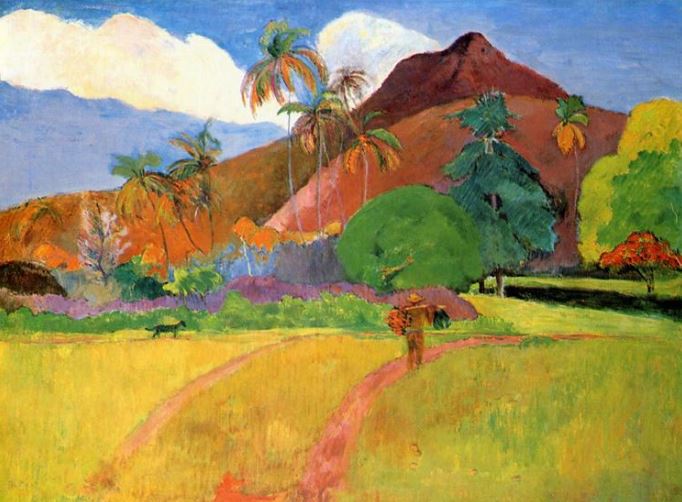
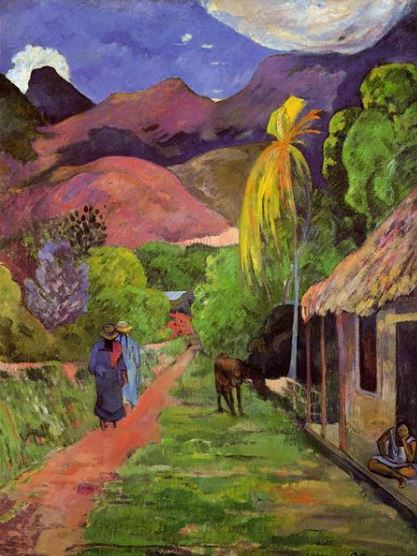
Another sell-out paint and sip event at Winchester’s Arc. Paul Gauguin Tahitian Sun.
The evening began with a short, illustrated talk about the artist, including a brief biography tracing his life from Copenhagen and Peru to Tahiti, and explaining why he is recognised as a major figure in modern art.
This introduction helped the artists connect with Gauguin and his work, encouraging a deeper appreciation of the masterpiece they were recreating.
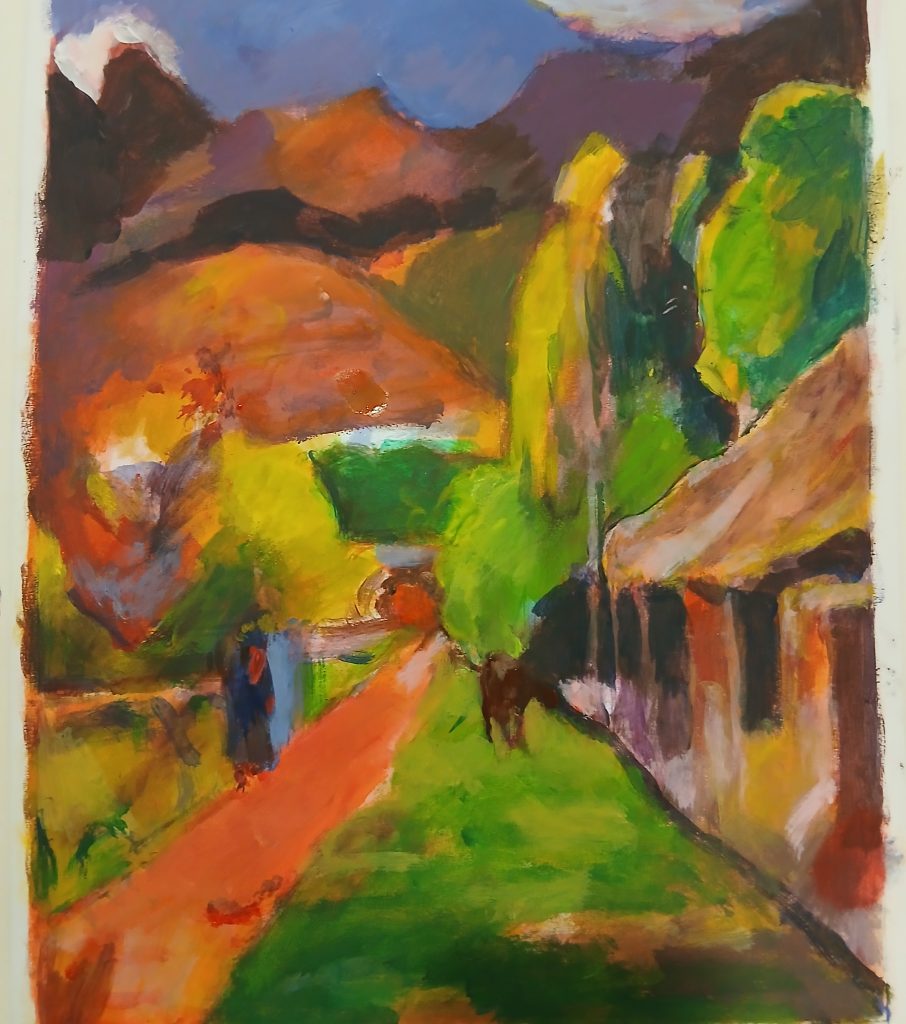
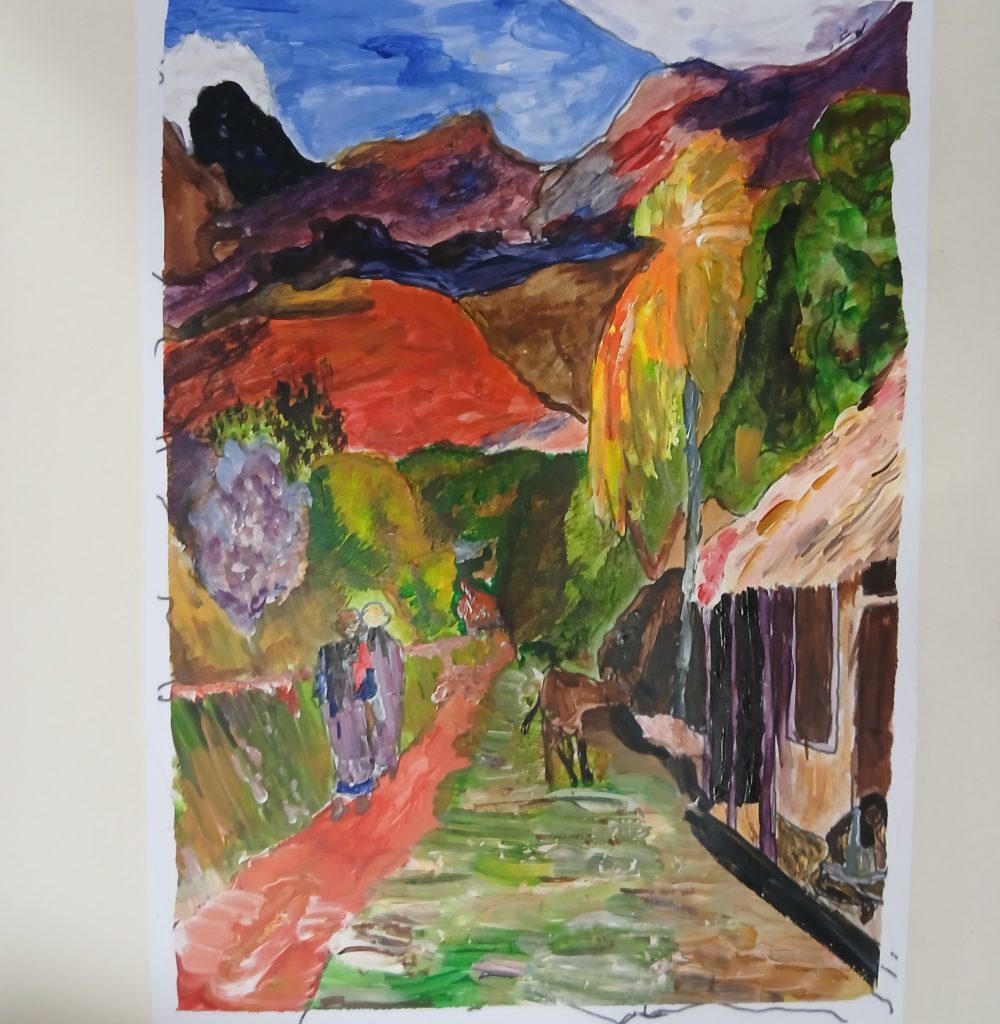
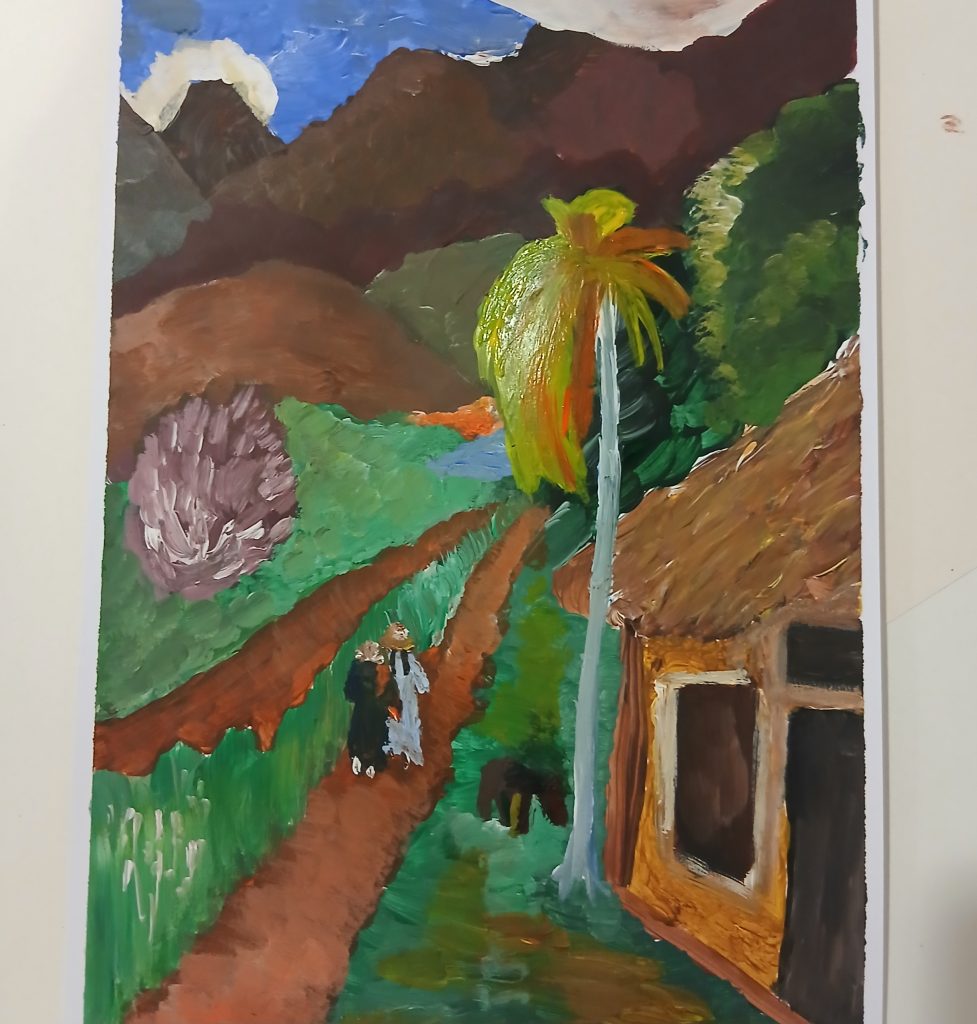
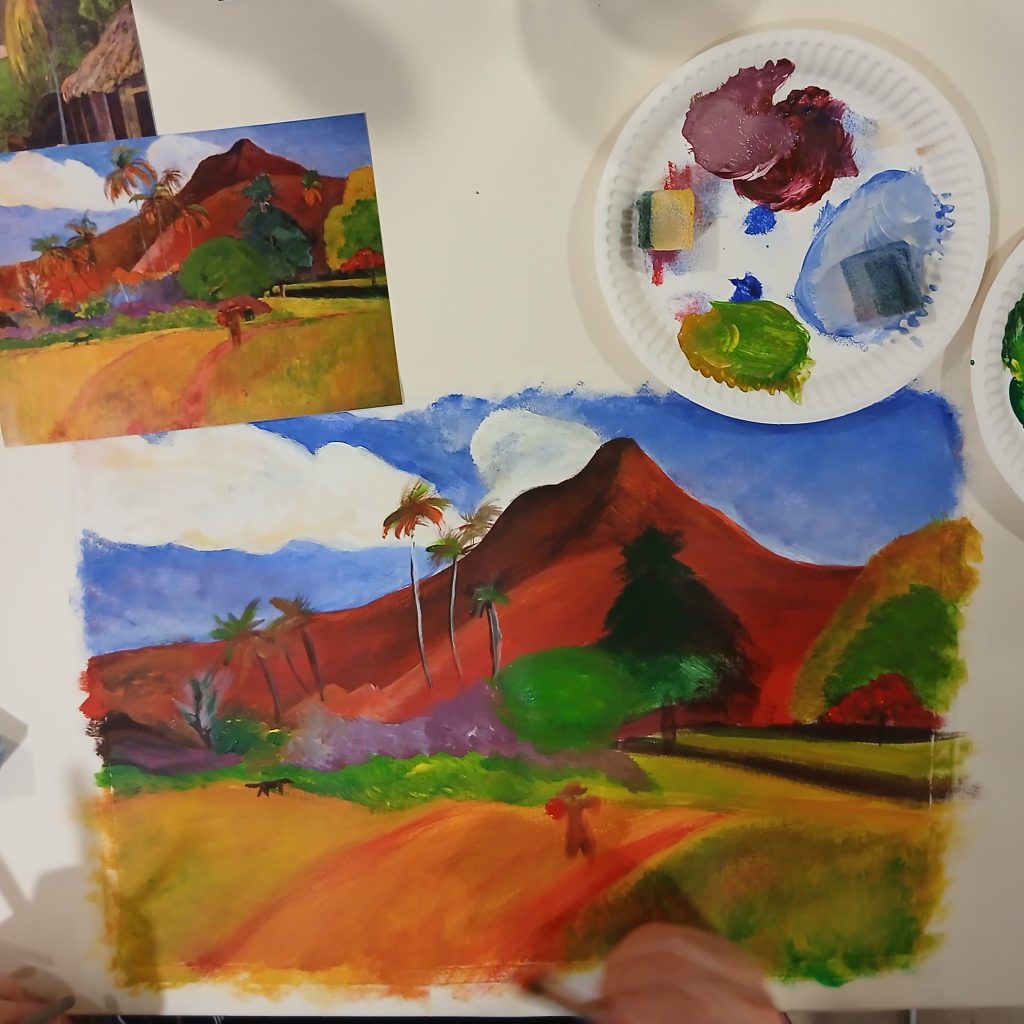
With eclectic music playing in the background, along with soft drinks and wine to help the creativity flow, all 22 participants left delighted with what they had achieved by the end of a highly enjoyable evening.
Below are just some of the highlights from a wonderfully creative and sociable evening.
Paul Gauguin’s reputation meets with very mixed responses. His lifestyle, his experiences in the South Seas and his incredible influence on modern art are almost as contradictory as could possibly be imagined. Warmth of Tahitian sun in Winchester
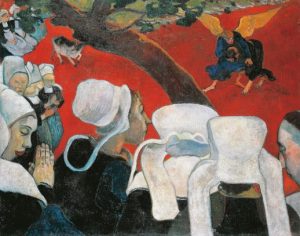
Gauguin had made a name for himself in the Brittany village of Pont Aven where he and his followers developed a movement we now term as Symbolism and this together with his work on cloisonnism and synthetism made Gauguin a major feature in avant-garde art.
These artists accentuated the expressive impact of individual sensations by completely excluding an objective reference to reality.
Symbolism – the inclusion of items symbolising various meanings for example St Michael fighting the Devil below. Cloisonnism – flat areas of colour and bold outlines and synthetism – neither form nor colour predominate but each has an equal role. All as can be seen in his work Vision After the Sermon 1888.
Paul Gauguin travelled to Tahiti occasionally returning to France. Gauguin’s style of symbolism, cloisonnism and synthesism was richly developed in Tahiti and mark him out as a genius in the evolution of Modern Art. A major step forward in the avant-garde.
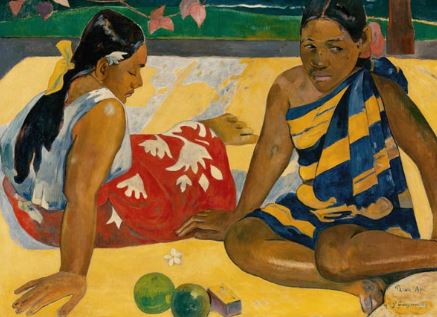
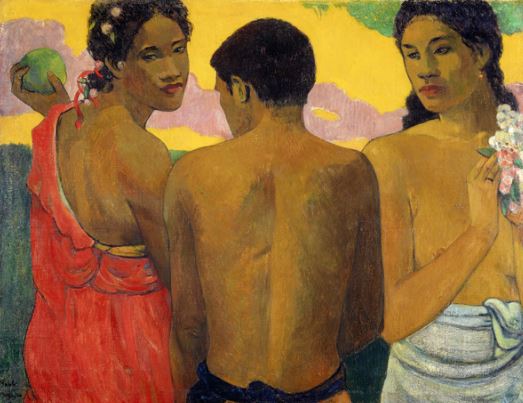
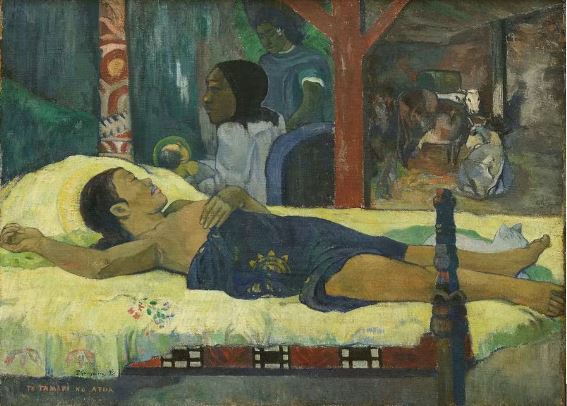
Paul Gauguin led a fascinating life. After working on the Panama Canal, he married a Danish girl, and they had 5 children. They moved from France to Copenhagen where Gauguin became a tarpaulin salesman, but he couldn’t speak Danish. So that did not work. He became a stockbroker, but that did not work. So, he became an artist.
In 1885 he left his wife and children and moved to Paris to enjoy the art community there.
Following his move to Arles in 1888 to join his friend Vincent Van Gogh he journeyed to the South Seas where he sought and found the free primitive hedonistic lifestyle that suited him.
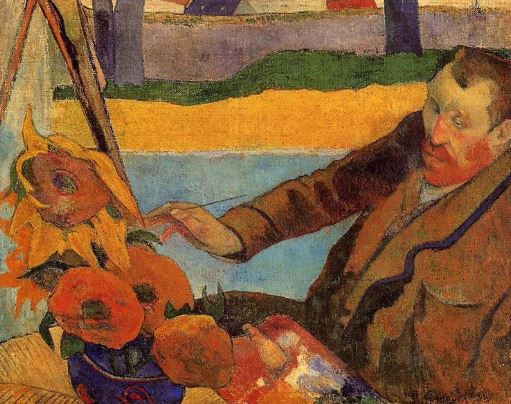
Eugène Henri Paul Gauguin 7 June 1848 – 8 May 1903) was a French painter, sculptor, printmaker, ceramist, and writer, whose work has been primarily associated with the Post-Impressionist and Symbolist movements.
Under the influence of folk art and Japanese prints, Gauguin’s work evolved towards Cloisonnism.
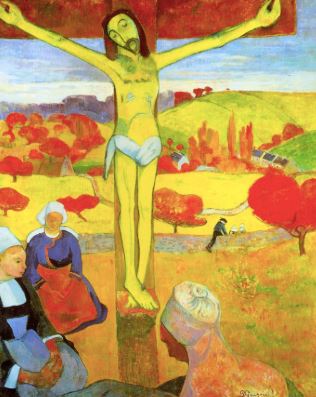
In Gauguin’s The Yellow Christ (1889), often cited as a quintessential Cloisonnism work, the image was reduced to areas of pure colour separated by heavy black outlines. In such works Gauguin paid little attention to classical perspective and boldly eliminated subtle gradations of colour, thereby dispensing with the two most characteristic principles of post-Renaissance painting. His painting later evolved towards Synthetism in which neither form nor colour predominate but each has an equal role.
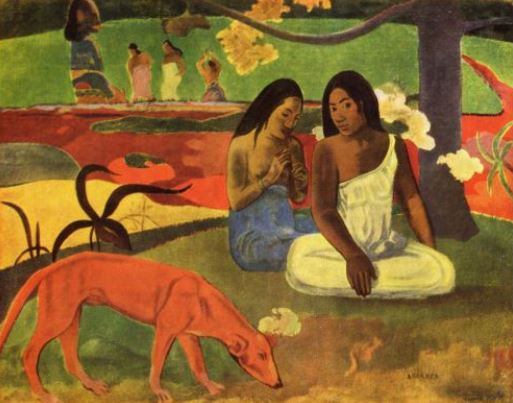
Warmth of Tahitian sun in Winchester