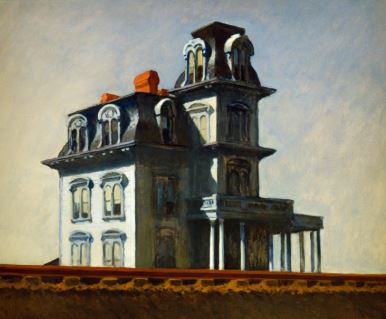
Greenwich Village NYC at Winchester’s ARC
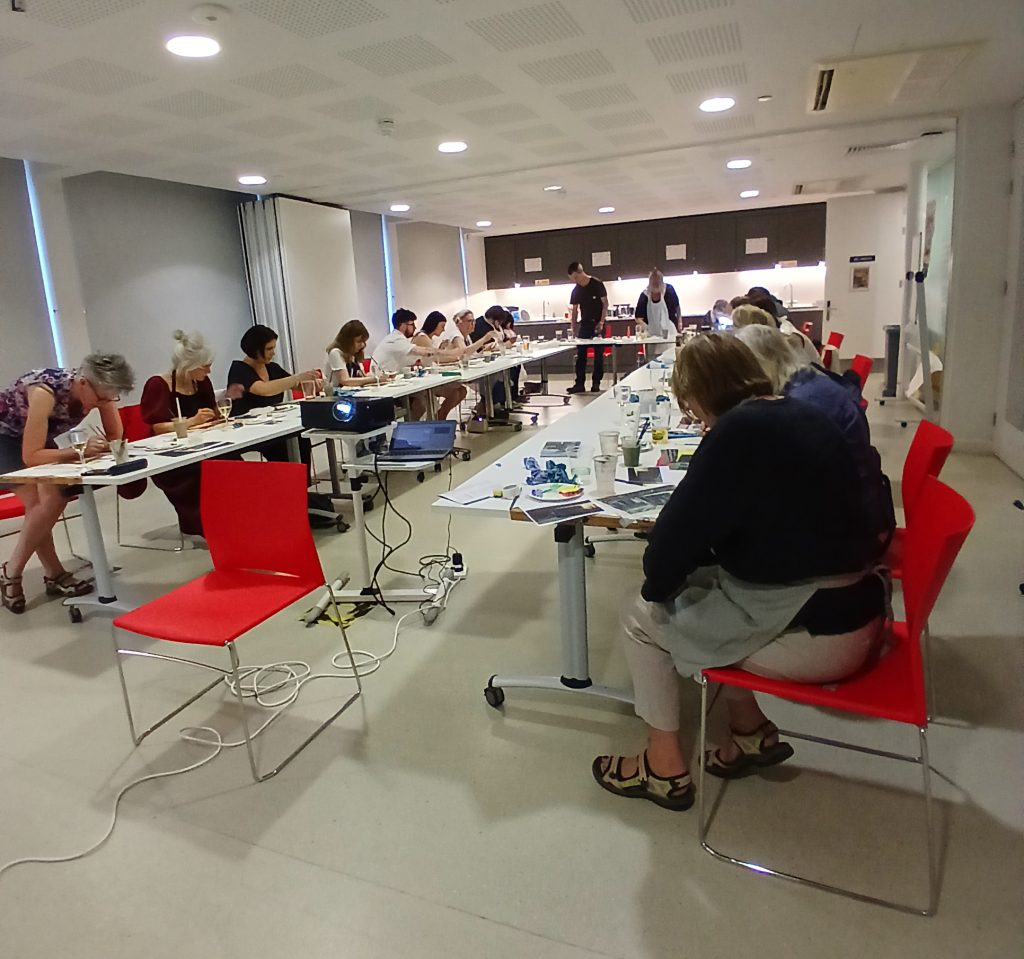
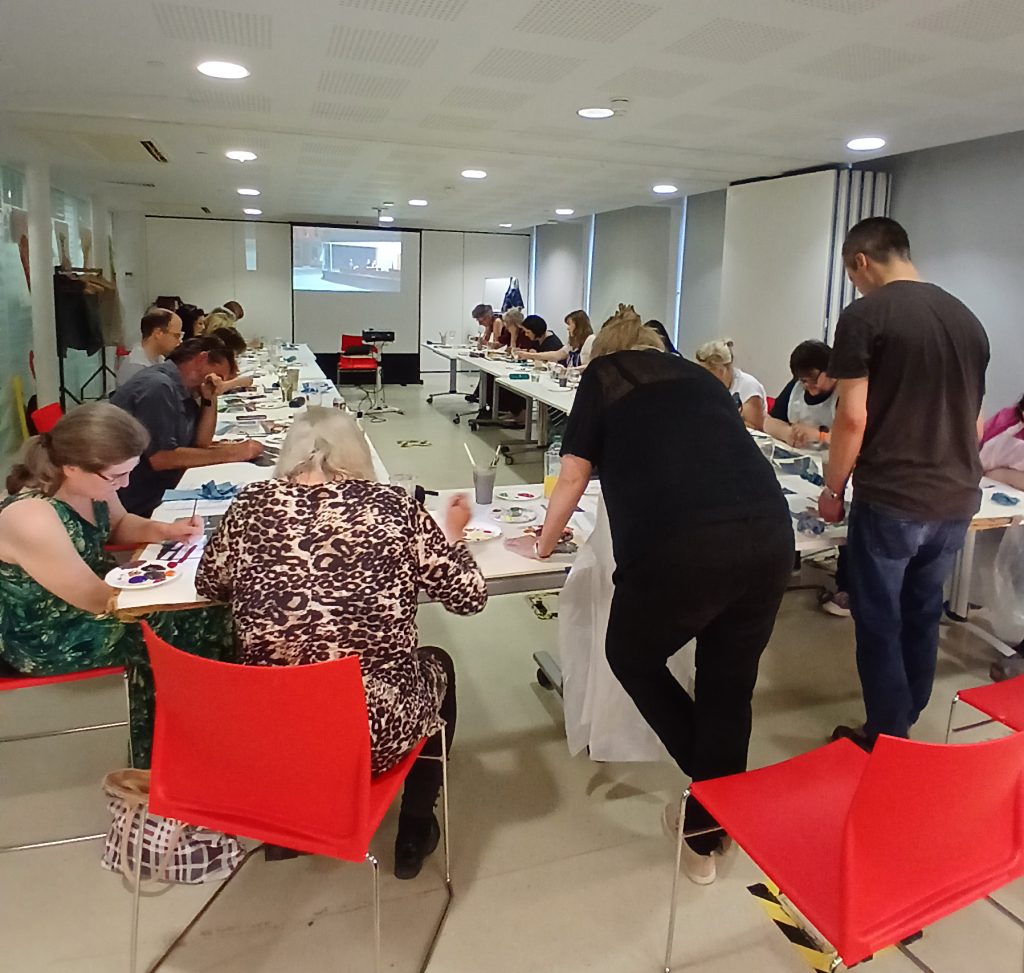
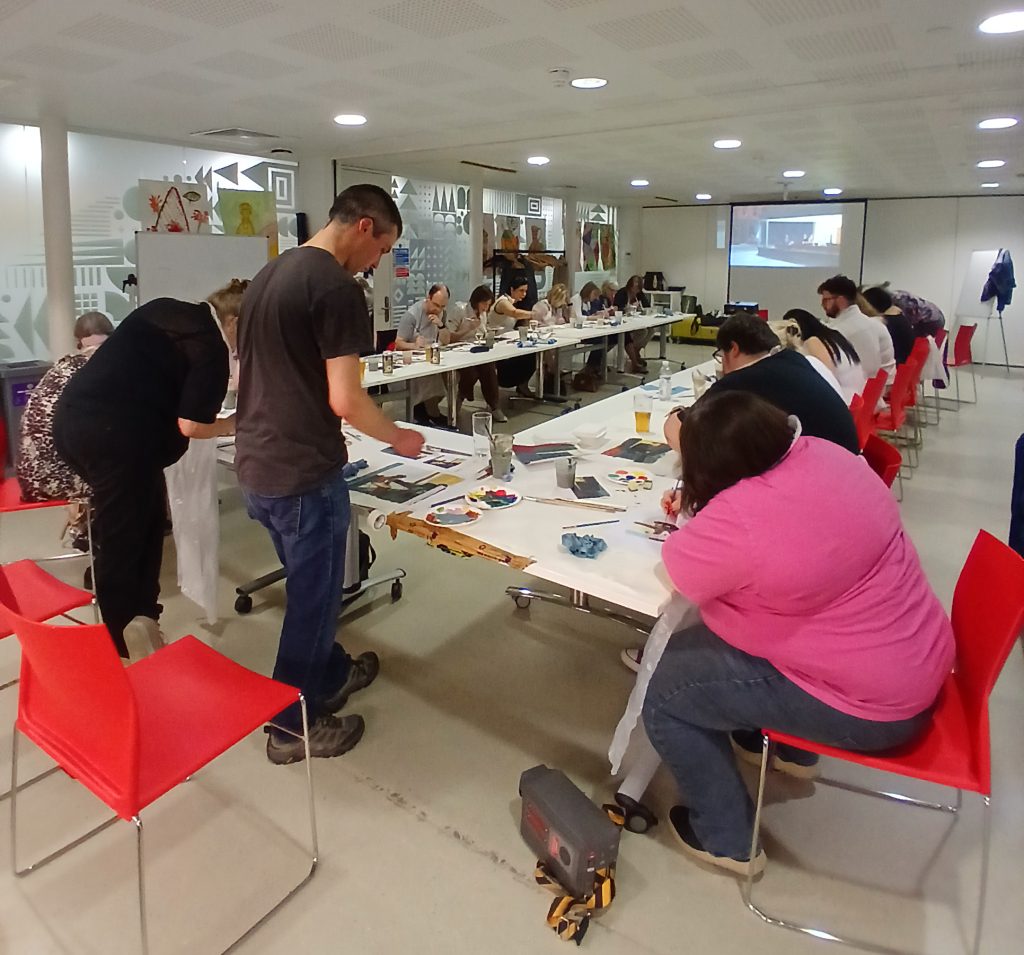
Fantastic evening at Winchester’s ARC when a sold out event attracted 21 artists to enjoy creating their own version of Edward Hopper’s Hotel Room and Nighthawks.
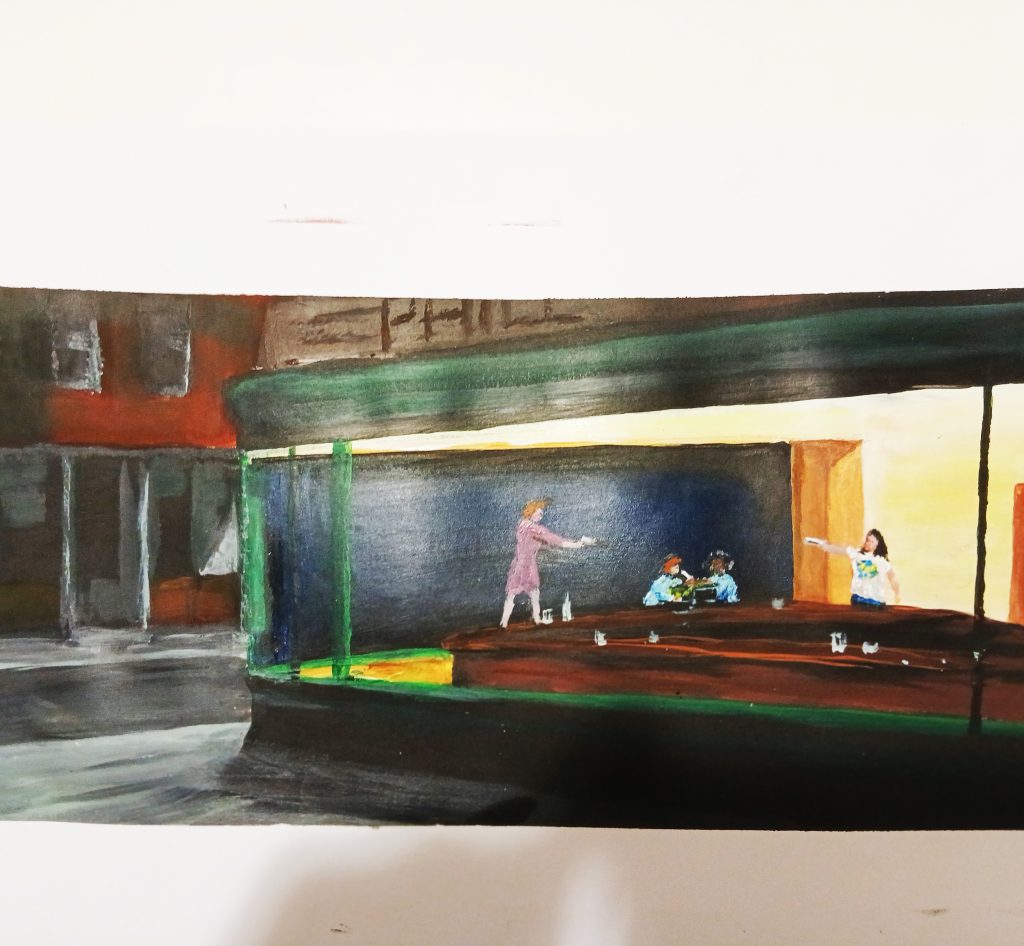
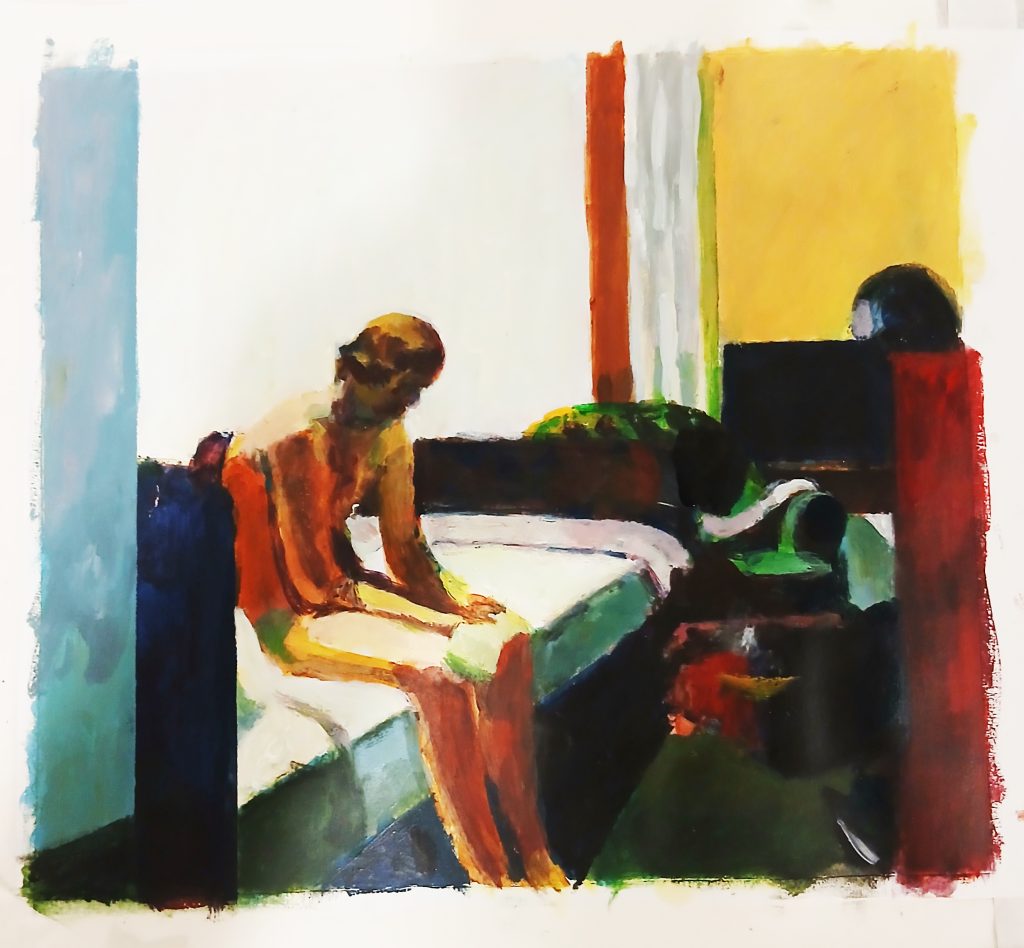
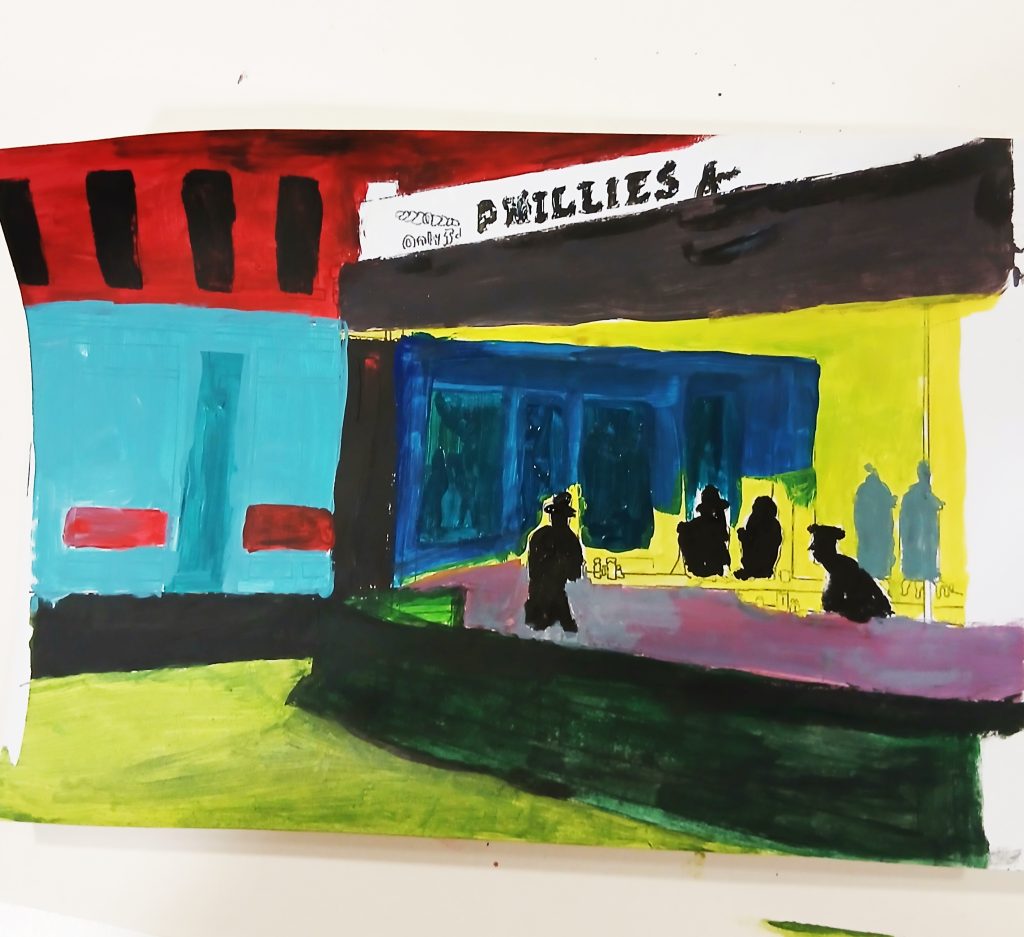
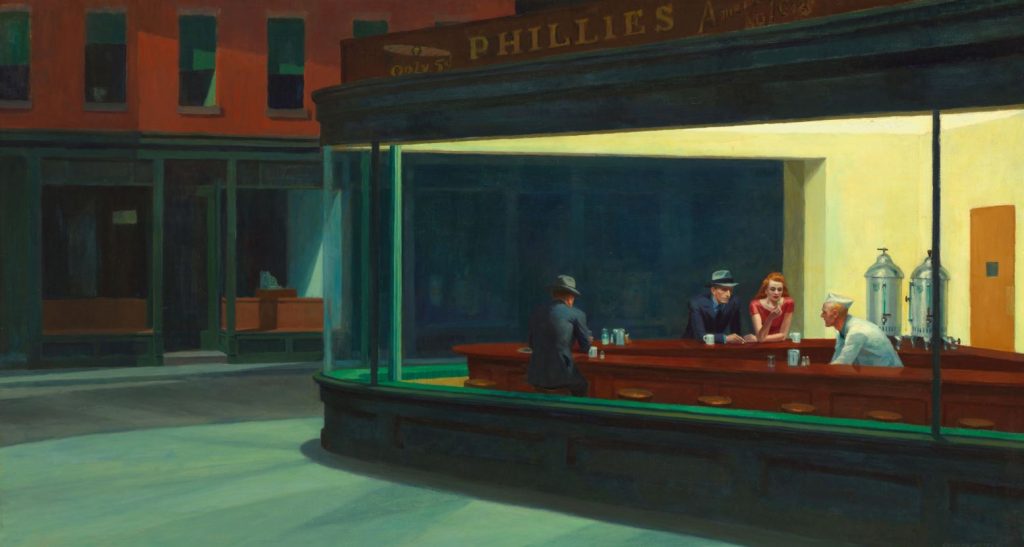
What was happening in 1942? Pearl Harbor was attacked in 1941, so the USA was now drawn into the World War II. 32nd US President Franklin D Roosevelt was in charge. US motor manufacturers switched their priority to war machines. Daylight Savings War Time goes into effect. Nazi U-boat sink an American cargo ship at the mouth of the Mississippi River. Gasoline rationing introduced. In New York – no more baseball night games. Bing Crosby’s White Christmas and Silent Night recorded. The British wartime movie Mrs Miniver makes a dramatic impression on America’s attitude to the war in Europe. USA & USSR sign Lend-Lease. Bambi is released. It has been raining a lot. And on and on…and this is just up to the fall in America. Greenwich Village NYC at Winchester’s ARC
What do you think were the prevailing attitudes at the time? The politics and the economic situation? Do you think any of these influenced Hopper?
The answer is almost certainly ‘yes’. (Source: Conversation of Art)
Look at the players in this picture. Are we looking at loneliness or companionship? How do you think they are making a living – or not? Remember the above: huge increase in industrial manufacturing and with show-business – business as usual.
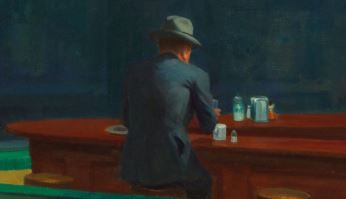
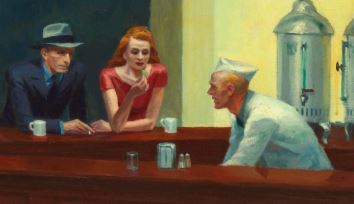
They might even be here because the baseball has been cancelled.
The restaurant depicted was inspired by one in Greenwich Village. Both Hopper and his wife posed for the figures, and Jo Hopper gave the painting its title.
Edward Hopper (July 22, 1882 – May 15, 1967) was an American realist painter and printmaker. He is one of America’s most renowned artists and known for his skill in depicting modern American life and landscapes.
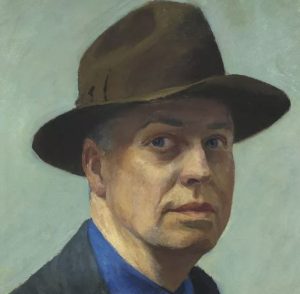
Born in Nyack, New York, to a middle-class family, Hopper’s early interest in art was supported by his parents. He studied at the New York School of Art under William Merritt Chase and Robert Henri, where he developed a signature style characterized by its emphasis on solitude, light, and shadow.
The tendency to read thematic or narrative content into Hopper’s paintings, that Hopper had not intended, extended even to his wife. When Jo Hopper commented on the figure in Cape Cod Morning “It’s a woman looking out to see if the weather’s good enough to hang out her wash,” Hopper retorted, “Did I say that? You’re making it Norman Rockwell. From my point of view she’s just looking out the window.”
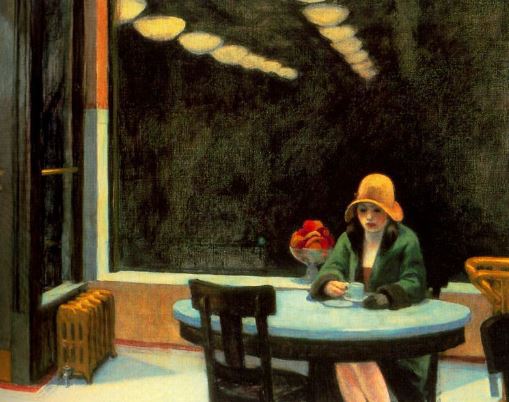
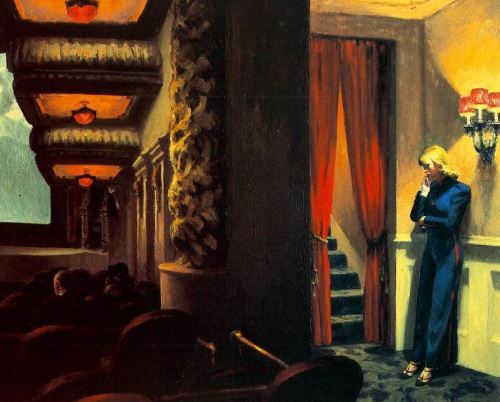
Hopper’s technique, marked by a composition of form and use of light to evoke mood, has been influential in the art world and popular culture. His paintings, often set in the architectural landscapes of New York or the serene environments of New England, convey a sense of narrative depth and emotional resonance, making him a pivotal figure in American Realism. Hopper created subdued drama out of commonplace subjects layered with a poetic meaning, inviting narrative interpretations. He was praised for “complete verity” in the America he portrayed.
Hopper paid particular attention to geometrical design and the careful placement of human figures in proper balance with their environment. He was a slow and methodical artist; as he wrote, “It takes a long time for an idea to strike. Then I have to think about it for a long time. I don’t start painting until I have it all worked out in my mind. I’m all right when I get to the easel”
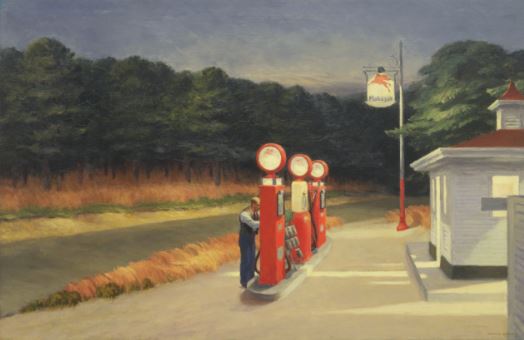
Although a realist painter, Hopper’s “soft” realism simplified shapes and details. He used saturated colour to heighten contrast and create mood.
(Source – Wikipedia)
Greenwich Village NYC at Winchester’s ARC