
Johannes Vermeer’s most renowned and iconic painting is widely known as ‘Girl with the Pearl Earring’. Completed in 1667, this work presents a young woman portrayed from the shoulders up, her head turned toward the viewer, set against a dark background. The Girl’s Story
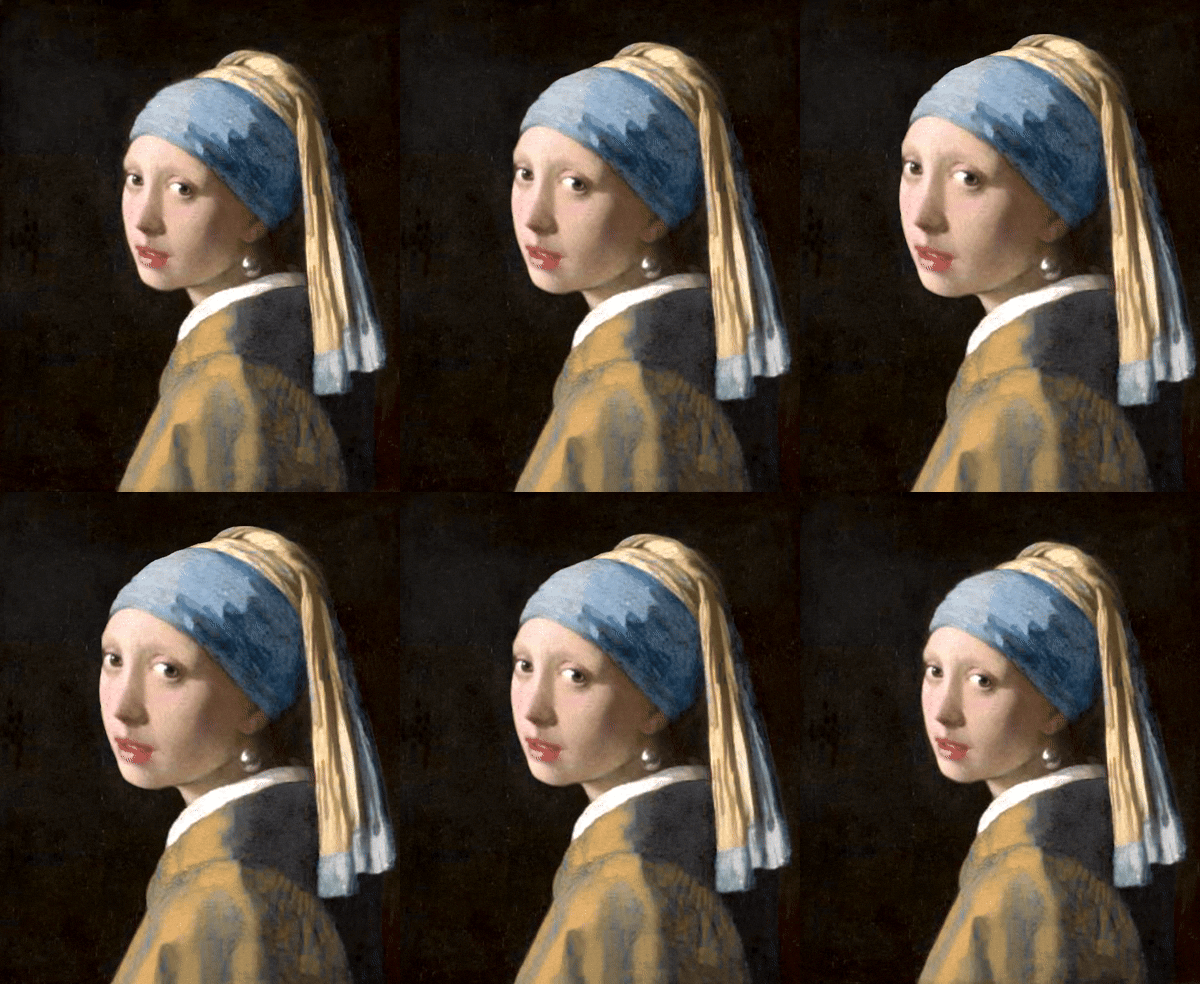
Notably, the headdress worn by the subject bears an almost Middle Eastern influence, accentuating the crown of her head—a detail that may offer interpretive insight. The direct gaze of the girl creates an impression of immediacy, as if she is about to address the viewer. The distinctive pearl earring, for which the painting is named, is prominently featured.
There has been significant scholarly debate regarding the identity of the sitter. According to Andrew Graham-Dixon in his book ‘Vermeer. A Life Lost and Found’, the subject was purportedly 12 year old Magdalena, the daughter of Maria de Knuijt and Pieter Claesz van Ruijven. Maria and Pieter were prominent patrons of Vermeer, commissioning numerous works for display in their Delft residence within the United Provinces of the Netherlands.
Maria and Pieter were affiliated with the Remonstrant Church—a Protestant denomination independent of the Northern Netherlands’ Calvinist tradition, which originated partly in response to the Dutch War of Independence and the decline of Catholic dominance in the region. The Remonstrant congregation advocated inclusivity among various religious groups, extending participation to Muslims, Jews, Catholics, and Calvinists alike.
Despite this spirit of tolerance, the Remonstrants often maintained a low profile, particularly since women were afforded greater freedom of expression and worship within the sect. Consequently, many meetings, especially those involving women, took place in private residences, such as that of Maria and Pieter. It is believed Vermeer’s paintings served as aids for prayer and meditation during these gatherings, differing markedly from the explicit religious imagery characteristic of contemporary Catholic art in France and Italy.
Vermeer’s oeuvre is thus distinguished not only by its domestic realism but also by its capacity for conveying narratives aligned with Remonstrant theological perspectives. His paintings are considered visual interpretations of biblical stories presented through everyday contexts accessible to the congregation and visitors alike.
In the case of ‘Girl with the Pearl Earring’, it has been suggested that the daughter’s name Magdalena may allude to the biblical figure Mary Magdalene, recognized as the first witness to Christ’s resurrection. Andrew Graham-Dixon posits that the girl in Vermeer’s painting symbolically represents Mary Magdalene, directly engaging the observer as if they stand before the empty tomb. While this interpretation may appear speculative, it should be viewed within the historical and cultural context of seventeenth-century Netherlands, the beliefs of the Remonstrant Church, and the practice of using Vermeer’s works to illustrate biblical lessons for private contemplation.
At the very least, it offers an intriguing perspective on the painting’s enduring delight.
The Girl’s Story