
Andrew Graham-Dixon & Vermeer: I met with Andrew Graham-Dixon in Lewes recently.
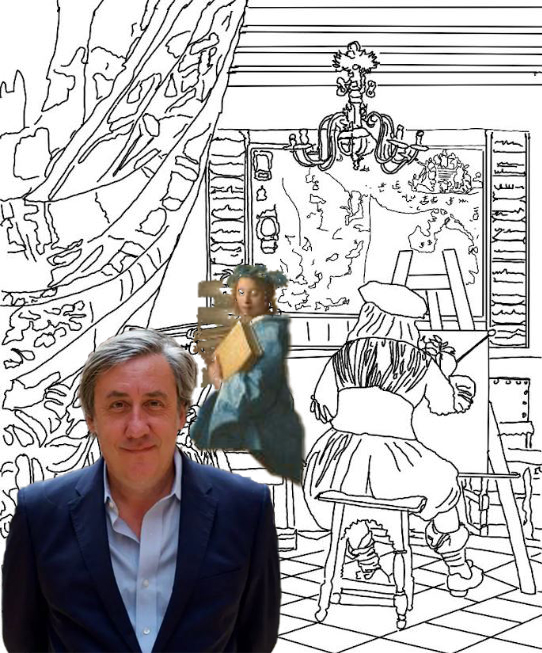
He was talking about how a viewer can gain so much more when looking at a painting by considering its context. Why was it painted, when and in particular, what is its meaning?
Andrew used several examples including Caravaggio, Johannes Vermeer, Jasper Johns and Millais. In each case he described the painting then went to great fascinating depth to explore each works’ context and meaning.
I mentioned to Andrew that I was intending to attend his talk at the Winchester ARC in November when he is talking about the extensive research, he has undertaken exploring the work of Johannes Vermeer.
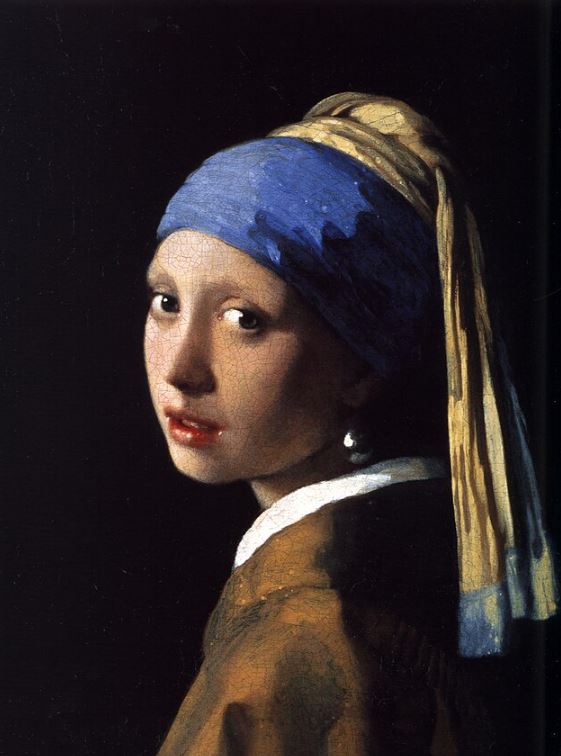
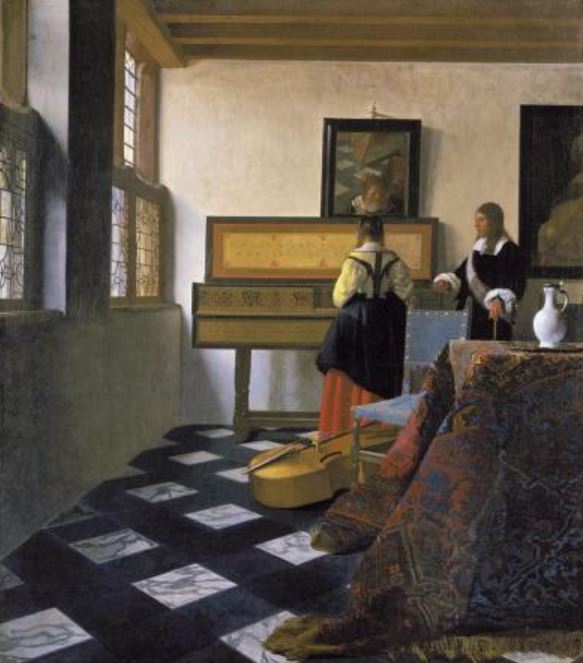
Three of the works of Vermeer have, earlier this year been the subject of the Paint & Sip evenings at the ARC: The Art of Painting, The Music Lesson and The Girl with the Pearl Earring.
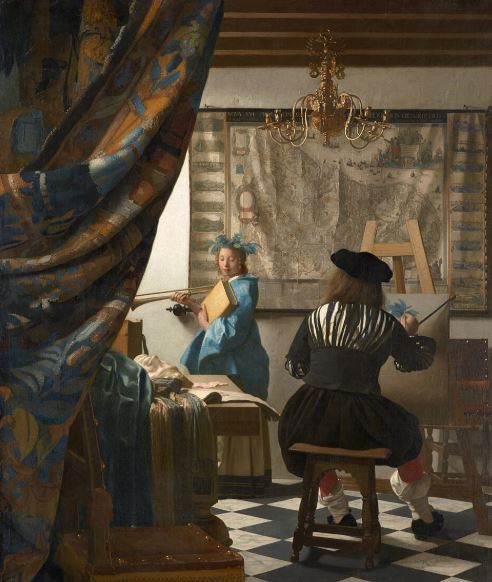
Andrew and I then talked about the figure of Clio who appears in Vermeer’s The Art of painting. Thought to be Vermeer’s daughter whilst he is maybe the artist in the foreground, Andrew explained why the book she is holding is closed.
Clio is a Greek muse of history who chronicles the experiences of past civilizations in order for future civilisations to learn and benefit from. These chronicles are written in her book. As Andrew explained, with the book being closed, is that the end of civilisation? Is that the meaning of the painting? In terms of historical context Vermeer found himself at the end of the Dutch wars of independence from Spain as well as witnessing the end of the 30 Years War. Difficult times, but drawing to a close so why are we considering the end of civilisation and not the beginnings of a fresh start?
Looking forward to hearing Andrew Graham-Dixon’s explanation of this in November.