
Italian Renaissance
Conversation of Art – Extract: The Byzantine style influenced the early Renaissance Italian artists such as Cimabue, Giotto and Duccio. The Catholic Church was the principal source of commissions resulting in what the Church wanted: Biblical pictures with colours and subject matter in the form dictated.
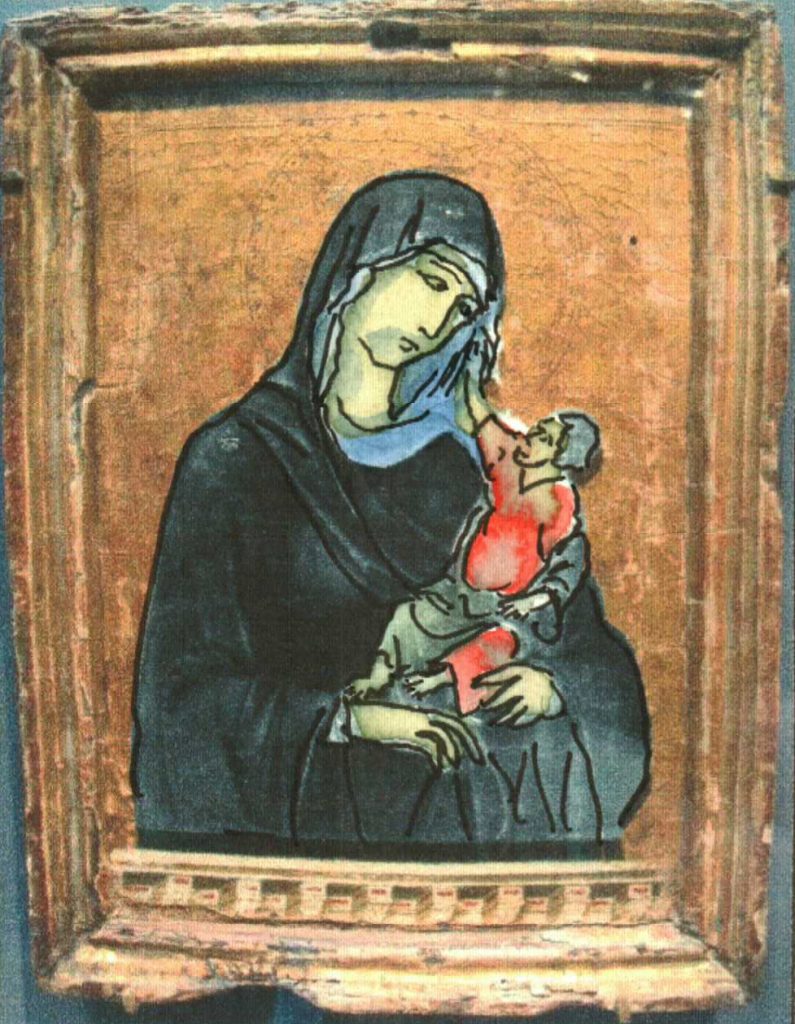
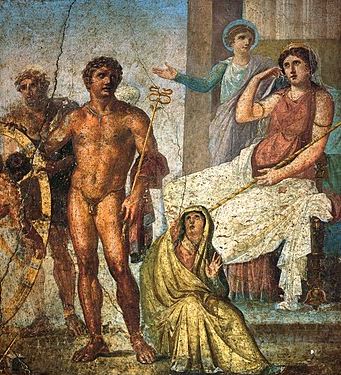

The Church was in charge. Collective representations as a rule formed part of a mystical complexity within which people’s emotional and passionate elements were scarcely allowed any free thinking in order to obtain any personal mastery.
The Catholic Church did not need a modern PR agency. It commissioned the very best image makers to visualise its propaganda and marketing and from there control the flock. The Catholic creed harnessed the power of the picture.
Art became an intermediary between the natural world and the world of spiritual presences. A symbol of an emotional state, a means to convey information. A theological dialogue with the congregation.
Amongst the first of the Early Italian Renaissance painters, we find Giovani Cimabue (1240-1302) who has been heralded as the father of Italian painters, establishing the Florentine School and whose works famously adorn the walls of the Basilica San Francisco of St Frances’ in Assisi.
Cimabue’s c. 1265 Crucifix in the Santa Croce Church Florence amply illustrates the important contribution he made to the evolution of art.
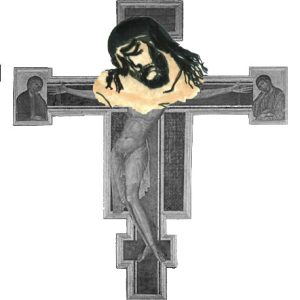
The Christ figure now depicted broken in mortal agony on the cross, not as in Byzantium as invincible even in death, but as one of us, a human being. The new values of humanism. Naked, contorted in pain. Lifelike. A revolutionary portrayal of human suffering that became of seminal importance and influence on Michelangelo, Caravaggio and even Francis Bacon in our modern times.
Until this time artists were not too concerned with a true representation of the human form. Essentially, they were achieving beauty in design and colour of angels and icons of the holy people almost as symbols.
Cimabue, Duccio and Giotto were inspired to show people as people. How they looked, how they thought, how they aspired to achieve enriched lives and not simply as fallen sinful beings simply waiting for judgement and the hereafter.
So artists started new ways of creating the results desired. The real world, true representation yet not losing that profound belief in the divine.
The Renaissance saw the harmonising of the humanistic secular with the transcendent. These early artist pioneers led the way to a whole new world order.
The Renaissance, the new beginning, the revitalisation of art particularly showing humans as humans in a natural way, had begun.
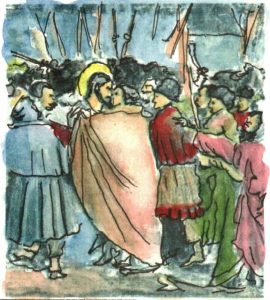
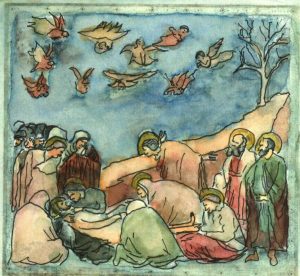
From Cimabue so to Duccio in Sienna and Giotto di Bondone in Florence, breaking away from centuries of Byzantine iconography in favour of more naturalistic forms with their figures on isometric parallel planes as more accepted by the human eye. Duccio and Giotto also brought real human emotions into their art and their figures were given distinctly individual identities.
Conversation of Art – Extract