
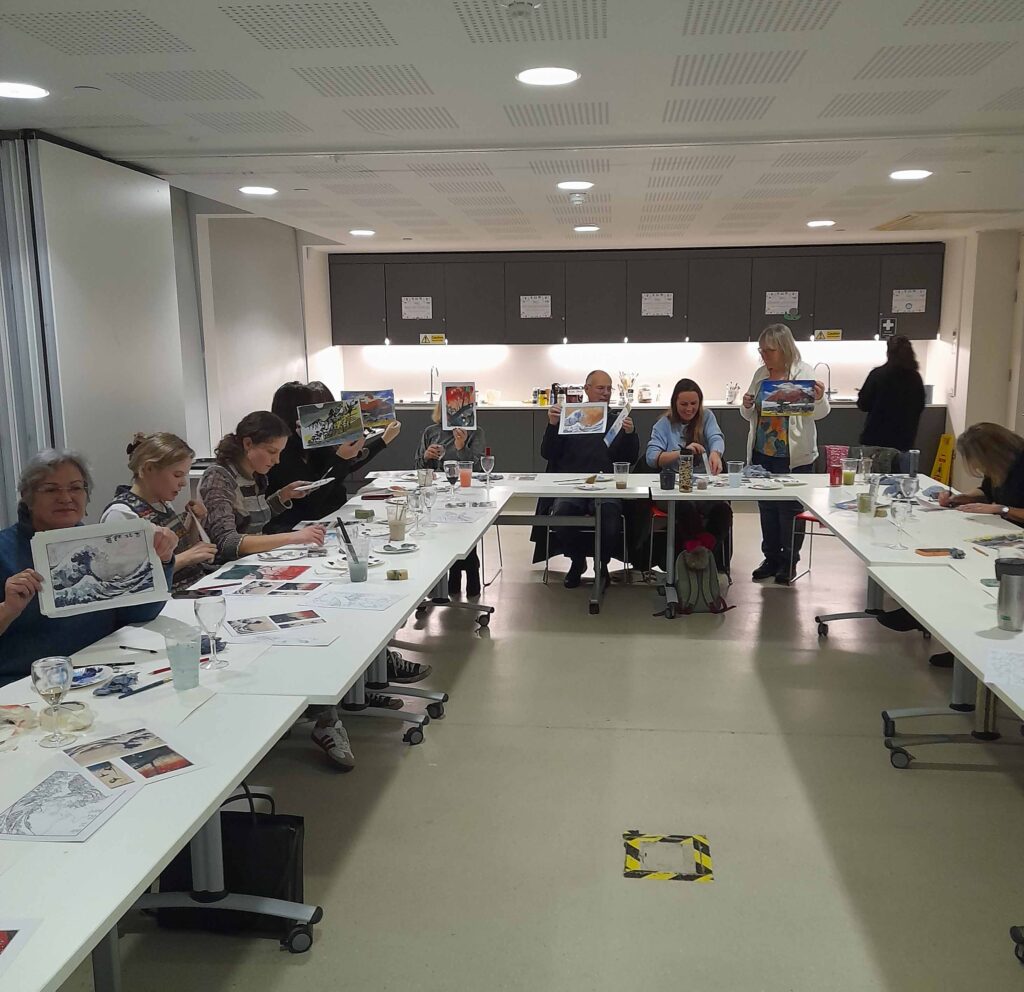
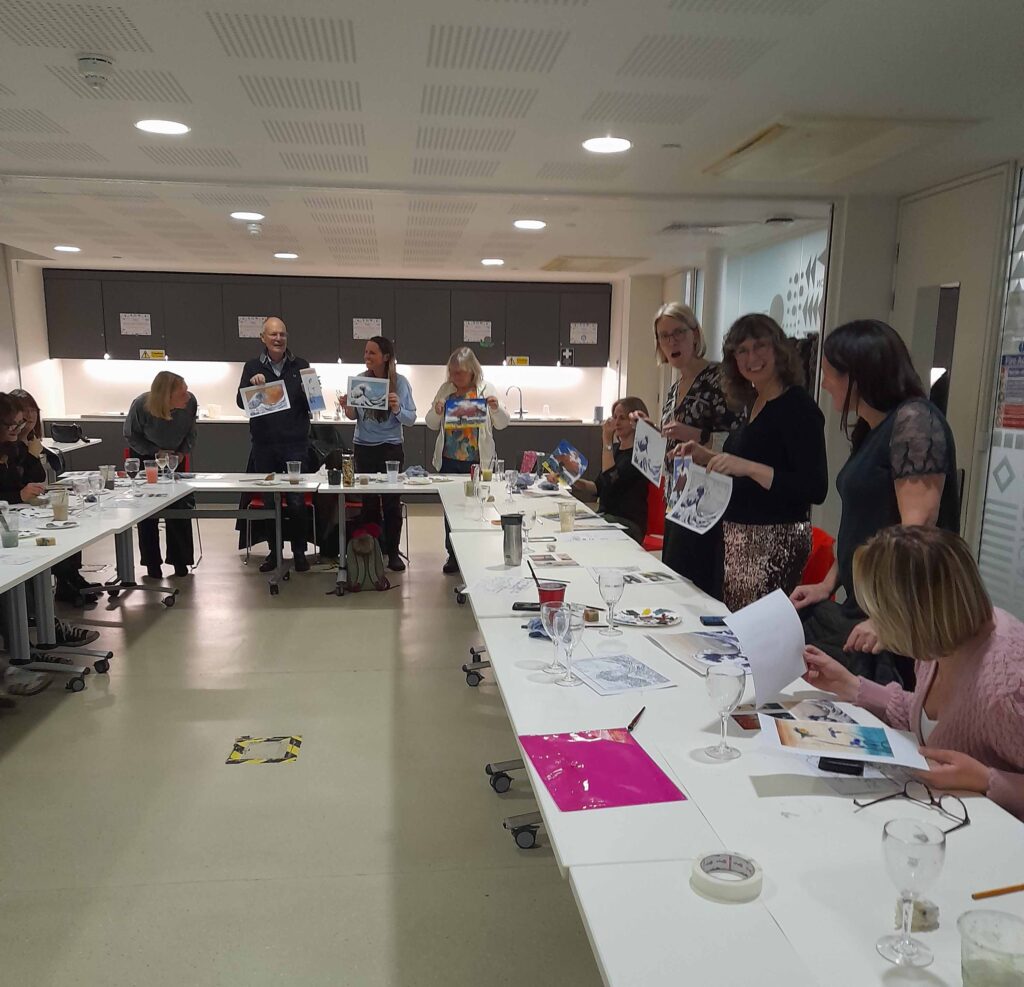
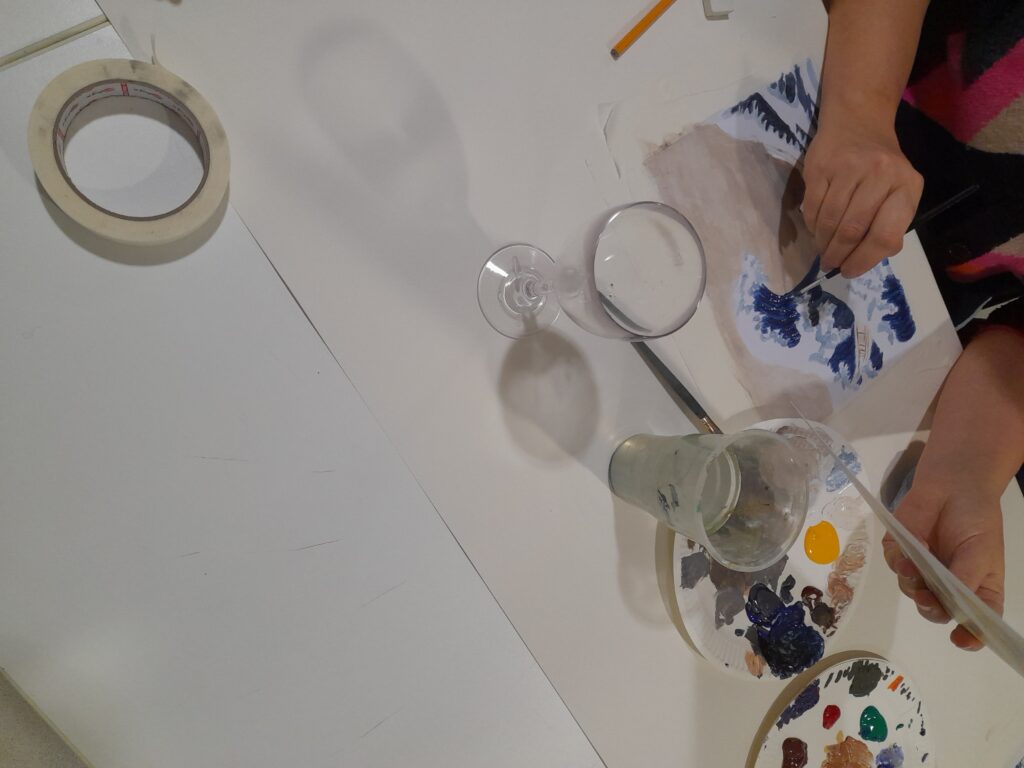
An Evening in Japan – Sip and Paint a masterpiece at the ARC Winchester Friday 6th December 2024 – a huge success with all artists going home absolutely delighted with what they had achieved.
Christmas presents sorted. That space on the wall at home – now filled. A work of art to submit to the Royal Academy Summer Exhibition 2025 even. Well maybe.
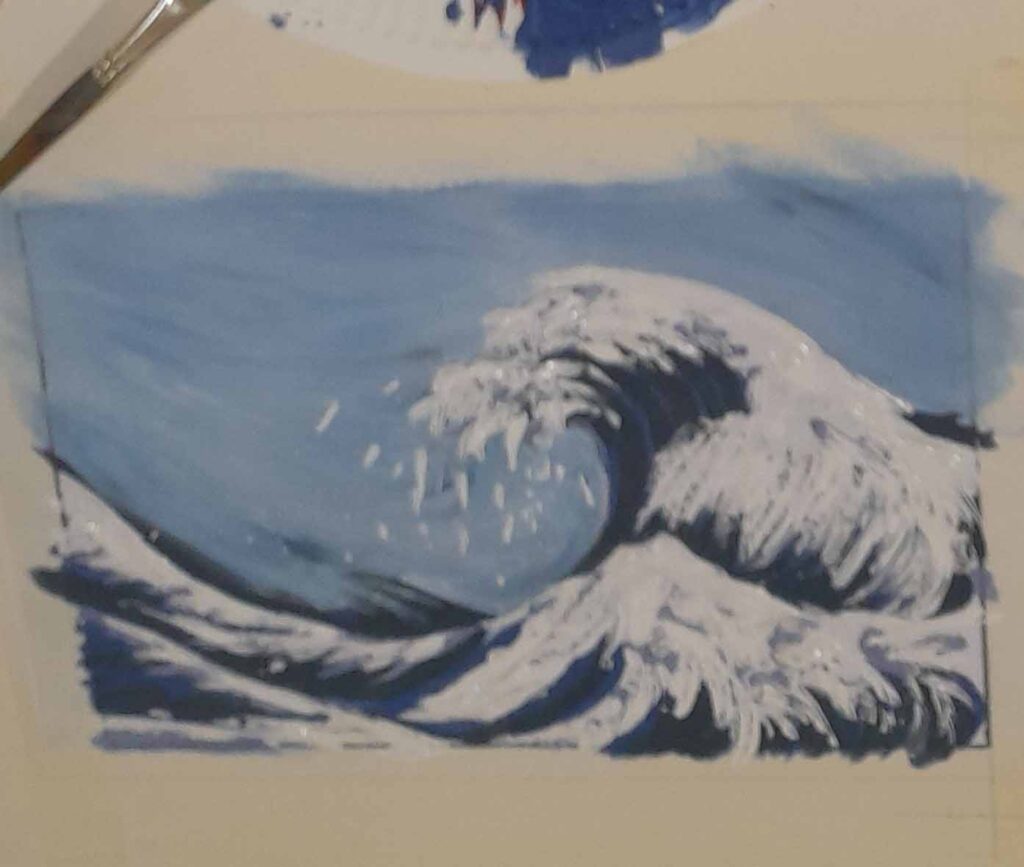
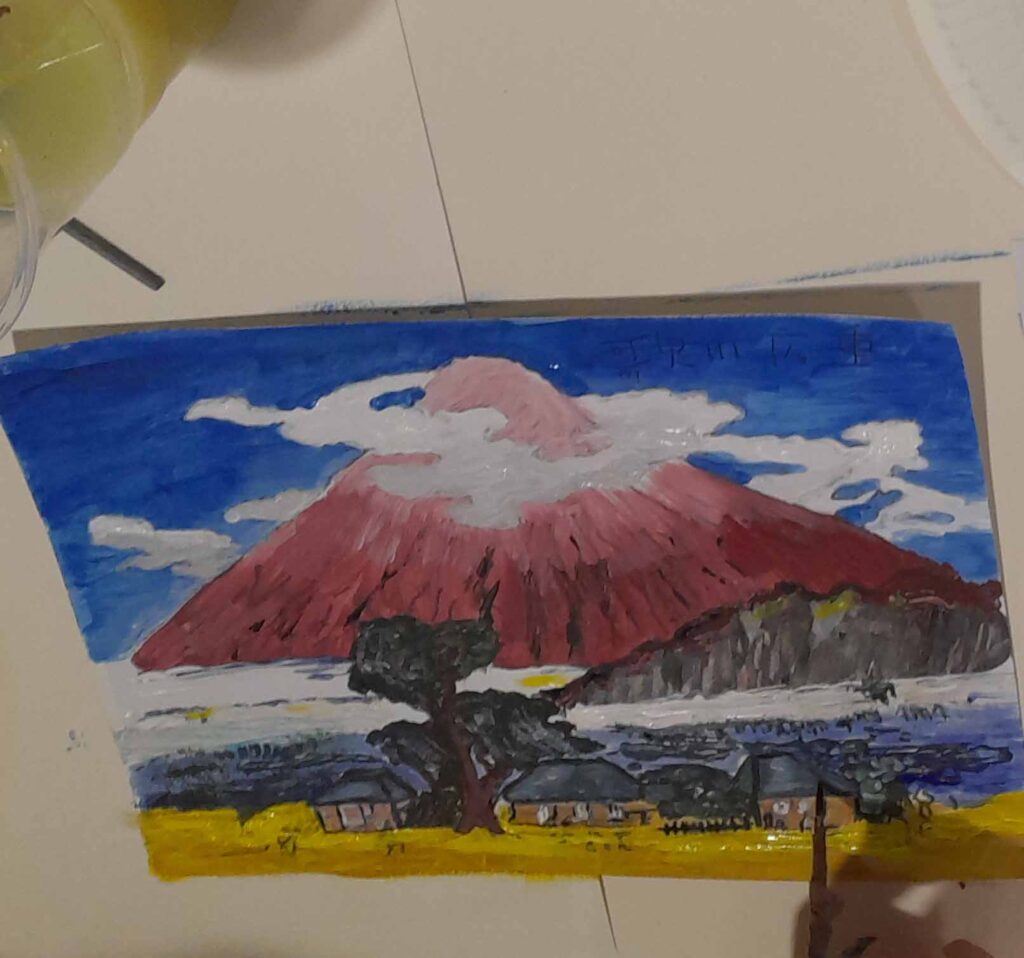
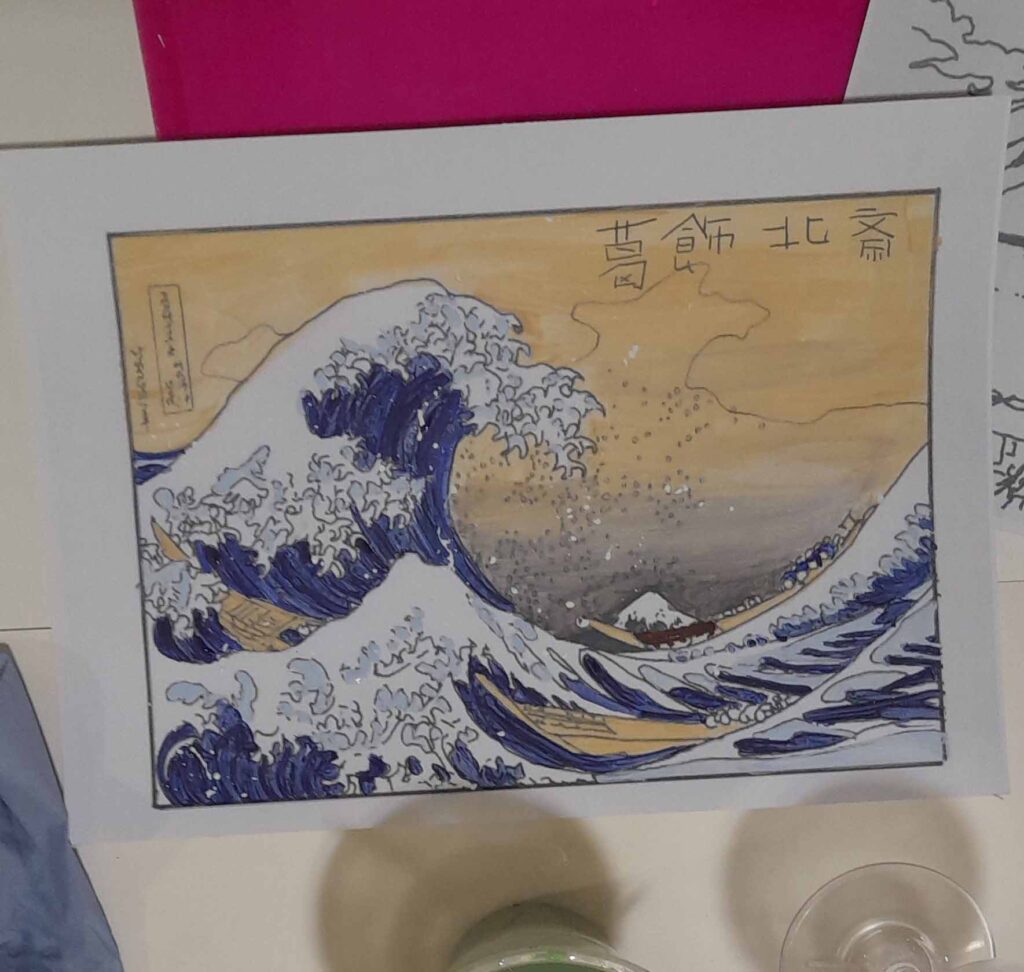
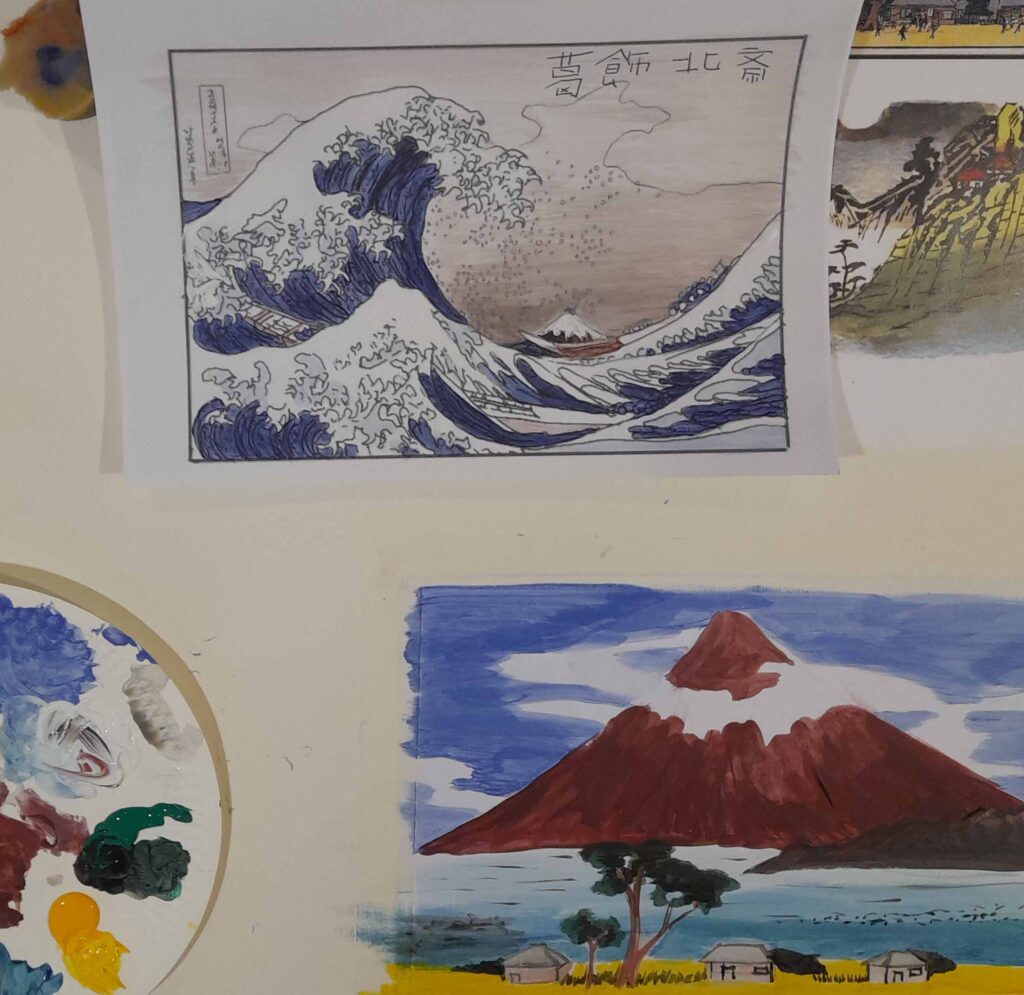
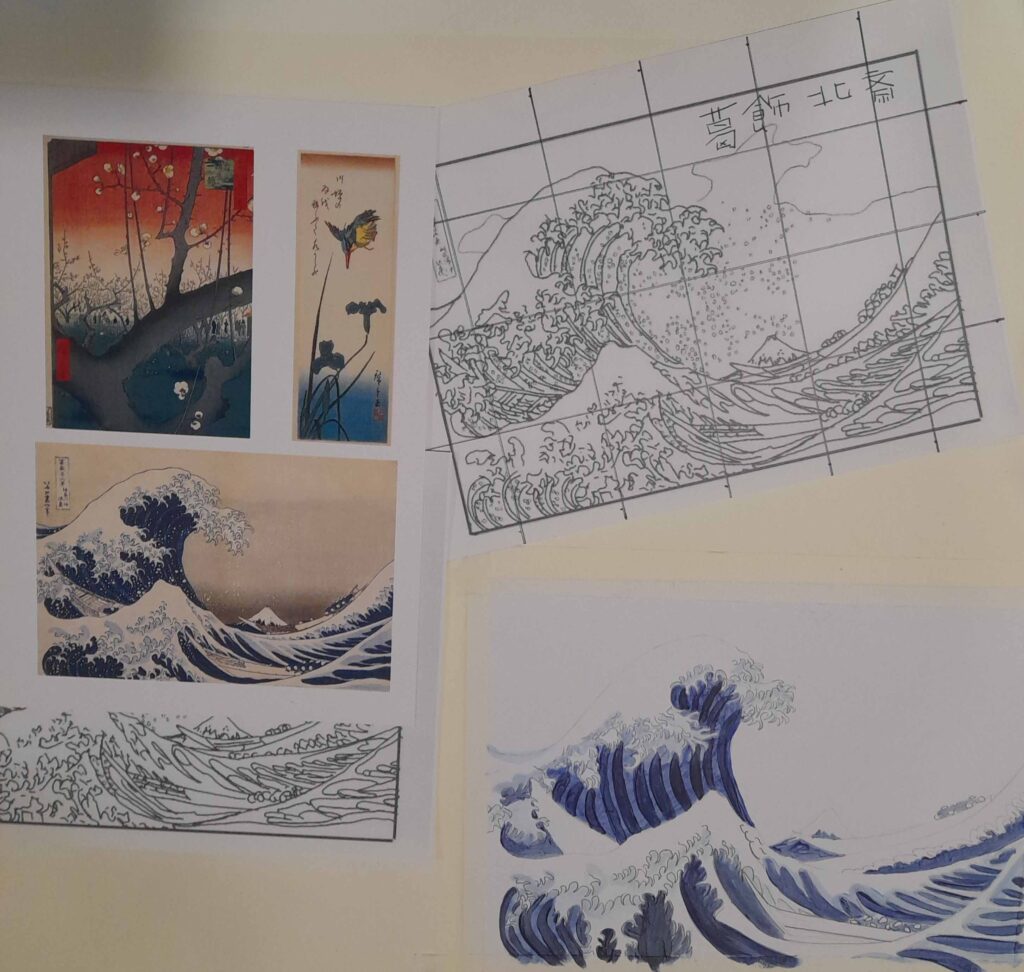
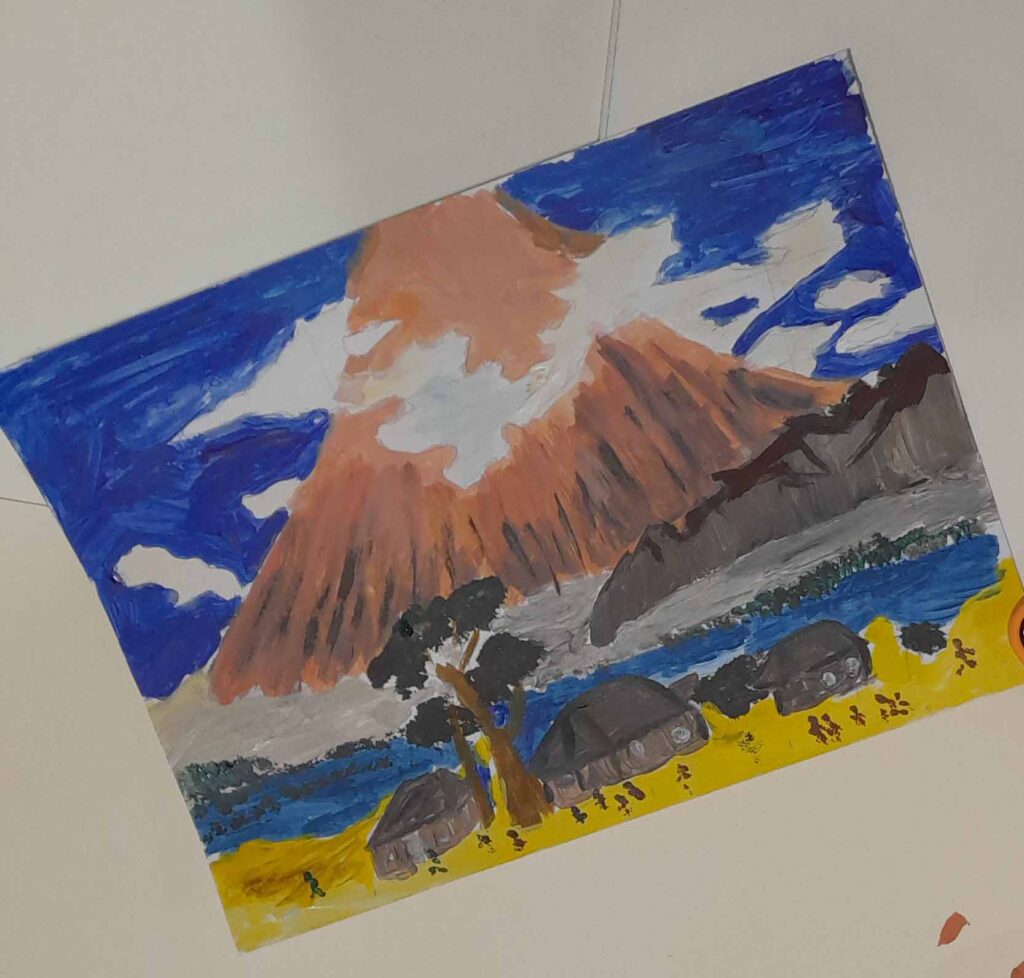
Artists had a choice of 5 Japanese pieces and could either work using freestyle, a grid or a sketch to colour in. Examples of the works were given to guide people in how the original colours were organised, if they so wished to emulate. Some did, others chose to use their own colour co-ordinations.
We were following the works of the two well known Japanese artists Hirosage and Hokusai. famous for their woodblock prints that were so popular in Japan and became famous in Europe and major influences on the Impressionists, Vincent van Gogh and Paul Cezanne.
A brief Powerpoint introduction to set the context a glass of wine and off they went. Two hours later and the results were fantastic.
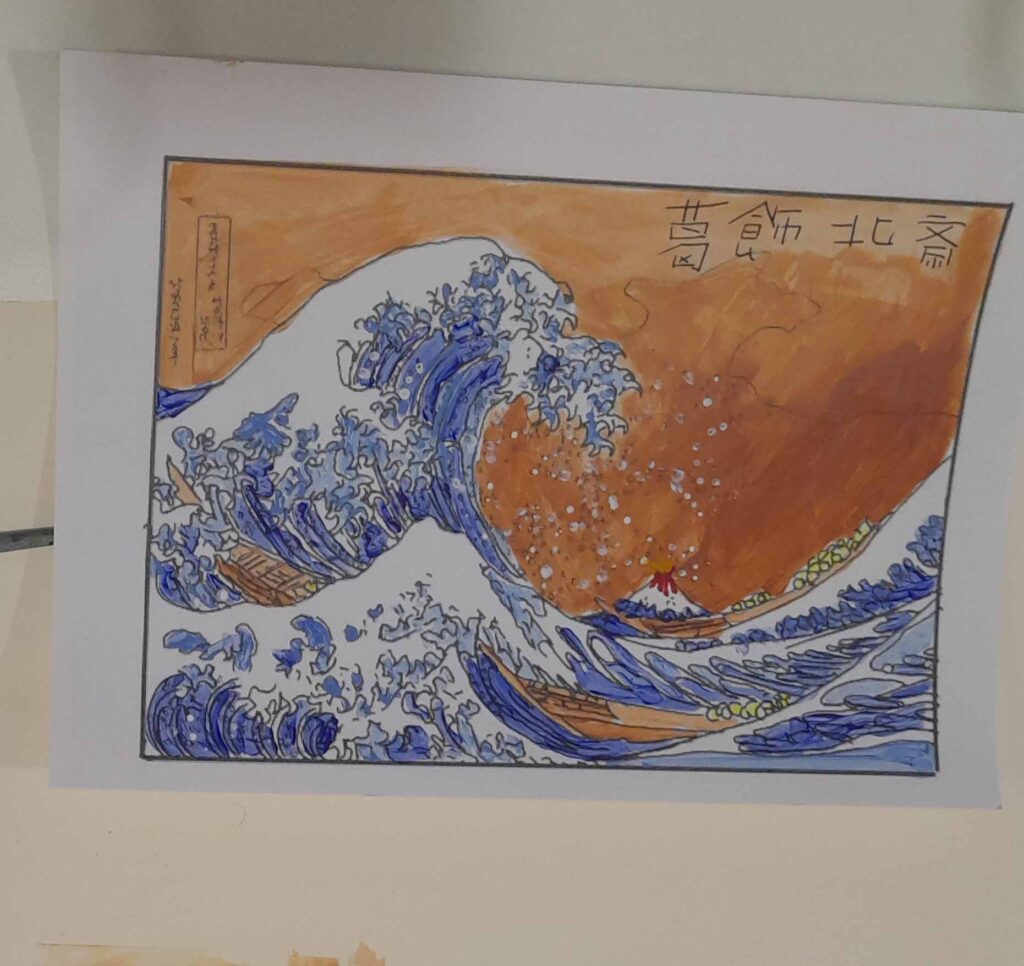
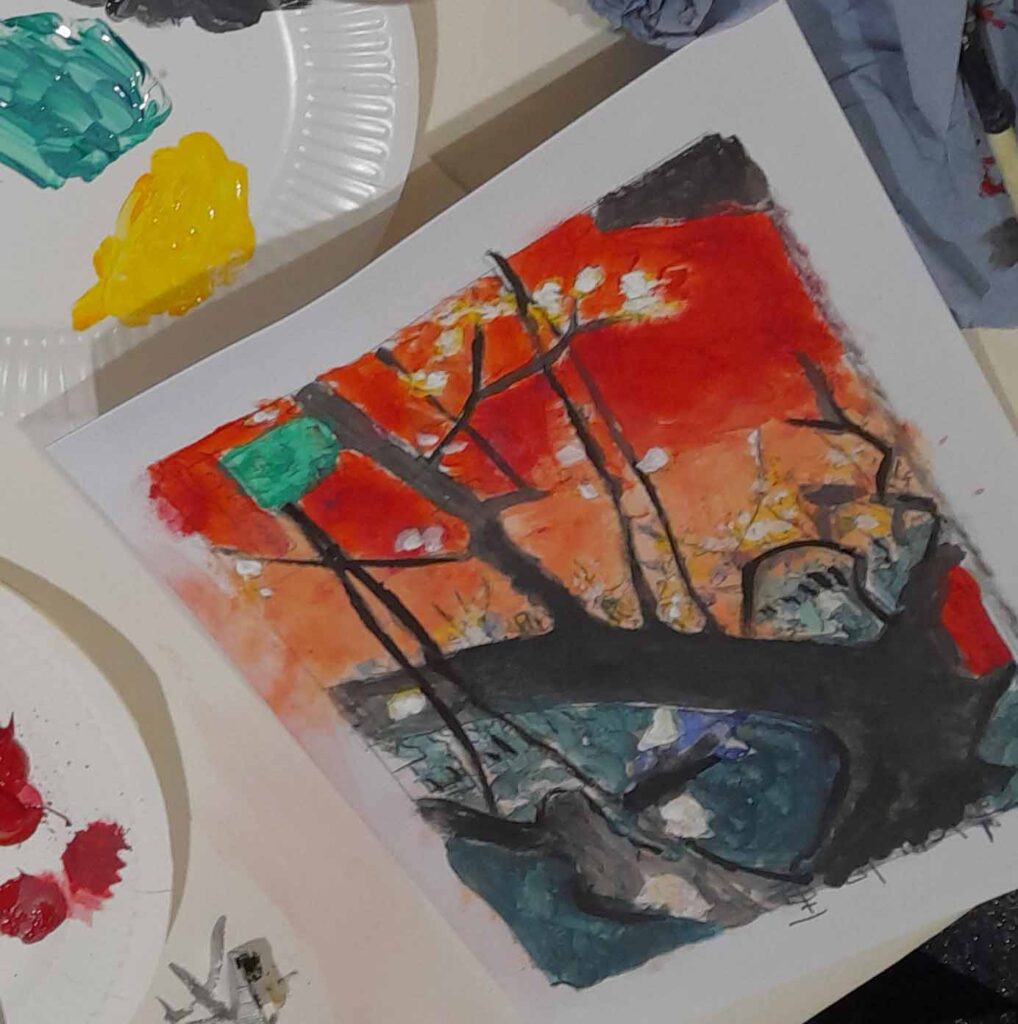
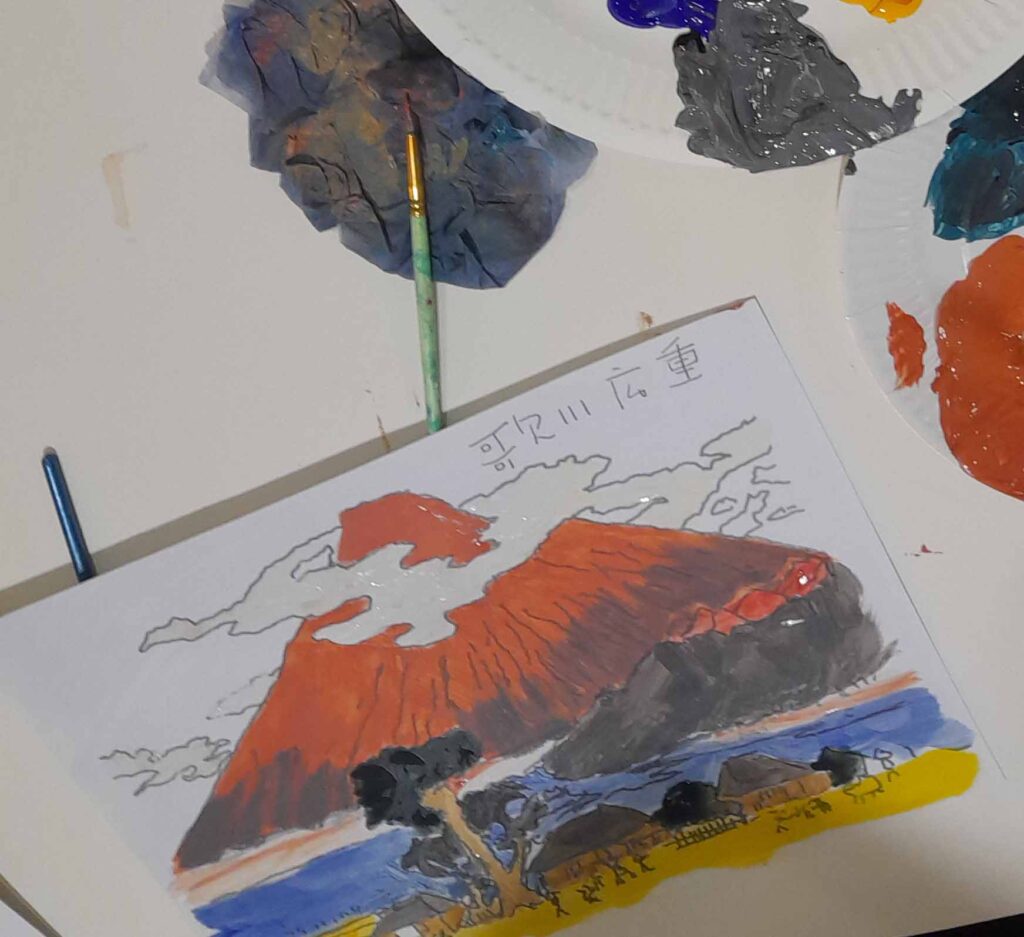
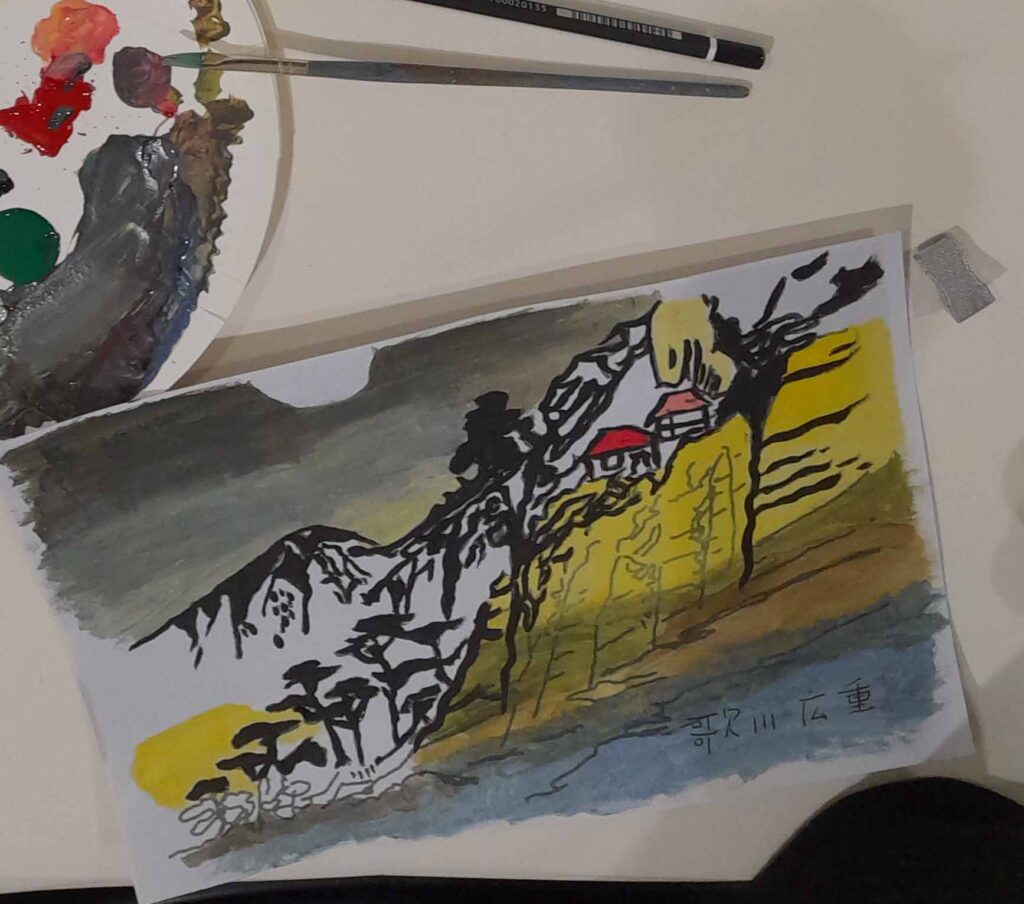
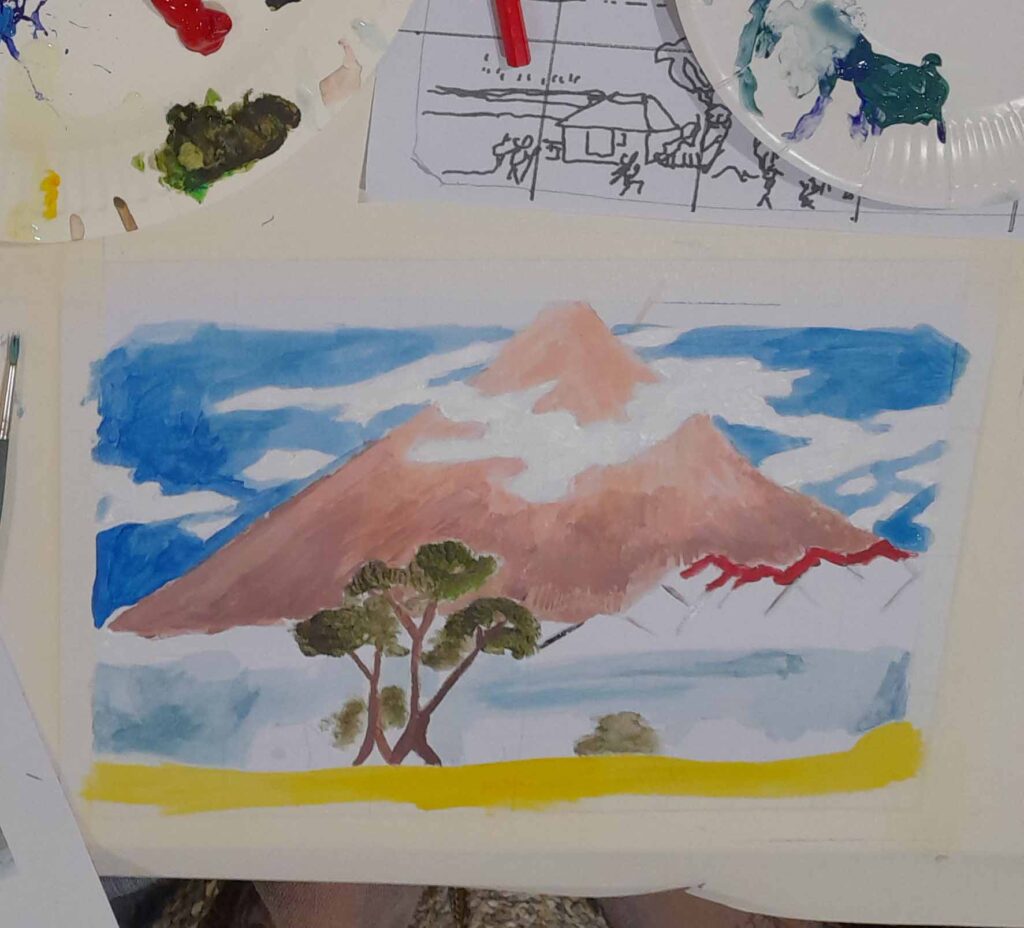
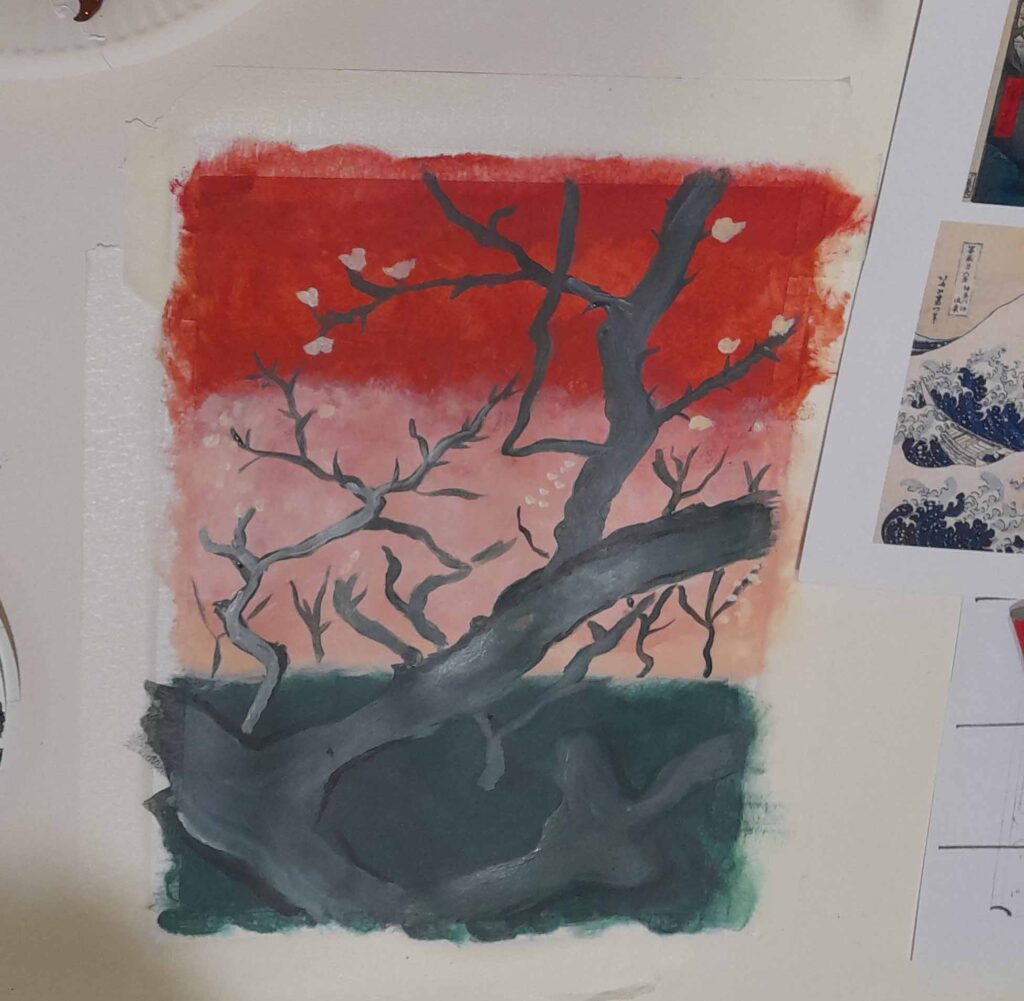
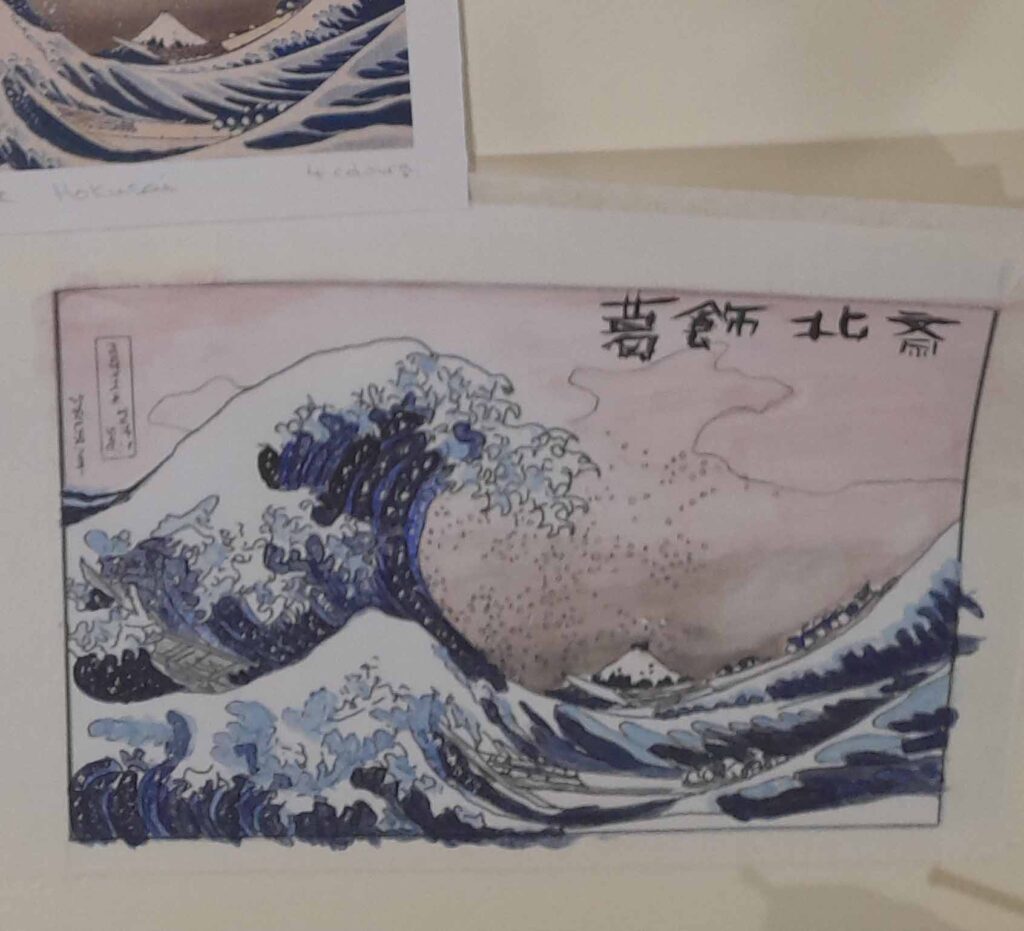
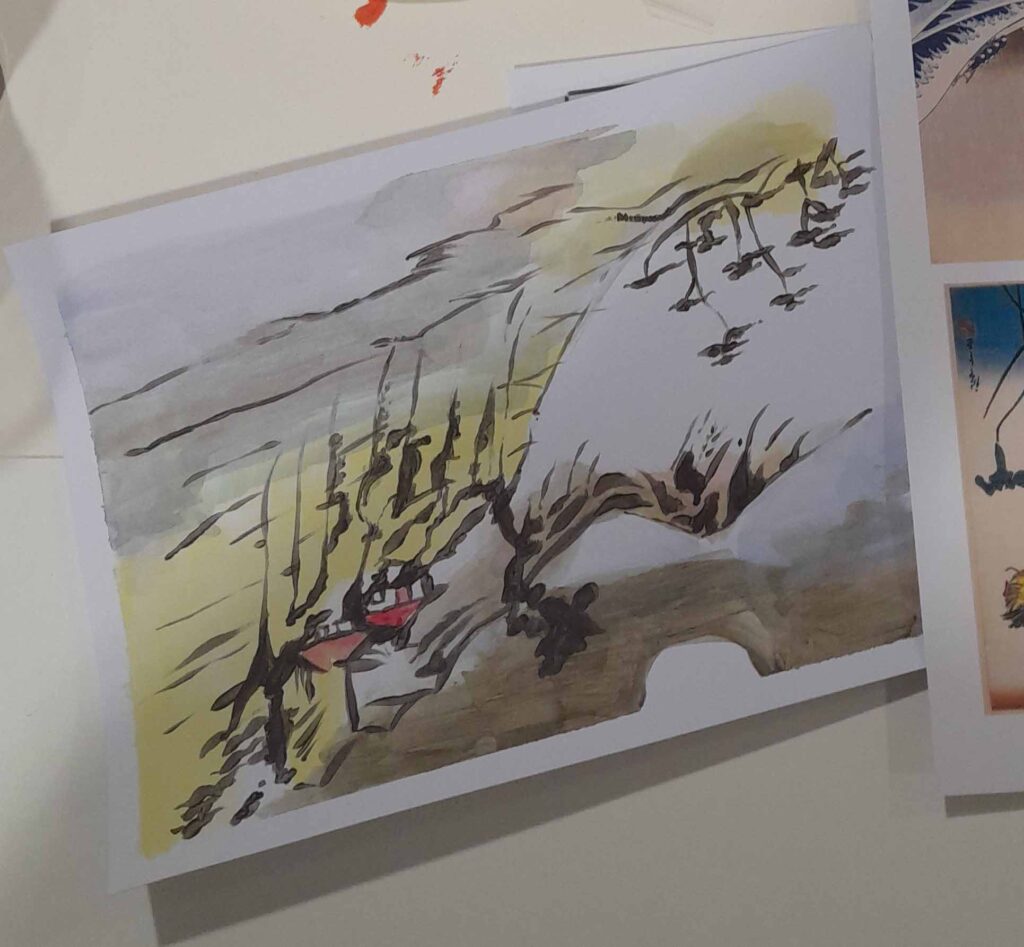
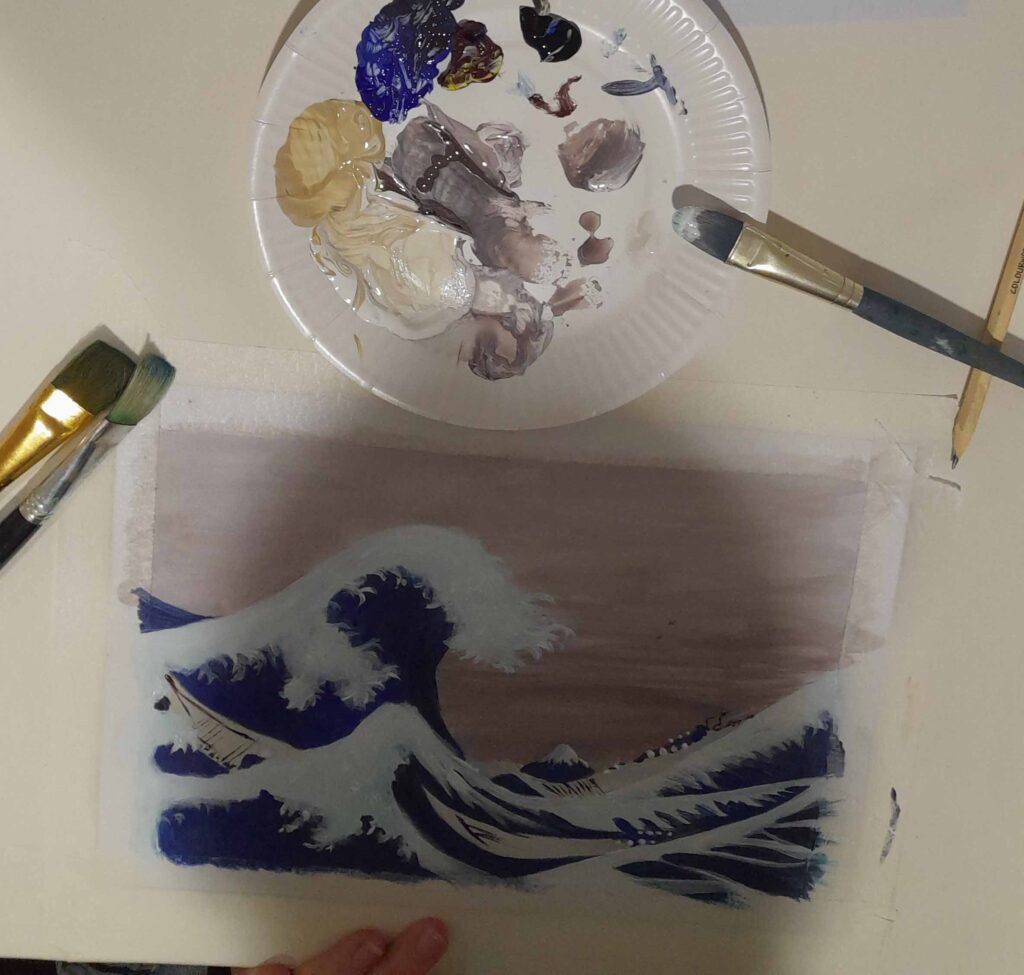
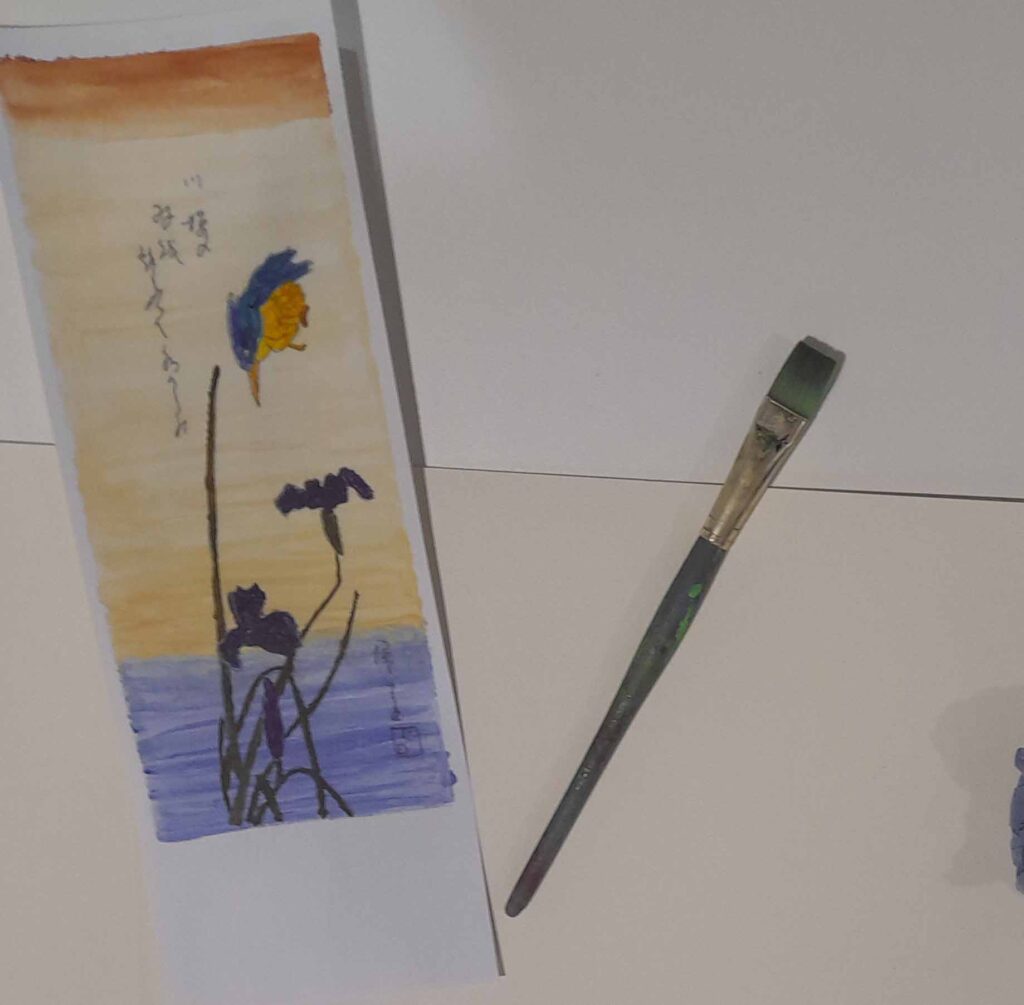
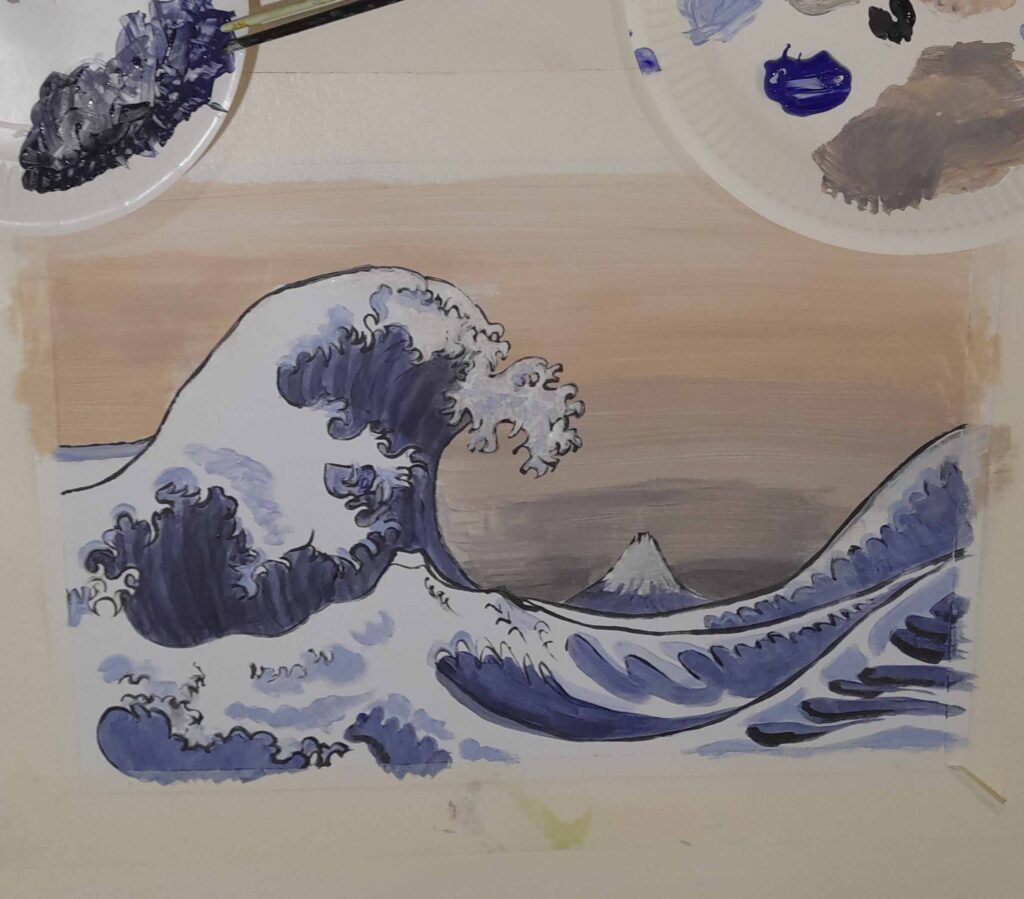
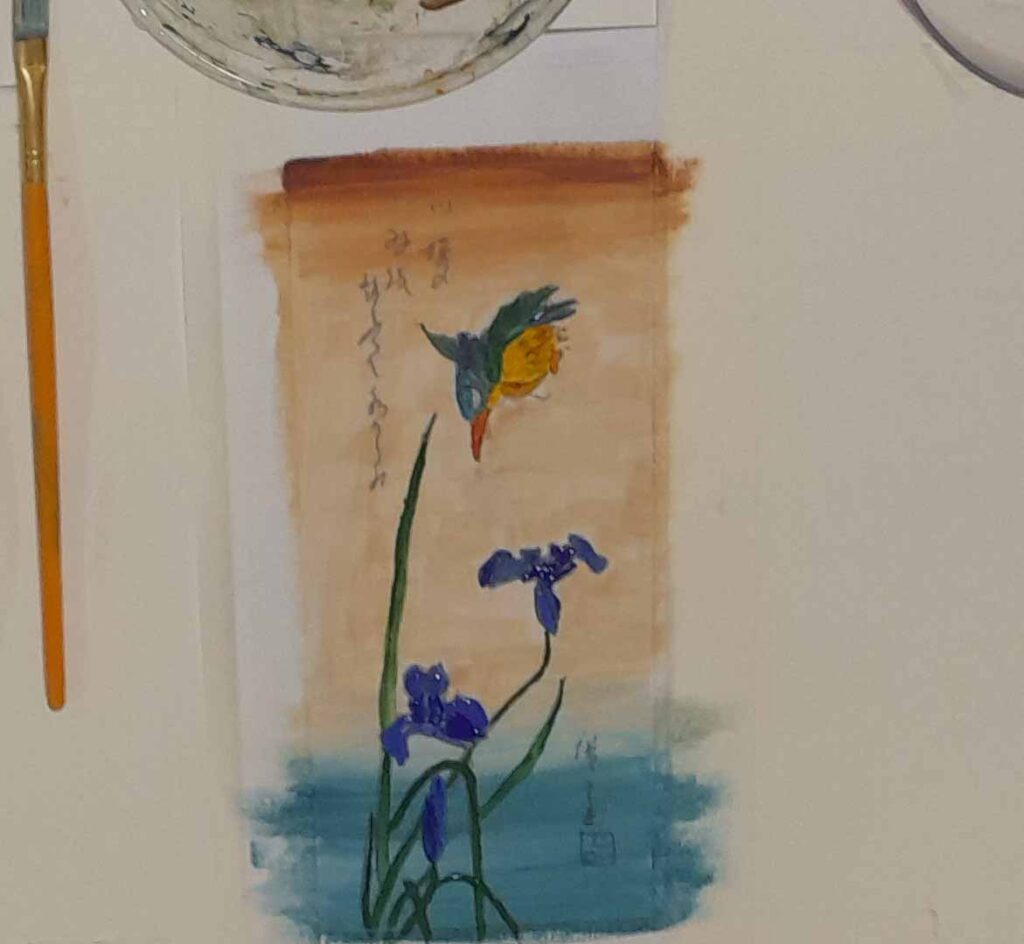
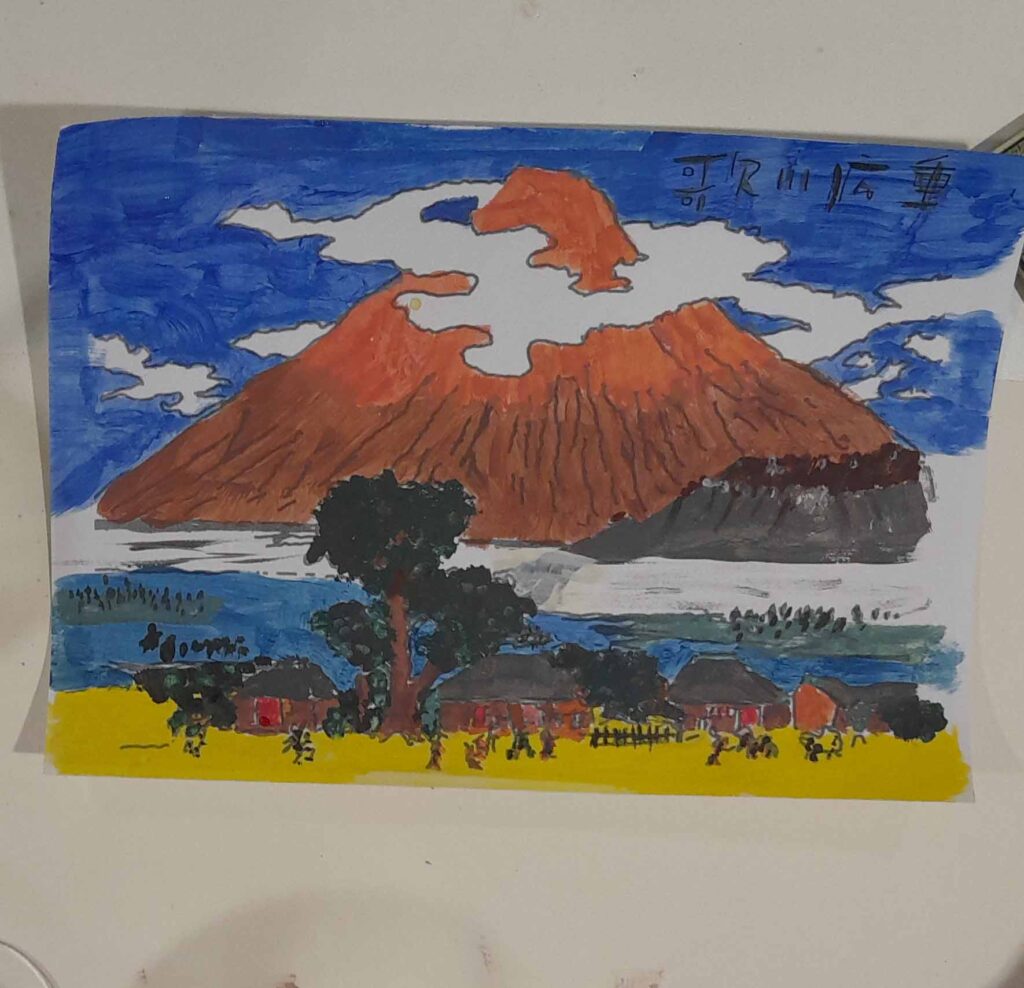
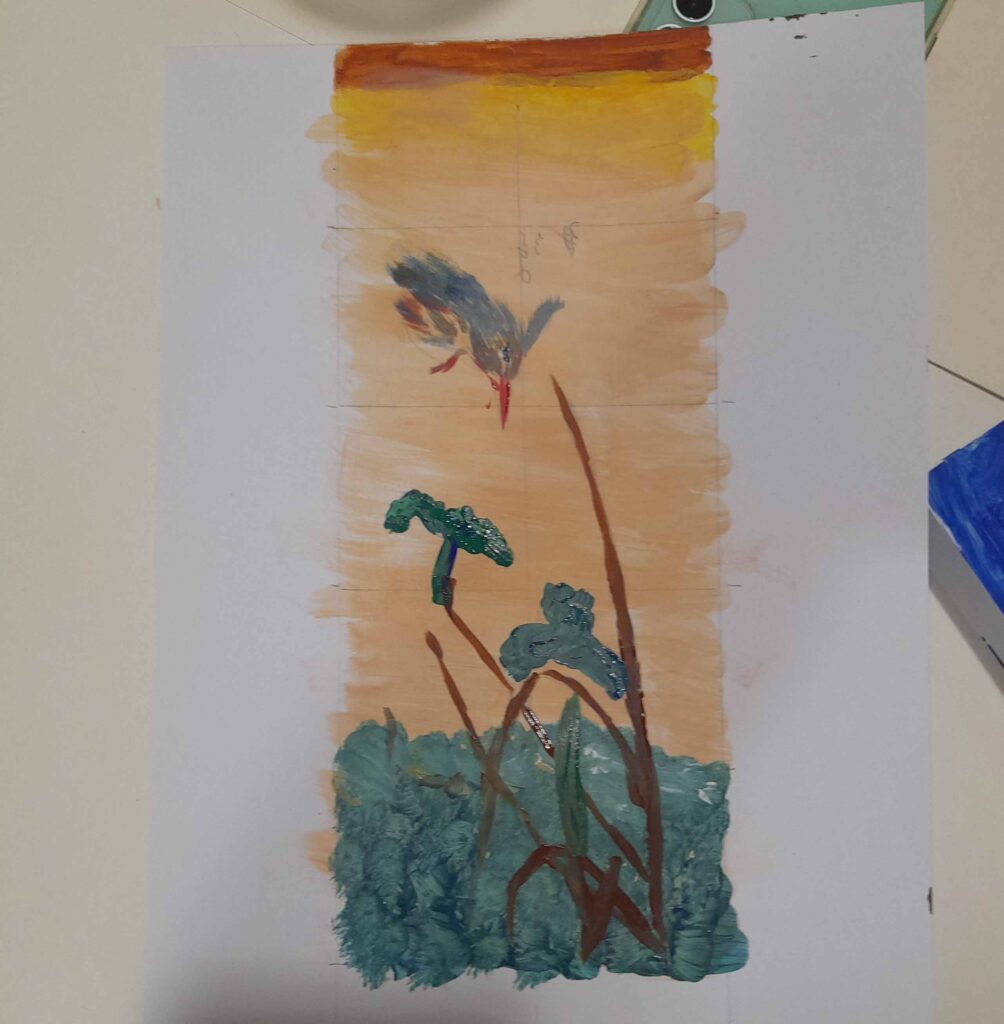
Utagawa Hiroshige (1797 – 12 October 1858), was a Japanese ukiyo-e artist (Ukiyo-e[a] is a genre of Japanese art that flourished from the 17th through 19th centuries.
Hiroshige is best known for his horizontal-format landscape series The Fifty-three Stations of the Tōkaidō and for his vertical-format landscape series One Hundred Famous Views of Edo. The subjects of his work were atypical of the ukiyo-e genre, whose typical focus was on beautiful women, popular actors, and other scenes of the urban pleasure districts of Japan’s Edo period (1603–1868). The popular series Thirty-six Views of Mount Fuji by Hokusai was a strong influence on Hiroshige’s choice of subject, though Hiroshige’s approach was more poetic and ambient than Hokusai’s bolder, more formal prints. Subtle use of color was essential in Hiroshige’s prints, often printed with multiple impressions in the same area and with extensive use of bokashi (color gradation), both of which were rather labour-intensive techniques.
For scholars and collectors, Hiroshige’s death marked the beginning of a rapid decline in the ukiyo-e genre, especially in the face of the westernization.
Hiroshige’s work came to have a marked influence on western European painting towards the close of the 19th century as a part of the trend in Japonism. Western European artists, such as Manet and Monet, collected and closely studied Hiroshige’s compositions: Vincent van Gogh, for instance, painted copies of some Hiroshige prints.
Katsushika Hokusai c. 31 October 1760 – 10 May 1849), known mononymously as Hokusai, was a Japanese ukiyo-e artist of the Edo period, active as a painter and printmaker.[1] His woodblock print series Thirty-Six Views of Mount Fuji includes the iconic print The Great Wave off Kanagawa. Hokusai was instrumental in developing ukiyo-e from a style of portraiture largely focused on courtesans and actors into a much broader style of art that focused on landscapes, plants, and animals. His works had a significant influence on Vincent van Gogh and Claude Monet during the wave of Japonisme that spread across Europe in the late 19th century.